

Dusk fell over the horizon as I made my way across the 59th Street bridge. It was a cold winter evening above the city, making my way back to Queens and the warmth of my apartment. I couldn't help but peer over the side of the bridge to the buildings below. Some were just under the height of the bridge, with lights on and blinds drawn open; how could I not peer inside?
Living in densely populated New York, I'm no stranger to being in people's personal space. Actually, this is why so many New Yorkers will not look or smile at you. Sorry, visitors — we're not rude, we're just giving our neighbors mental space because physical space is a hot commodity. There is something deeply intimate about catching a glimpse into someone's home without their knowledge, neighbors peering across courtyards into the secret lives of one another.
With blinds drawn open in a city like New York, there is always an element and understanding that someone somewhere is watching. Be it creepy or just observational, this is the reality. As I brushed by people going about their evening, cooking, or settling down to watch TV, I was reminded of the Hitchcock classic Rear Window. Did it speak so loudly to me because this was my existence in my formative years? I am accustomed to a level of voyeurism that many do not experience, I am also a sucker for a murder mystery so this elemental blending of my own lived experience with a great Hitchcock story was a recipe for success.
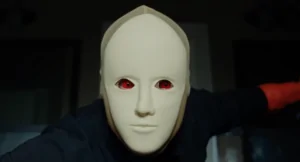
Based on Cornell Woolrich's 1942 short story It Had To Be Murder, Rear Window follows wheelchair-bound L.B. Jefferies, a photojournalist recently injured in the field (played by Jimmy Stewart). A photograph of a race car hurling towards the camera ultimately tells us exactly how L.B. broke one of his legs. Confined to his apartment, he finds gazing out his window into the courtyard below and through the windows of his neighbor's apartments to be his only pastime.
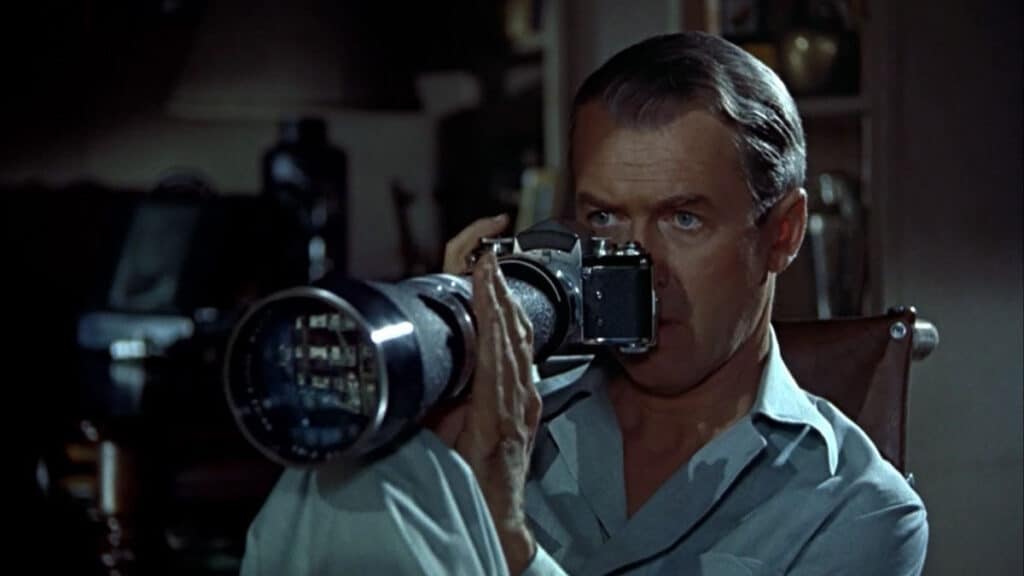
It's summer, and the windows and doors are wide open. There is a level of unspoken decorum in city living— when you open your lives up in this way, people keep to themselves because everyone's life is on some level of display. One evening, he notices from across the courtyard that the invalid wife of his neighbor has disappeared. Soon after, he witnesses the husband, Lars Thornwald (Raymond Burr), beginning to pack up items all pertaining to his wife. Jeff is convinced her husband has murdered her. His girlfriend, Lisa Fremont (Grace Kelly), and his home nurse, Stella (Thelma Ritter), are his legs to gather information about Lars and the mysterious disappearance of his wife.
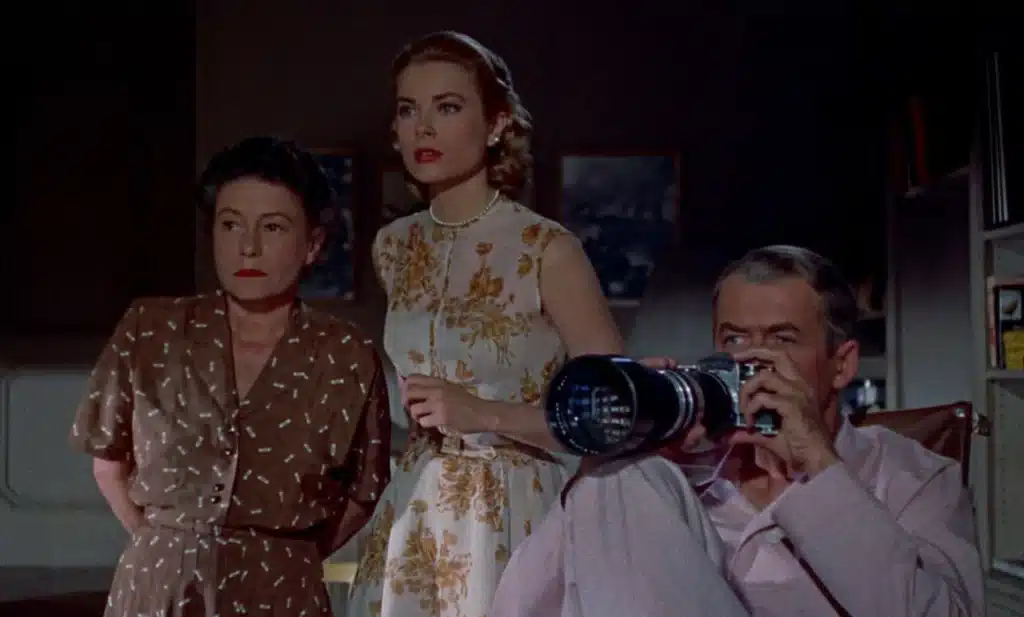
At 70 years old, this film still packs a punch. The suspense of watching Lisa in Lars' apartment when she sneaks in to hunt for clues, as we see him simultaneously coming down the hall while she is unaware, keeps you on the edge of your seat. The audience is Jeff in that moment; all we can do is observe what unfolds.
In the wake of McCarthyism, the world began to change; people became more distant and fearful of their neighbors. Hitchcock plays to these themes, and the idea still resonates today in multiple ways. Social media has turned us all into voyeurs in some capacity. People give strangers a carefully curated glimpse into their lives, a peek into the window, but who are they beneath the surface when the camera turns off?

I think back to my evening sneaking fleeting glances into the windows of those homes. You almost can't help it when it's dark outside and the lights are on. It's human nature to be curious. But there's a barrier that is crossed, and an intimacy that comes with observing someone in their lives when they don't know they are being watched.
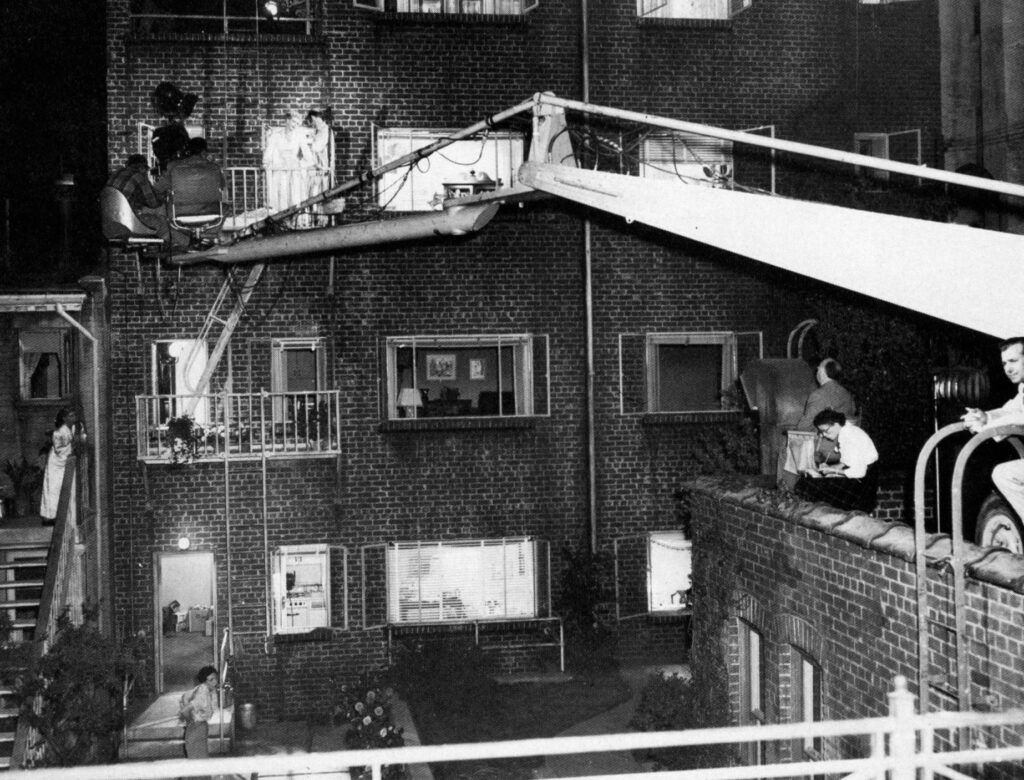
Hitchcock constructed the entire city courtyard and apartments at Paramount, their largest production scale-wise that year. With 31 apartments (12 of them fully furnished), he had a system of pipes for rain elements and was able to construct lighting grids to mimic the realistic movement of the sun based on the time of day. His team basically built a small city ecosystem.
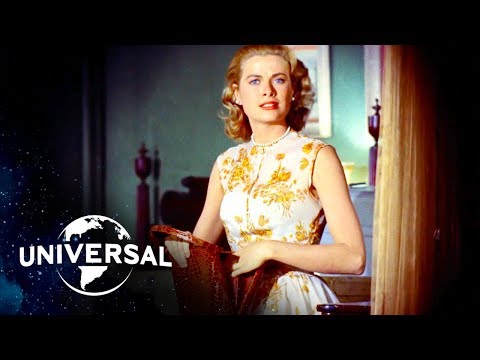
We can't talk about this film without discussing Edith Head's costume design. Rear Window was the second collaboration for Hitchcock and Head, and she went on to do ten more films with Hitch, following him to Universal in the '60s. She had a close friendship with actress Grace Kelly, and this film gave her the opportunity to design her dream wardrobe for Kelly. The Academy did not nominate her for this film, but she was nominated (and won) the Best Costume Design Oscar for Sabrina, which came out that same year.
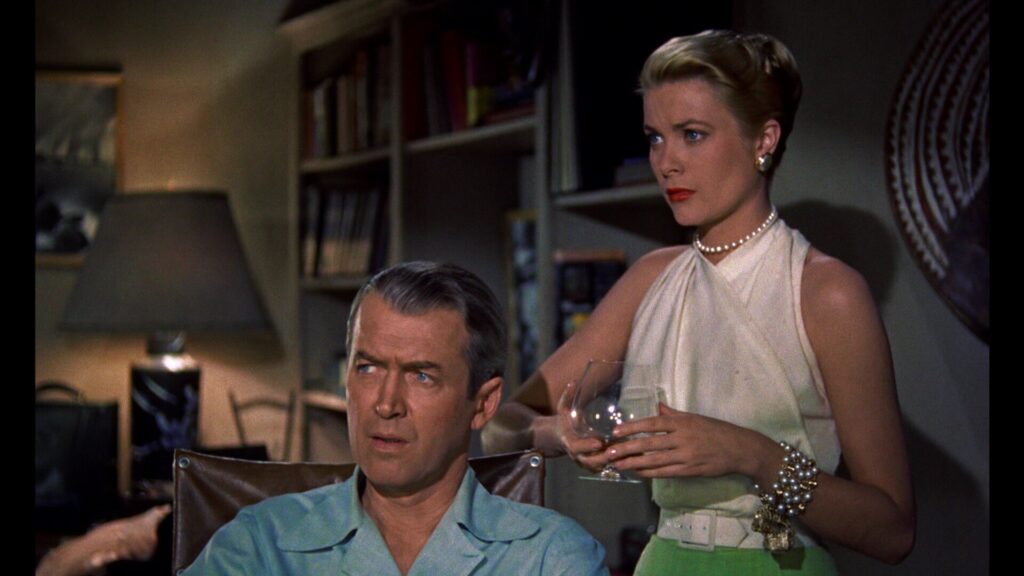
According to Jay Jorgensen in his book Edith Head, Edith described it as: “Hitchcock's vision for Grace in this film was that she was to appear delicate like a piece of Dresden China, this was based on L.B.'s perspective of her. He thinks of her only delicately.”
We also see Edith's favorite color on screen in that famous suit, which was a nod to the Balenciaga designs of the day, in eau di Nil green, which translates to “water of the Nile.” We have only been treated to this color one other time after this, on Tippi Hedren in The Birds a decade later.
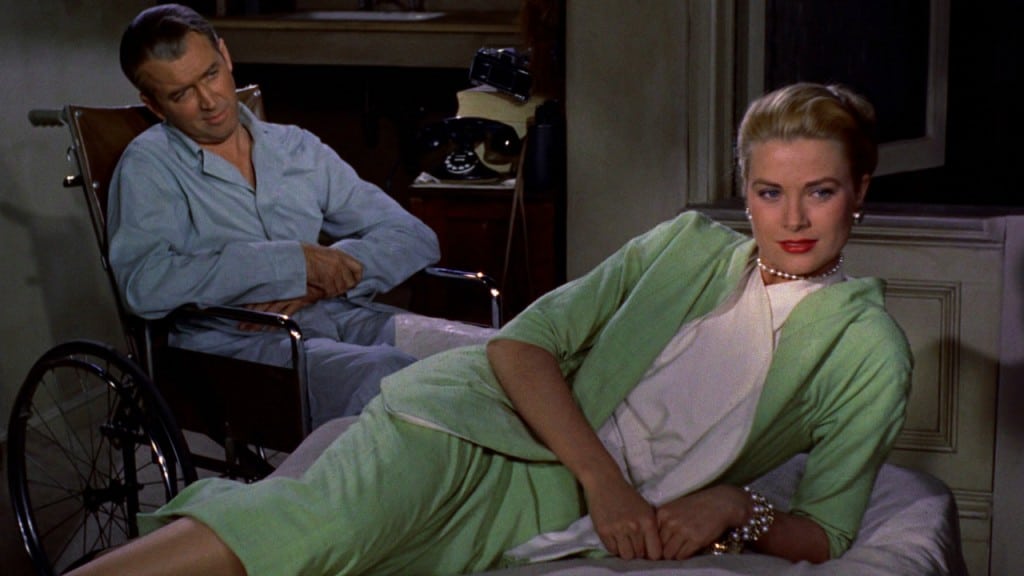
Rear Window is all about perception and seeing what you want to believe. Edith incorporated those elements in her designs. She contrasts Lisa and L.B. with opposing colors and fabrics. Playing with the ideas of masculine and feminine roles that had started to change during the war were being challenged now that the war was over.
When all these elements come together, it's lightning in a bottle. You can't predict making something so special and everlasting; it just evolves that way. Seventy years later, we are still treated to special screenings of this movie. Rear Window has inspired countless films, and we are still talking about this movie not only because it's Hitchcock but because it strikes a nerve on a basic human level. The curiosity of what happens behind closed doors and the question — if the blinds are left open, will we look away, or will curiosity get the better of us?
