
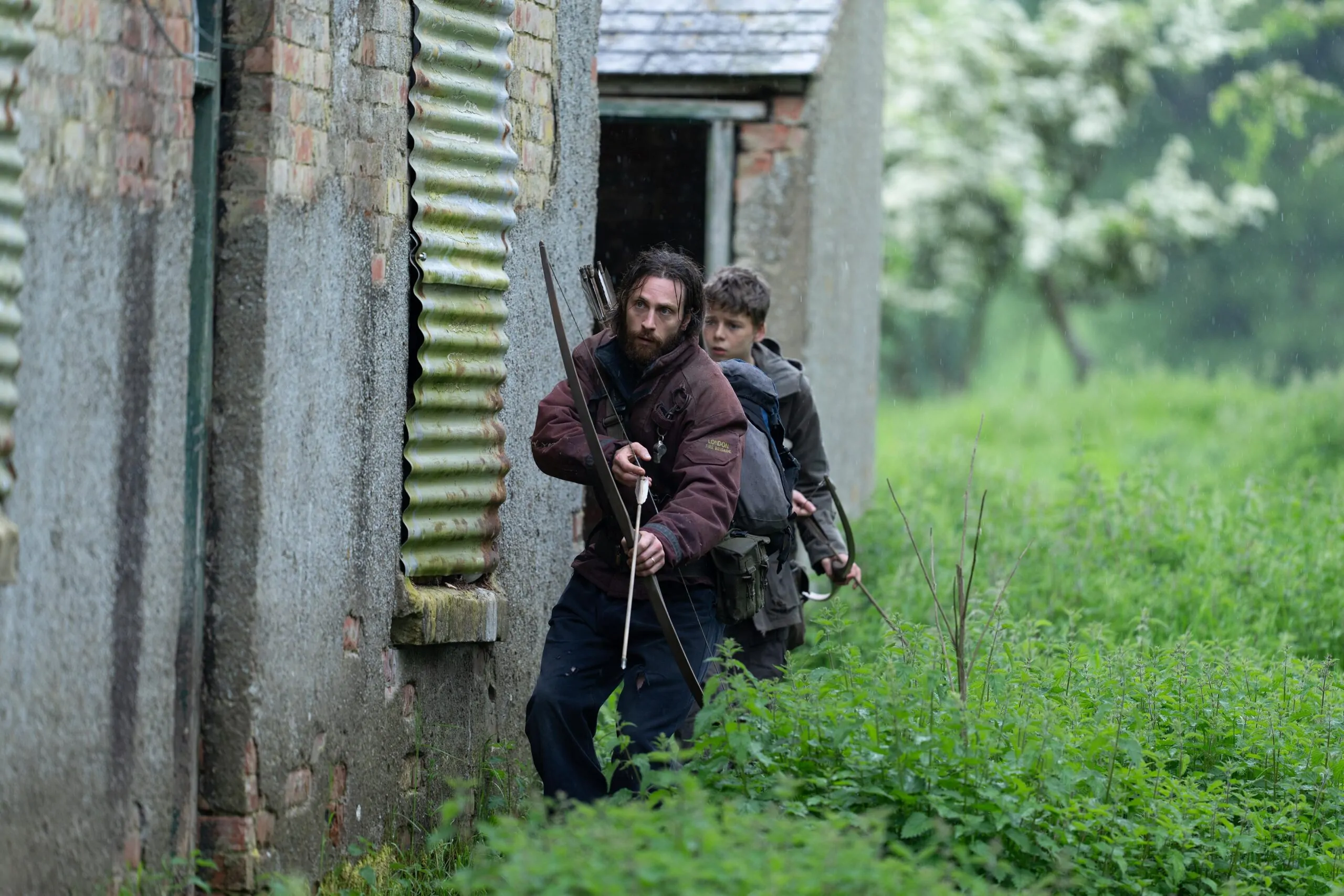
The best decision made by any dad in 2026 horror cinema is antithetical to every dad’s number one responsibility: he doesn’t show up. The father in question is Jamie (Aaron Taylor-Johnson), a non-existent figure in Nia DaCosta’s exemplary 28 Years Later: The Bone Temple, and a distant secondary one in Danny Boyle’s 28 Years Later, which ends with him staying put on his nice, quiet little island community while his son, Spike (Alfie Williams), undertakes a perilous boyhood journey of self-actualization.
Jamie, in a word, sucks. It’s not so much that he spends 28 Years Later two-timing his wife and Spike’s mom, Isla (Jodie Comer). As it turns out, she’s stricken with terminal cancer, and as with any bereaved spouse, Jamie is allowed to move on. But he moves much too fast, because Isla is alive (and admittedly unwell) as the film begins, and Jamie is all but openly hot for Spike’s teacher, Rosey (Amy Cameron), who shepherds the children on Lindisfarne, where an enclave of human survivors dwells in Great Britain’s zombie post-apocalypse.
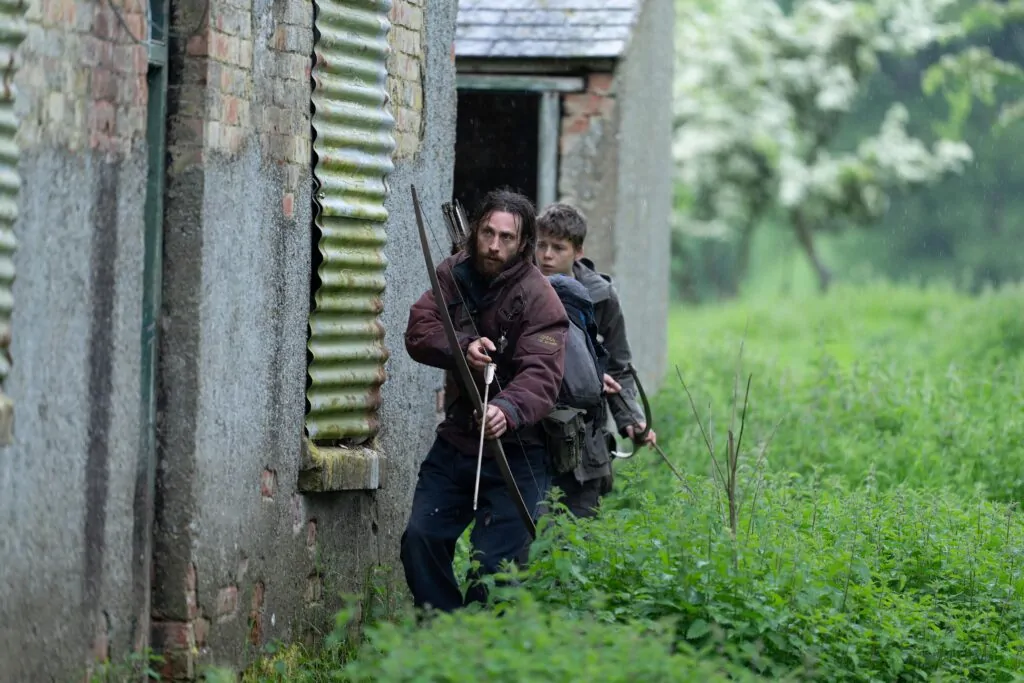
One might forgive Jamie’s affair if he left more than a faint blip on the radar of Spike’s life; the heart wants what it wants, and grief is a profound risk factor for infidelity. But grief isn’t a puppeteer, and Jamie isn’t a marionette. He makes choices.
We hope he makes better ones, raising his adopted newborn daughter, whom Spike names for his mother and leaves in Jamie’s care before returning to Britain’s wilds to complete his coming of age. Maybe we’ll find out in 28 Years Later: Whenever Production Gets A Greenlight.
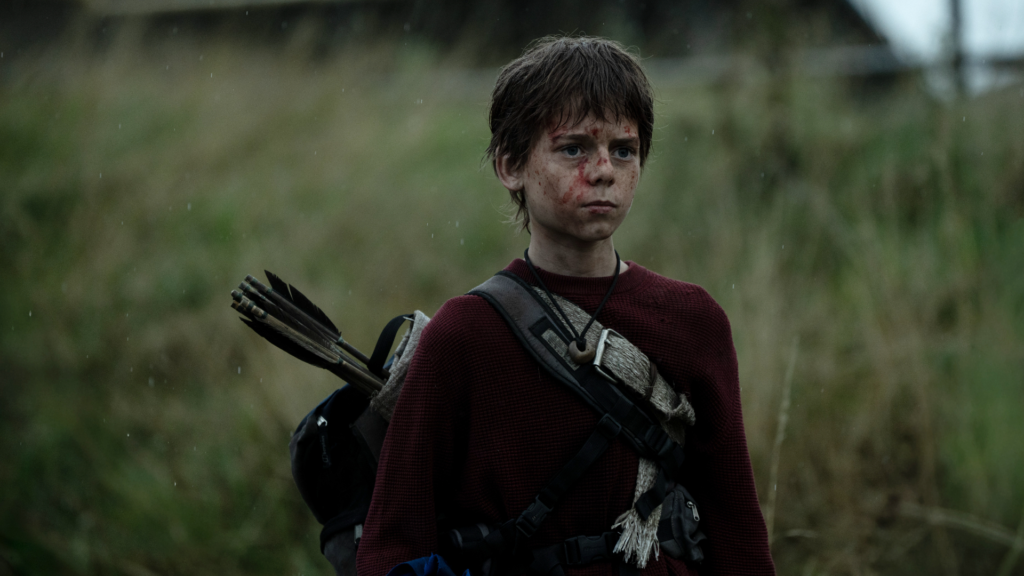
It’s for the best he’s out of the picture in 28 Years Later: The Bone Temple, though, if not because Spike fought so hard and has suffered so much for the freedom to grow into manhood on his terms in the first film, then because the lack of Jamie sets up 2026’s first six months of horror cinema as a comment on paternity in absentia. Good dads are hard to come by in this year’s scary movies, and bad ones are in abundance.
In Cold Storage, there’s Mike (Aaron Heffernan), ex-boyfriend of the film’s co-lead, Naomi (Georgina Campbell) and her daughter’s father. He’s the first character in the main plot to play host to space fungus that turns him into a goopy zombie eager to spread the infection.
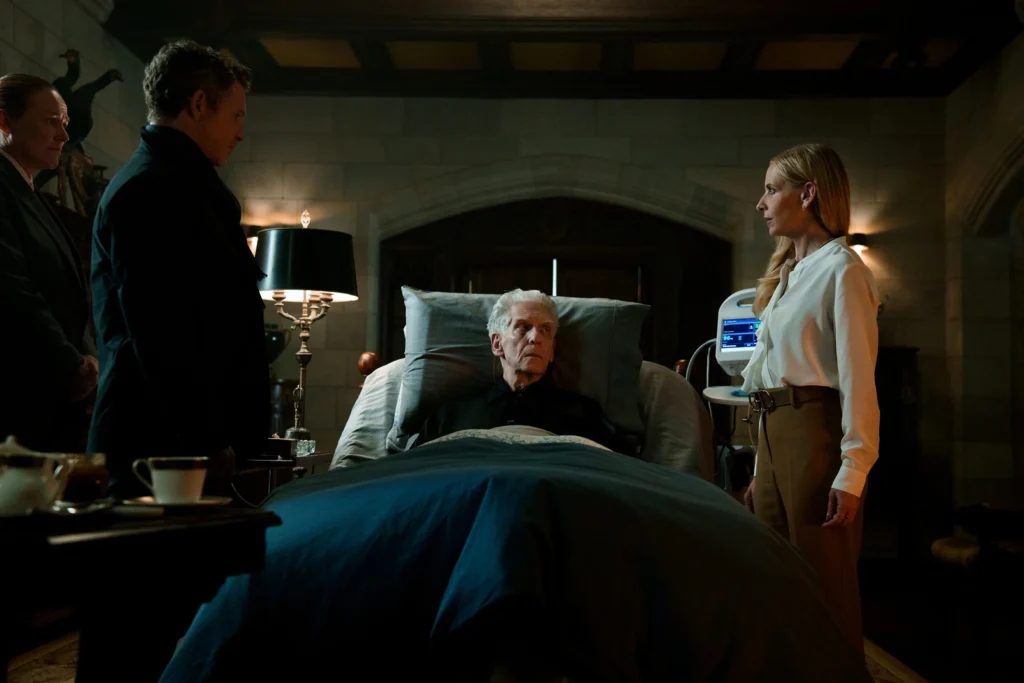
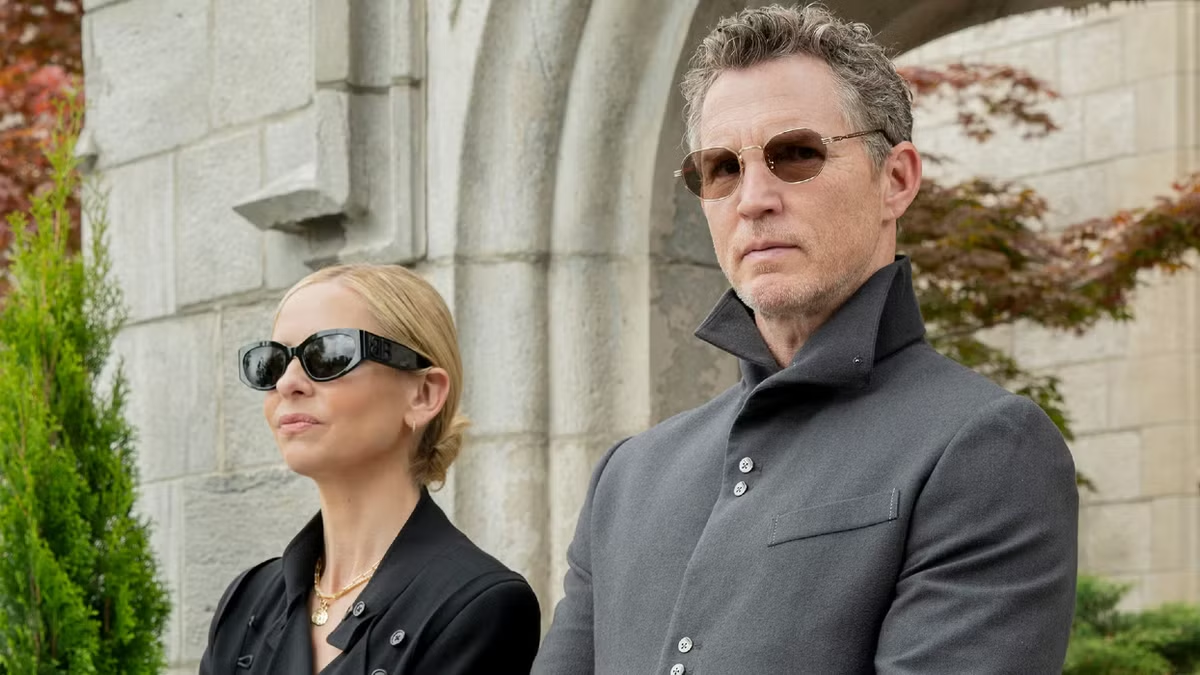
Elsewhere, we have Chester Danforth (David Cronenberg) in Ready or Not 2: Here I Come, who bids his hellspawn, Ursula and Titus (Sarah Michelle Gellar, Shawn Hatosy) to smother him so they can take his spot in a new game of hide-and-seek with Grace (Samara Weaving), the first film’s final girl.
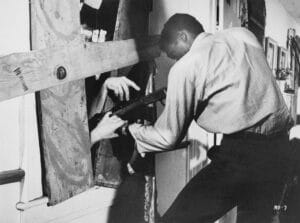
We never see Ohm Bauman’s (Adam Scott) late father in Damian McCarthy’s Hokum; we just know Ohm loathed him, based on how tenderly Ohm spreads his late mother’s ashes in the Irish hinterlands compared with how unceremoniously he dumps out his dad’s. And if Travis (Robert Taylor) isn’t a bad father in Saccharine, per se, he’s ineffectual at best, and key to his daughter Hana’s (Midori Francis) unhealthy relationship with food at worst.
None of these films is directly “about” father-child dynamics, of course. That trait is backgrounded by a wide range of themes, from diet culture crazes (Saccharine), to stale critiques of the global elite (Ready or Not 2), to depressingly still relevant COVID metaphors (Cold Storage), to midlife malaise spurred by unresolved guilt (Hokum).
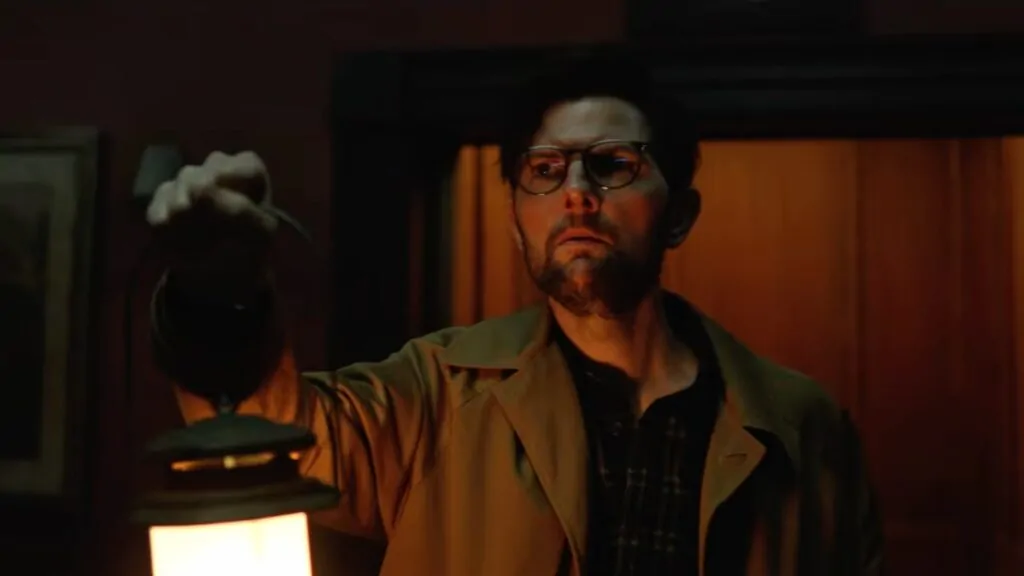
But Jamie’s sabbatical from Spike in 28 Years Later: The Bone Temple invites audiences to think about the impact dads have on their children’s lives, whether through involvement or apathy. Would Ohm, for instance, be such an insufferable asshole as to burn a bellhop (Will O’Connell) just to make a point about the difficulties of being a professional writer if his dad hadn’t abused him as a kid?
What are Ursula and Titus if not the product of Chester’s elitist influence? Is Hana a victim of algorithmic social media content drips, or is she primed to respond to their effects on account of Travis’ health conditions? And most of all, the grand question these movies raise as a whole: what does a truly present father do for their kids?
This is unfair to ask, perhaps, since the films can’t give answers. They’re closed circuits where the absence is felt, but left unresolved. Nevertheless, it isn’t enough to merely be there, or to have been there. A dad is supposed to help his children learn to steer their lives, rather than thrust the wheel into their hands and leave them to figure out the mechanics on their own.
Ursula demonstrates such superior judgment and higher function than Titus throughout Ready or Not 2 that it’s clear who would be Chester’s favorite of the two if the movie made it explicit that he had one. (In fairness, there’s no meaningful incentive for Guy Busick and R. Christopher Murphy’s script to do so.) Titus’ rudderlessness is obvious and obviously eats away at him. Much as he would bristle over accusations of an inferiority complex, he absolutely has one.
Ohm doesn’t miss his dad; rather, he despises him. Hana’s dad, meanwhile, is alive, but Saccharine implies that though he has a pulse, she mourns him, because the man he is now isn’t the same as the man he was when she was little.
She’s experienced a loss, in a sense: his severe obesity and consequent incapacity to care for himself don’t weigh the same as his death would, but defines their relationship regardless by restricting his ability to perform emotional labor as a dad, and frankly repelling her from spending time with him. (This is unfair of her, even if proximity to Travis is a trigger for her own body image issues.)
Cold Storage spares Mike substantial characterization for shallow writing. All the same, he’s perfectly despicable, a representative of that certain paternal “type” who thinks having a child and being a dad are the same thing.
I think about that last formulation a lot in my day-to-day. Is having two kiddos of my own sufficient cause to declare myself a dad? Biologically, yes. But there’s more to being a dad than DNA, like marking the Blu-rays on your shelf that have scary faces on their spines and turning them around when you have your girls for the night so they don’t see those scary images.
I, of course, am “you” here, and the Blu-rays include Evil Ed and Hellraiser, both of which feature leering monstrous mugs along their sides. My youngest, Elephant, takes no notice of them, but my eldest, Brownie, finds them expressly disturbing. Should I be awarded Father Of The Year for the simple act of hiding Pinhead’s face so she can sleep comfortably at night? No. Of course not. I should be awarded Father Of The Year because I’m awesome.
But little things matter, oftentimes more so than big ones. They also tend to pile up. In turn, kids tend to remember little things from that pile over the big things, even if the big things make up the frameworks of their existence.
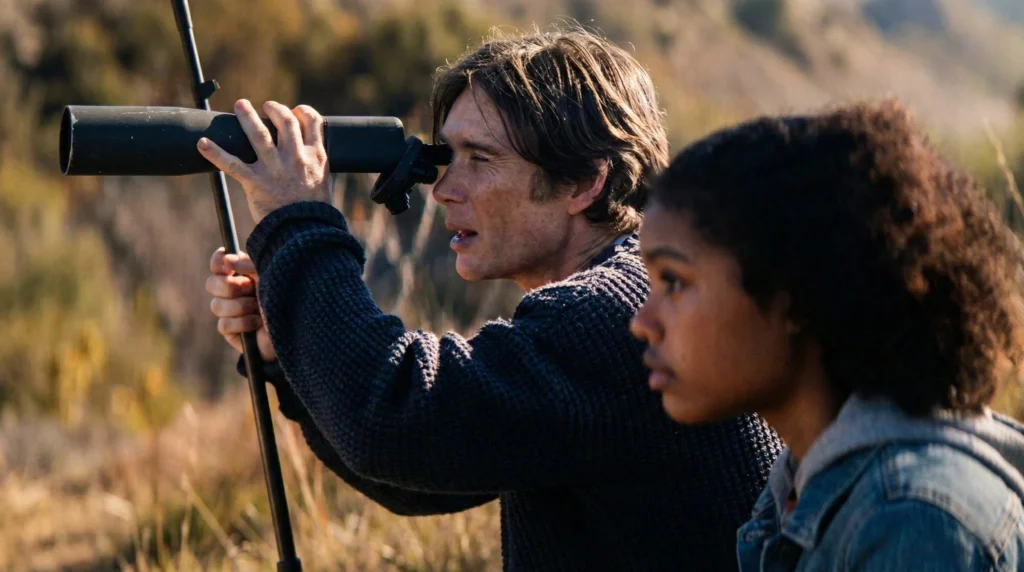
28 Years Later: The Bone Temple ends with the return of Jim (Cillian Murphy), 24 years after playing the role in Boyle’s 28 Days Later. He’s helping his daughter, Sam (Maiya Eastmond), cram for a history test about postwar Europe, which sounds serious on paper but is slightly unserious in practice.
There’s no school in their rugged home, tucked in the hills as it is, away from roving mobs of Rage-infected humans. Jim is Sam’s tutor, headmaster, and administrator, a fact she pokes fun at him for. Functionally, the beat is about franchise maintenance, leading into the third (eventual) 28 Years Later film, the pair witness Spike and Kellie (Erin Kellyman), a defected member of the Jimmies gang who serve as The Bone Temple’s chief antagonists, hoofing it from a pack of infected.
Expectedly, Jim goes to their aid. We’ll have to wait several years for the next 28 Years Later movie to see how that sequence shakes out, but in The Bone Temple, what seems to matter to Sam in the moment is Jim’s choice to intervene when he could have stayed put, as Jamie does on Lindisfarne.
It’s a big thing indeed to risk one’s life for strangers. It’s a little thing, however, to choose to risk, and if the distinction feels small, it isn’t without merit. The little things matter, like flipping the Blu-rays, cutting the crusts off of PB&J sandwiches, painting your nails pink to match your girls’, wearing a rainbow loom bracelet like the finest bling, and hanging up each new crayon or watercolor masterpiece on the wall as your personal art gallery. In the end, again, it’s the little things.
If Jamie is any kind of father, he’ll learn that lesson well and be a better caregiver to baby Isla–and, when he finally comes home, Spike, too. Maybe that will be a year for great horror dads. This year, though? Fatherhood is a low-key horrorshow.
