
Last Updated on July 14, 2024 by FANGORIA Staff
Editor's Note: This was originally published for FANGORIA on March 27, 2009, and we're proud to share it as part of The Gingold Files.
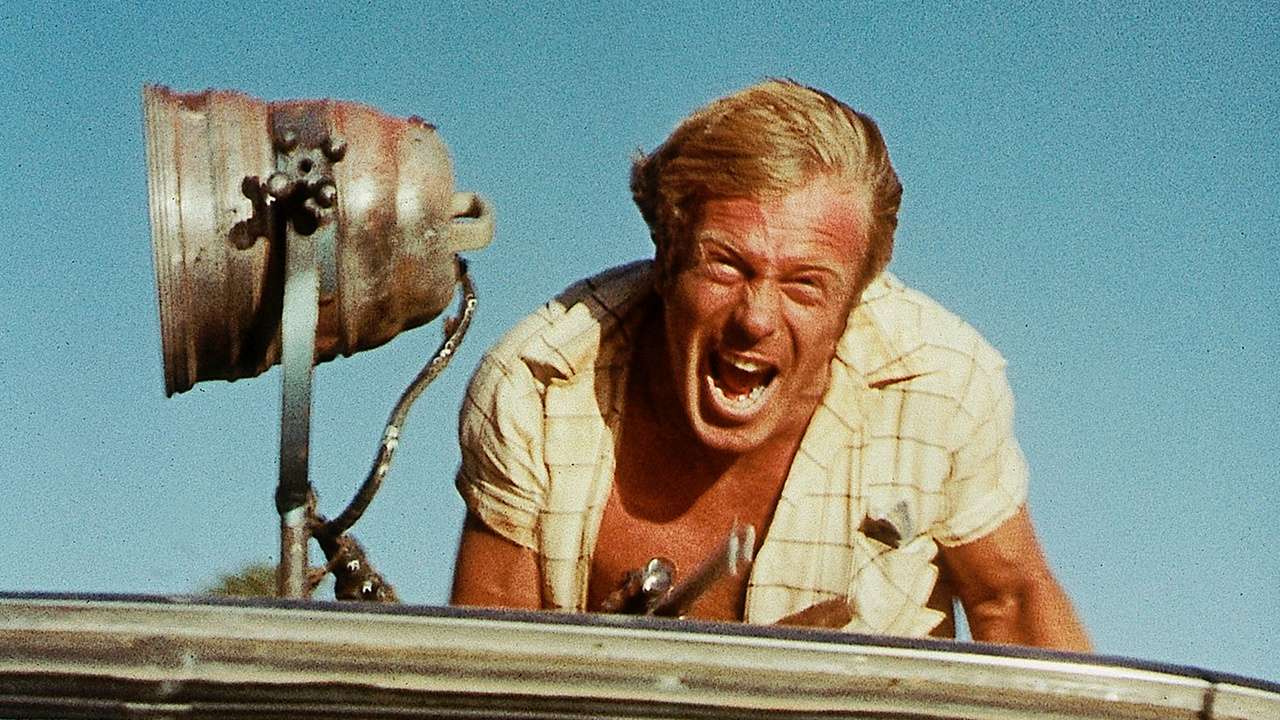
“Ozploitation”—the frequently low-budget but often equally high-energy fare of several genres that proliferated Down Under in the 1970s and ’80s, was characterized by its brash aggressiveness, and is celebrated in kind by Mark Hartley’s Not Quite Hollywood. Subtitled The Wild, Untold Story of Ozploitation!, it’s a rip-roaring, addictive documentary that fully conveys just how wild those flicks were, while assuring little of their history remains untold.
Not Quite Hollywood charts this cinematic movement from its origins in the early ’70s, when censorship was relaxed in favor of the creation of an R (adults-only) rating. Unlike filmmakers in other countries who (willingly or not) avoided such a tag, those in Australia embraced it, and began churning out sex-and-violence-packed films with abandon. Hartley gives equal weight to softcore features (silly, bawdy stuff like Alvin Purple and Pacific Banana), horror (highlighted by the oeuvre of Patrick and Road Games’ Richard Franklin) and action (of which Mad Max is the best-known, but was hardly the first).
In all three cases, Hartley saturates the screen with eye-popping film clips chock full of bare flesh, spilled blood and extremely hazardous driving. You’re guaranteed to come away from Not Quite Hollywood with a long list of must-see titles—way too few of which, unfortunately, are available for U.S. home consumption. (Just one I was able to catch on import disc, and recommend, is 1972’s Night of Fear, a rural bloodbath—done without dialogue and originally made for TV!—that, if there was a chance in hell Tobe Hooper had seen it, might be viewed as an influence on The Texas Chainsaw Massacre.)
As if the excerpts weren’t enough of a treat, Hartley has tracked down and interviewed a remarkable number of filmmakers and actors to share their memories of how these raunchy, rowdy and ruthlessly violent flicks were brought to the screen. Heavy hitters like Max’s George Miller and such lesser-known specialists as Brian Trenchard-Smith and producer Antony I. Ginnane (who seems to have had his hand in most of the movies covered) are just the tip of the iceberg; the stars and creators of even the most obscure-seeming titles get the chance to tell their stories as well. The points of view are many and varied: Some of the directors and producers cared about their craft even under the most low-rent circumstances, while certain others were just in it for the money; actresses from the sex comedies offer, er, hindsights ranging from vague embarrassment to “If you’ve got it, flaunt it”; and the air of celebration is balanced (but not tempered) by comments from a few critics who still can’t abide the blot that this trash placed on the Australian cultural landscape.
And it’s not just the local folks whose contributions are examined, but visiting performers too, including Fantasm’s John Holmes (warning: full-frontal exposure clip!), Mad Dog Morgan’s Dennis Hopper (warning: full-frontal craziness) and The Man from Hong Kong’s Jimmy Wang Yu (who, by all accounts, was a complete bastard). Hopper actually sits down for an onscreen chat and is seen in on-set footage too, while Stacy Keach and Jamie Lee Curtis recall their experiences on Road Games and Gregory Harrison talks about avoiding being boared to death in Razorback. Perhaps the most remarkable personality covered is Aussie stuntman Grant Page, who threw himself into death’s path more vigorously and consistently, and with more resulting injuries, than anyone short of Jackie Chan. You may be surprised to see him alive and well in a contemporary interview after witnessing all the punishment he underwent in plying his trade.
Hartley and his co-editors, Jamie Blanks (himself a director who’s been carrying the torch with the likes of Storm Warning) and Sara Edwards, tie it all together with pacing that’s zesty but not unduly hurried, and a series of amusing animated images and transitions. Providing a modern appreciation and perspective in their own interspersed comments are B-movie connoisseur Quentin Tarantino and such current Down Under genremeisters as Blanks, Wolf Creek’s Greg McLean and Saw’s James Wan—but their cheerleading is almost superfluous. Once you’ve taken in the sights and sounds of Not Quite Hollywood, you’ll likely be an Ozploitation fan too—even if you’ve never seen one of the features it covers in its entirety.
