
Last Updated on March 16, 2024 by Michael Gingold
Editor's Note: This was originally published for FANGORIA on April 17, 2006, and we're proud to share it as part of The Gingold Files.
—
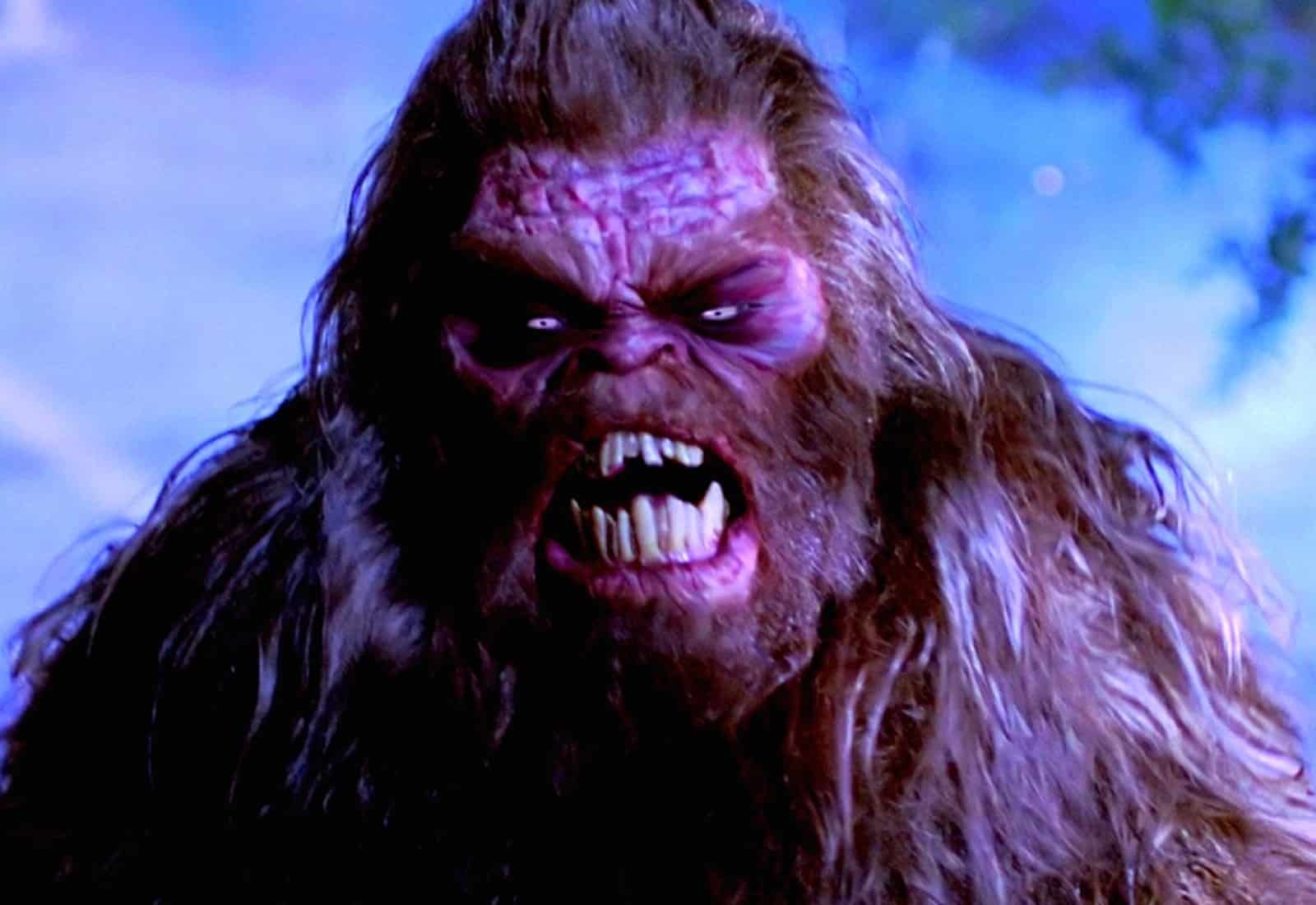
Abominable is a movie with a lot of buts. Its narrative is a welcome change from the generic plotting seen in most contemporary monster-in-the-woods flicks, but its choice of focus negates some of the terror. The featured creature is all done with man-in-a-suit FX that offer a refreshing break from the cheesy CGI that has taken over the low-budget creature-feature world, but the beast is too…odd-looking to be as scary as it could be. Lance Henriksen and Jeffrey Combs are very funny in their cameo appearances, but leave you wanting more of them. The movie has a killer conclusion, but it’s so good it makes one wish the idea it introduces had been explored in more depth in the rest of the film. And star Matt McCoy gives an earnest performance, but, dang it, his resemblance to Steve Carell just gets distracting at times. Thoughts of The 40-Year-Old Virgin shouldn’t be floating through your head when you’re supposed to be experiencing the horror of a 400-pound beast.
But…I shouldn’t make any more fun, because Abominable is a commendable stab (or, more appropriately, claw) at serious horror by debuting writer/director Ryan Schifrin, especially given the fact that his choice of creature has been the subject of so much cinematic hokum in the past. In fact, it can probably be said that this is the best serious fright film ever made about Bigfoot—one that, as noted above, eschews the tired old plotline of a group of scientists/students/hikers encountering the legendary man-monster and spending the rest of the movie running for their lives. This time, there’s a solo protagonist, and the creature comes to him; specifically, Preston Rogers (McCoy) arrives in a wheelchair at a secluded cabin near the mountain peak where he was crippled and his wife perished in a climbing accident (well…the place is called Suicide Rock). Returning to the scene of the tragedy in an attempt to overcome it, he soon finds he has much worse things to worry about.
And we’re not talking about Otis, his jerk of a home-care aide (played by Christien Tinsley, who also created the film’s monster FX and abundant gore), either. There’s a marauding Sasquatch—which has already decimated livestock and frightened Dee Wallace Stone in a prologue—on the loose, though Preston isn’t its next target. While he’s holed up in the cabin feeling sorry for himself, a bunch of hot young babes move into the house next door, and when one of them steps outside to make a cell phone call, Preston spots her being whisked off into the trees by the huge, hairy figure. Naturally, he can convince neither her friends nor the local law (including Paul Gleason doing his patented a-hole authority-figure shtick) about the lurking danger, and he’s left to do nothing but watch as the forest fiend sets its sights on the rest of the girls.
Yes, it’s Rear Window (which Schifrin has acknowledged as an influence) with a Bigfoot, and McCoy engenders a certain amount of sympathy while Schifrin creates decent tension as Preston helplessly witnesses the monster’s increasingly bloody attacks. (The expert night cinematography by the late Neal Fredericks is a considerable asset.) Problem is, this means that for a good portion of the movie, the real scary stuff is all seen at a distance, which dilutes the terror, especially since the young women are no brighter than usual in films like this. They ignore Preston’s warnings even after that first victim has been gone an unreasonably long time, and when another of them gets violently pulled through a window, with screams and shattering glass, no one else in the small house hears her because, of course, they’re listening to loud music. Up until the final act, in fact, Abominable’s highlight is an incongruous but highly entertaining sequence in which Henriksen, Combs and Rex Linn play hunters tracking the hulking killer. It’s no surprise that they wind up getting the tables turned on them, but it is a shame they couldn’t have had more screen time.
The Bigfoot itself, as constructed by Tinsley and performed by Mike Deak, has a real physical presence you’d never get with a digital character (certainly in a movie in this budget range), and its attacks pack a couple of good, gruesome jolts. There’s just something…I dunno…off about its facial features. They seem stunted and malformed, giving the monster the look of a slow learner, not a savage predator. Actually, there is a hint of an explanation why the creature looks the way it does in the final scene, which packs the biggest chill in the whole movie, and carries a number of intriguing suggestions that Schifrin might have done well to introduce and elaborate on earlier in the story.
Still, there’s an overall confidence to his direction that belies his first-timer status, and once Preston (along with a surviving girl played by Haley Joel) becomes the beast’s target, Schifrin stages a few effective small-scale action setpieces. He has also surrounded himself with a team of solid professionals; beyond Fredericks and Tinsley, he employed his veteran composer father Lalo to contribute an appropriately ’70s-esque score. So even if Abominable doesn’t entirely live up to its potential, Schifrin has, in at least some of the ways that count, managed to put his best (Big)foot forward.
