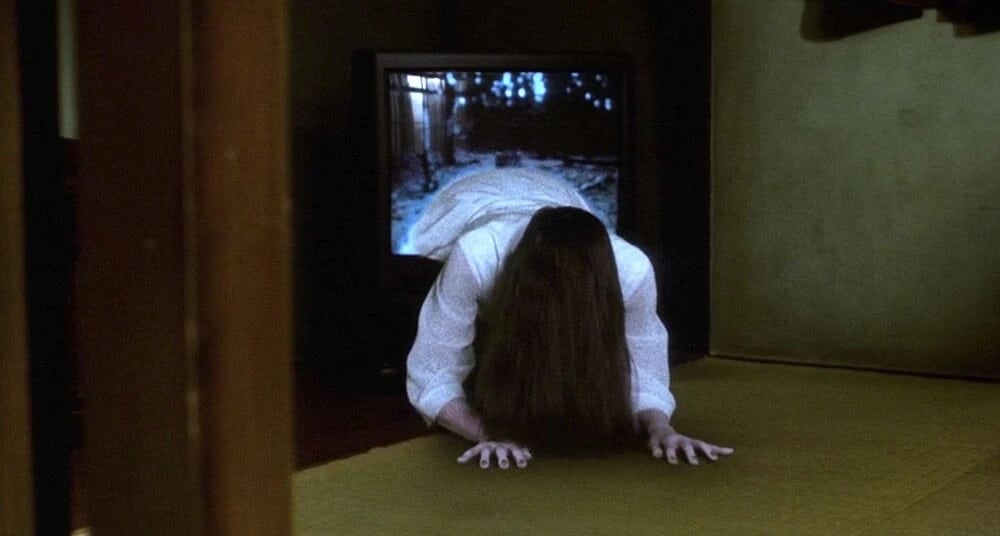
Ask any horror fan what country makes the scariest horror movies, and they’ll likely say Japan. Among the slasher reboots and “torture porn” surge of the late 90s and early 2000s, one subgenre from further afield crept into the minds and nightmares of horror fans, a subgenre that prioritized subtle scares and eschewed gore in favor of atmospheric ghost stories. Despite only lasting a few years, this genre – referred to as J-horror – changed the horror landscape forever and sparked a slew of American remakes – yet it remains one of the most misunderstood, understudied and underseen parts of horror’s vast ouvre.
The J-Horror Virus, a new documentary hitting Shudder from filmmaker Sarah Appleton and Japanese cinema scholar Jasper Sharp, is a comprehensive history lesson for all those who believe that J-horror started and ended with Hideo Nakata’s Ring or Takashi Shimizu’s Ju-On. Delving into the true beginnings of the genre, starting with films like Teruyoshi Ishii’s Psychic Vision Jaganrei (1988) and Norio Tsuruta’s Scary True Stories (1992) with the help of some of the genre’s biggest names, The J-Horror Virus is a must-see for anyone looking to expand their Japanese horror watchlist. Ahead of the November 4 Shudder release, we sat down with Appleton and Sharp to talk further about the documentary, and this terrifying cinematic movement as a whole.
What was the impetus for making this documentary? It’s clearly a topic you’re very both passionate about.
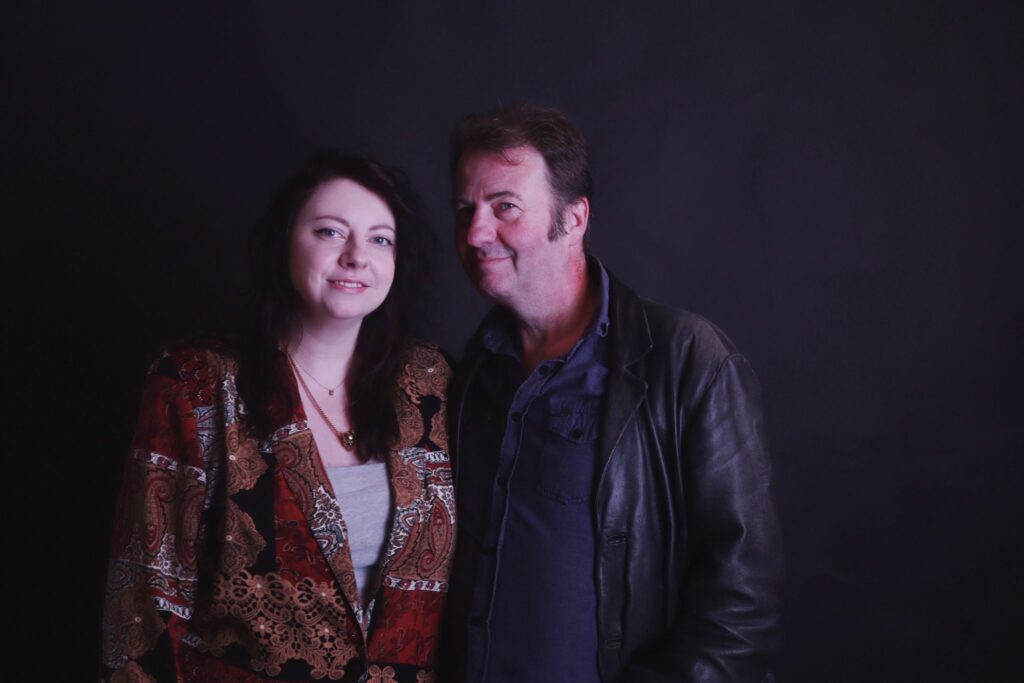
Sarah Appleton: For me personally I had just made The Found Footage Phenomenon and was thinking about what was next. I met Jasper prior to that film, and Jasper obviously has a long history with Japanese film and I felt like this documentary was a great chance to combine our skills. Personally, I’ve loved J-horror since I was a kid. My dad wrote a book about it when I was 10 (Denis Meikle’s The Ring Companion) so I watched a lot of the films that perhaps other people might not have watched at that point and was very aware of the genre.
Jasper Sharp: I’ve been writing about Japanese cinema for a long time, and you quickly realize there are so many different genres within the genre as a whole. I knew J-Horror was a genre that needed discussing because I felt that the full story hadn’t been told properly. When I started Midnight Eye with Tom Mes, we owed a lot of our success to this wave of J-horror – we started the site up at the same time as Ring and Battle Royale and when all those types of films were coming out.
Although these films were kind of the beginnings of the consciousness for Western audiences, there’s an entire backstory that hadn’t been told. It’s all about telling that story, getting back to the origins and using the abilities we have and the connections we’d made that other documentary makers might not have access to.
The J-Horror Virus details how there’s a lot of confusion and misconceptions around the term J-horror, with some people incorrectly using it to refer to any and all Japanese horror. How would you define the term more specifically?
SA: J-horror is a subgenre in itself, it just so happens to be labelled with a broader term. It’s a genre that started at the very end of the 80s and beginning of the 90s with a lot of recognisable tropes, and the noticeable factor is that its films all made by the same group of people who were all taking influence from each other. That’s why the films all have similar tropes – a young girl with long black hair, a white dress, the moody atmosphere, a lot of water.
Ring made such an impact overseas in a way that no other Japanese film really had before in the West, so you can understand where the term comes from, but J-horror is its own thing. It doesn’t include Godzilla for example, or a Japanese body horror like Tetsuo: The Iron Man.
JS: I remember when the term was coined on an English language Internet forum. Lots of films like Ring were coming out, and J-pop had just started to become more popular in the West, so the J- prefix was applied. But when we interviewed the filmmakers for The J-Horror Virus, a lot of them weren’t aware that they were operating in a genre. They didn’t know where the label came from, because it didn’t come from Japan. The producer of Ring, Takashige Ichise, later did the J-Horror Theater series after becoming aware there was a foreign market for this genre.
The J-Horror Virus has so many amazing interviewees from the genre – Kiyoshi Kurosawa, Takashi Shimizu, Shin’ya Tsukamoto – was there anyone who you didn’t manage to get who you would’ve loved to talk to?
SA: The obvious omission is Hideo Nakata. We obviously wanted to have him involved and Jasper did speak to him, they go back a long way (Nakata wrote the foreword to The Midnight Eye Guide to Japanese Film), but he doesn’t really like talking about Ring anymore. He doesn’t want to be one of those directors only remembered for one thing.
JS: But in many ways The J-Horror Virus reframes the narrative that Ring was the first J-horror film, and establishes that it was the product of what was already going on before it. Ring is missing, but it makes sense within the context. I lived in Japan and had been interviewing these people for years – I met Hiroshi Takahashi (writer of Don’t Look Up, Ring) about 15 years ago, and he was talking about Arthur Machen and Algernon Blackwood and about they influenced him. I realized that a lot of what the academics were saying about J-horror, that it was so uniquely Japanese and therefore somewhat inaccessible, wasn’t necessarily true. What these Japanese filmmakers do so well is take various sources and synthesize them into their own cultural context.
I’ve noticed a recent resurgence in interest in the J-horror genre. Arrow’s J-Horror Rising boxset [which Appleton and Sharp both worked on to produce], YouTubers doing deep dives on filmmakers like Kōji Shiraishi [who also features in the latest issue of FANGORIA] – why do you think it’s seeing a renaissance among horror fans?
SA: A lot of it is nostalgia. Because we’re 25 years on from Ring, we’re feeling nostalgic and looking back on a time and rediscovering it.
JS: Anything from Japan is very exotic to Western viewers. And you’ve got to remember, before Ring, before the launch of labels like Tartan Asia, no subtitled horrors really ever got widely released in the UK. It changed the landscape – these very female-centric narrative, very few jumpscares… nothing like that had really been seen before. There’s also those themes of fear of technology, people feeling more apprehensive about social media and those kind of things.
SA: However, I feel strongly that a lot of the J-horror films aren’t actually afraid of technology. I think we take away those readings from the films but I don’t think Japan is necessarily afraid of technology. Japan is a very spiritual country, and many people there believe in ghosts, but aren’t always scared of them. They just believe they are there, and present, but not necessarily a threat.
As Westerners, we tend to find these stories scarier because our attitudes towards ghosts are so different. A lot of the directors, like Kiyoshi Kurosawa, don’t really understand why these films did become so popular outside of Japan – because they’re terrifying to us in ways they maybe aren’t at home.
Do you think J-horror played a big part in influencing Western horrors that came after it?
SA: Absolutely. Noticeably, both Smile and It Follows conjure up lot of those J-horror themes and feelings.
JS: I thought The Ring remake did something really interesting by retaining the sort of police procedural element that’s in the original, which you still see quite a lot in modern Western horror.
What do you think the future holds for J-horror? Will there be a second wave of the genre, or do you think it is too era-specific?
JS: What The J-Horror Virus will show is that the genre was born out of a particular moment and a particular market. There are definitely a lot of great Japanese horror films out there now, but because they’re operating in a very different climate, whether they can bond together to create another movement remains to be seen.
SA: We saw Hideo Nakata’s The Forbidden Play in Japan last year and that felt like a return almost to those J-horror tropes, but with a modern twist. Nakata told us that The Forbidden Play wasn’t doing well in Japan – Japanese audiences don’t seem particularly interested in that type of horror anymore.
What would you love viewers – either veterans to the genre or total newbies – to take away from The J-Horror Virus (aside from a gigantic new watchlist, of course!)
JS: I’d like people to discuss these films not just in terms of their Japanese-ness, but also their importance as a group of filmmakers bouncing ideas off one another, and the creativity that they had to create a new movement with the budgets they had.
SA: I’d love more people to see Psychic Vision Jaganrei. It’s a culmination of the beginnings of both found footage and J-horror.
Final question – who’s scarier, Ring‘s Sadako or Ju-On‘s Kayako?
SA: Sadako, 100%. The idea that her very presence could make you die of a heart attack. I used to have nightmares about her as a kid.
JS: Yeah, Sadako. The way she crawls out of the TV screen is terrifying. But if you don’t go anywhere near Kayako’s house, she can’t hurt you.
The J-Horror Virus hits Shudder on November 4.