
Last Updated on January 23, 2025 by Angel Melanson
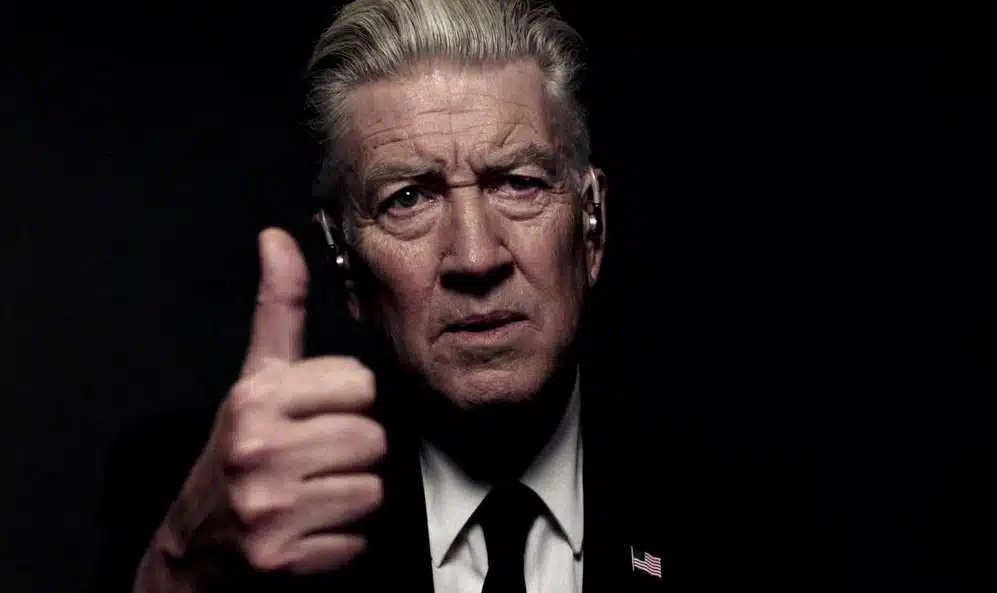
If you spend enough time among movie nerds and film enthusiasts, inevitably, you'll encounter someone who is really into David Lynch. I should know, I very much was…and am…that person.
In a landscape dominated by the mainstream offerings pushed forward by local multiplexes and rental stores, for many of us, the discovery of Lynch's work fundamentally rewired our understanding of what cinema, and art in general, could be.
Out of the gate, David Lynch did not seek to fall in line. His first feature film, Eraserhead, became one of the tentpole contributors to a burgeoning midnight movie scene. But even as it changed the cultural landscape, it was an outlier. With an otherworldly baby and an intensely coifed, neurotic lead, the film was confrontational and unwilling to explain itself. It frustrated cinematic traditionalists and enamored those with a taste for the subversive. Even if it kept them up at night.

Lynch was rarely, if ever, concerned with meeting the viewer with simplicity. Instead, like the painter he was, he'd offer up creations that were not afraid to confuse or confound on their first, second, or even tenth viewing. Yet, for their seeming inaccessibility, there was something just familiar enough about the mysteries Lynch wove that caught audiences in their thrall.
Like all good artists, Lynch made his work seem personal for both himself and his viewer, offering up puzzles that the devoted would obsess over…and how could they not? Because, in so many ways, those puzzles were us.

Interestingly enough, David Lynch has long had a dedicated following among horror fans, while never exactly being affixed with the label of “horror filmmaker.” However, I view this as less of an eschewing of genre, but rather as a tacit understanding that Lynch was a genre unto himself. Indeed, his impact was so singular that his particular style became a cultural descriptor for other artists.
How often have you seen someone explain away a bit of surrealism or complexity in a film as “Lynchian”? The man's style became so synonymous with the abstract that his very name evolved into a shorthand descriptor – even if those films that followed didn't always reflect the tenets of his work.
Indeed, what always set Lynch's use of surrealism apart from others is the fact that he never seemed terribly enamored by the weirdness, but rather by the truth encapsulated within. It is in that respect that Lynch's work most definitely explored horror, albeit not monsters per se, but the monstrosity of the human condition.
Lynch was fascinated with reality and our tenuous grasp on it. Blue Velvet, for example, deconstructed the ideals of picket fence Americana, while films like Mulholland Drive and Lost Highway explore the notion that while you can be the architect of your own reality, it doesn't mean you haven't built a nightmare.
In many respects, David Lynch's work was about healing — the ways in which we do it right, and the very many ways in which we don't.
Over the decades, we have seen David Lynch explore these themes via Laura Palmer, the centerpiece of his magnum opus, Twin Peaks.
When audiences first met Laura Palmer in 1990, she was already a body, the dead teen queen who we would only know as a victim. And while Lynch would reveal bits of Laura's life posthumously, it always seemed to be to her detriment. This was a girl with secrets who did bad things with bad people. It made the mystery rich, salacious, and tawdry.
Except Laura Palmer was always so much more, and David Lynch knew that.

When Lynch returned to the show's universe that he co-created with Mark Frost for the 1992 feature film Twin Peaks: Fire Walk With Me, he gave us a glimpse of a very much alive Laura Palmer. This was a girl who was conflicted, abused, and pushed into darkness by her trauma. She was not easily explained away as a “body” or the mechanism for a TV mystery. David Lynch made the audience confront their preconceived notions and what it means to truly lose one's self.
Fire Walk With Me had a firm and definitive axe to grind: Nobody is just a body.
This is why, when Lynch and Frost brought Twin Peaks back in 2017 for The Return, the series' subsequent redemption of Laura Palmer provided a resolution many of us didn't even know we needed. At last, the girl who had to walk through the darkness by way of the constructed realities of so many others got to be free.
Ultimately, for me, that's the greatest strength of David Lynch's work: The ongoing exploration of the idea that the darkness we cultivate inside can often eclipse the darkness beyond and that we must find a way back to ourselves, even if that journey is strange, unusual, and unique. Indeed, in a world of artifice where everyone tells us what reality is supposed to be, sometimes it's the weirdness that's the most true…and maybe there's peace to be found in transgression.
As for peace, David Lynch was famously a practitioner and endorser of transcendental meditation, often speaking of the study as an ongoing process. While it may seem odd to the layperson that the creator of such abstract, dark materials would be so devoted to serenity, it stands to reason that it's all part of the process. From the Elephant Man to Laura Palmer to Mulholland Drive's Betty/Diane and beyond, we're all just trying to unravel the puzzle of ourselves and figure out our place.
As one of Lynch's movies famously states: “The whole world's wild at heart and weird on top.” No one said it was going to be easy. But thankfully, we got to live in a time when an artist like David Lynch made it clear that it doesn't have to be.

As of the time of this writing, the news of David Lynch's passing is only hours old. And, as a once and always obsessive of his work, I feel a profound sadness.
For so many who grew up feeling like David Lynch was “their” filmmaker, this loss is incalculable. For a generation of emerging artists who now have to live without him, perhaps even more so. But, like all great creators, we may have lost the man, but what he's given us will live on.
So, while we may have our cherry pie and damn fine cup of coffee today in mourning, he will be in our dreams always. As for how that dream manifests, that's up to you. David Lynch wouldn't want you to explain yourself to anyone. Just go out…and be.
Thank you, dear maestro. Forever and always.
