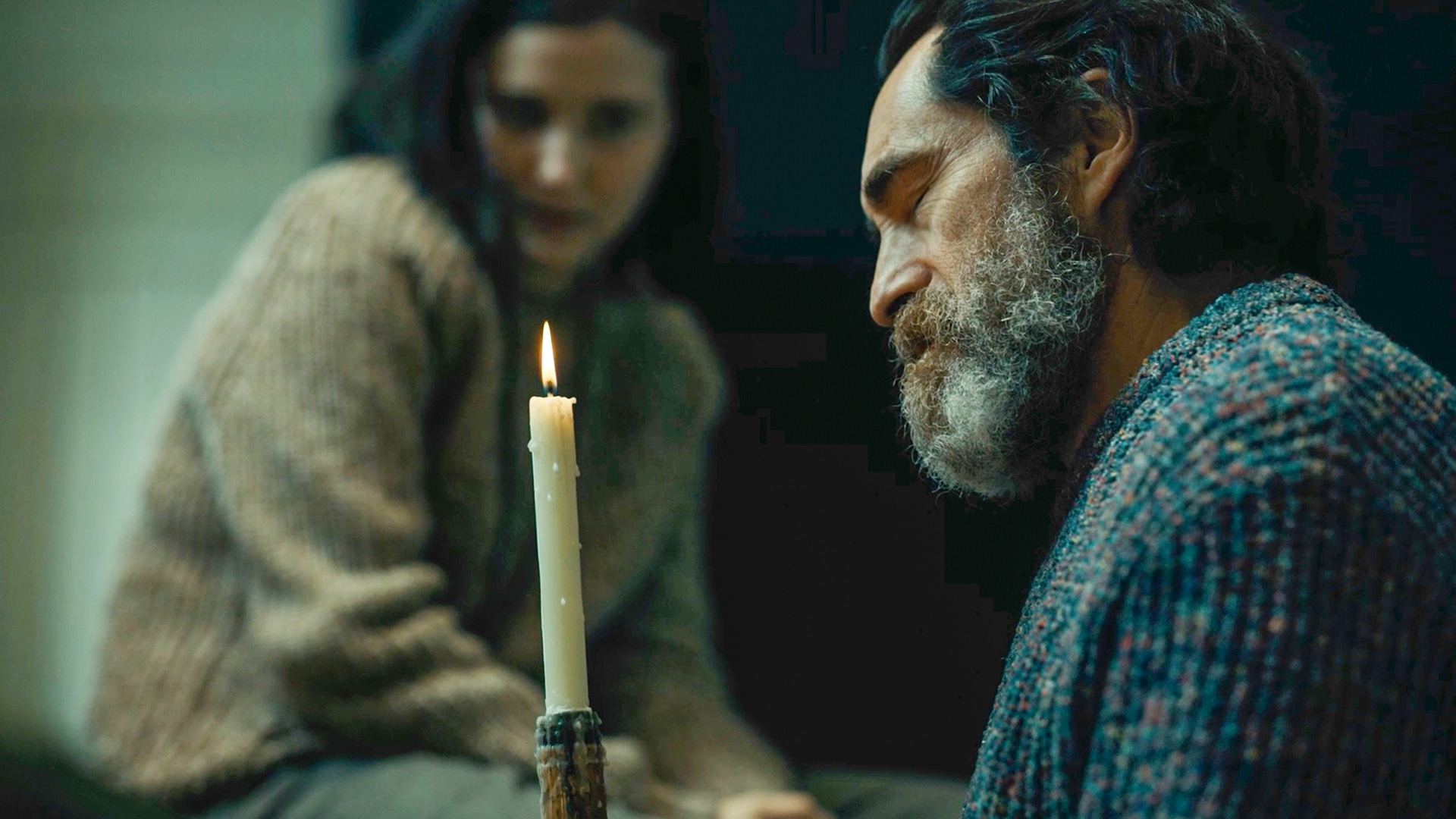
Isolation, paranoia and mythological sea monsters (real or imagined) are just some of the terrors faced by Emily (Julia Goldani Telles) when her boat shipwrecks on a remote island at the bottom of the world.
The marooned woman then meets the helpful but enigmatic Ismael (The Nun’s Demián Bichir), the island’s sole resident and loyal lighthouse keeper. Emily becomes increasingly distrustful of Ismael as her stay keeps getting prolonged, and Ismael’s strange behavior raises red flags…
Taiwanese-American director Roxy Shih, who has helmed episodes of the cable series Dark/Web and the Eli Roth-produced The Haunted Museum, has been itching for a feature film like Beacon for some time. When Julio Rojas’ screenplay came to her, Shih jumped at the chance to explore its psychological layers and shifting perspectives.
Beacon made its world premiere at June’s Tribeca Film Festival and next plays LA’s Screamfest (October 8-17). In this exclusive interview, the award-winning director recounts Beacon’s stormy production.
What attracted you to Beacon?
Beacon was brought to me by this amazing producer, Neil Elman. We’ve been following each other for the past six or seven years, and he wanted to find the right project for us to collaborate on. Originally, the project was called Atlas. He thought of me for it, and I am so grateful because I had been yearning for something like this. I love pressure-cooker [scenarios]. Contained environments, small cast, small ensemble pieces, because these environments are really what allow me as a filmmaker to explore the nuances of humanity and the paradoxical nature of characters.

I don’t believe there’s truly anyone who is good or evil. We’re all really complex beings, and I love the challenge of a two-hander piece. With strong actors like Julia and Demián, it was literally the best sandbox for me to work in. A lot of people have already said that when they watched Beacon, it reminded them of The Lighthouse and 10 Cloverfield Lane, my two references. To be able to have a piece like this as a filmmaker, is a real privilege. That’s what drew me.
Beacon already had a green light when you came on board?
Yes. But financing didn’t really come in until Demián and I got attached. It’s a psycho-thriller with a little bit of a paranormal seasoning on it. It’s so interesting and engaging to have that immediately. It wasn’t hard to be green-lit because it had those elements.
They had a few versions of the first draft when I came on. Originally it was written in Spanish because the writer, Julio Rojas, is Chilean. We did further development making sure that we had all the appropriate time to mold the story, really give it shape and be the best possible version that it could be before we went into shooting. There wasn’t much time between the green light and shooting, it was like two months.
Was there ever any pressure from financiers to emphasize a more horrific genre element, the kind of movie that production company MarVista usually makes?
I got really lucky with this movie because [producers at] Tideline and Particular Crowd were really supportive of my vision. For me, it was always about toeing the line of what is reality and what is not. It is a very nuanced approach because with horror, sometimes, you can push it, and sometimes you have to toe the line of whether it’s psychosomatic, whether it’s something that is within the character’s head, what is reality, what is not, and blurring those lines.
Sometimes you really have to leave it to the audience instead of being the one who rams it in. Tideline has been truly wonderful, they’re the branch of Fox that really supports female creators, and they are also in the genre space. I’ve made a few films for MarVista in the past. One of them was the drama List of a Lifetime, which got a Critics Choice nomination, so they knew my work. I also did a few thrillers for them. We cultivated that relationship, and I’m lucky that they trusted me so fully with this one. I’m so grateful for it, and it’s something that I will never forget.
Julio Rojas’ screenplay always took that understated approach?
Yes. Because with this story and the way it’s written, so much depends on your perspective. A lot of the project is whether Ismael is a villain or a savior, depending on how Emily is feeling. That creates reality. There’s no one else to give context to this person at all. You have to either take what they say as truth or don’t. The two characters are constantly questioning each other. That’s what really appealed to me, how it parallels our modern society and social media: who’s right and who’s wrong. Going through the pandemic gave me a lot of ammunition to explore it in that way, but in a very microcosm-type of space.
Lighthouses have been a staple of horror films from The Monster of Piedras Blancas to Cold Skin to The Lighthouse. What makes them great locations for a genre film like Beacon?
You always have the threat of the ocean just feet away, you are always subject to the whims of Mother Nature. The lighthouse is manmade, so there’s always a thought of Mother Nature destroying the small beacon of manmade light, which allows for the siren metaphor to really come through.
The isolation is also such a powerful aspect. When we’re alone for a long time, how we think and view ourselves starts to change. Ismael has been alone at this lighthouse for quite a while now, and he sees himself as the center of this world. He sees himself as Atlas, the man who’s protecting mankind with his beacon of light. In a way, it’s man versus nature. That makes it such a great world for exploring.
Was Demián Bichir your first choice as Ismael?
Yes. Isn’t he the first choice for everybody? He should be. He’s phenomenal. It was such a pleasure and an honor to work with him. And Julia is amazing. I just got so lucky with my two actors. My euphoria was whenever I got to say “rolling” and “cut,” because they just took such ownership over their characters. It was clear they loved the script so much, and as a director, that’s the best you can ask for, to have two actors as invested as you are.
Was it tough to land Demián for the lead? He’s an actor who usually works on big Hollywood movies and not small films.
Demián has worked on all these big things, but at his heart, he is a true artist. He will go to a project that really speaks to him, and he’s deeply collaborative. There were obviously nerves when I was about to meet him because he is an actor of such high caliber, but after talking to him, I felt so much more at ease. You just see someone who’s in his heart, through and through, an artist who wants to create, work, and champion filmmakers. That is a rare thing to find.
He brings so much to the table, as did Julia, and a lot of my collaborators on this. We really went above and beyond. For any filmmaker who feels scared or intimidated, it just takes a conversation to gauge where they are with him. He’s so easy to talk to and so wonderful to work with.
And his presence ultimately helped get the film financed?
That’s usually what it is, right? [laughs] You have to secure an attachment. And then the studios will say, “Yeah, OK, this is real. Let’s go.” I don’t know how any of it works. I’m just here directing a movie, and I cross my fingers, hoping that we can get it made as every filmmaker hopes to do.
What did Demián bring to the table as an executive producer?
From the development stage, he and his consulting producer, Jorge Sigler, who I love, really helped shape the script into what it is on screen. We were in late-stage development when we attached him. I did a few more rewrites just to really give it this chess-based dynamic of what the film ultimately is. In the original versions it was more clear-cut on who the protagonists and antagonists were. With his input as the executive producer, he had a say in making creative decisions and ensuring we were all aligned on where the project and story ultimately went. It was very, very useful and very, very helpful.
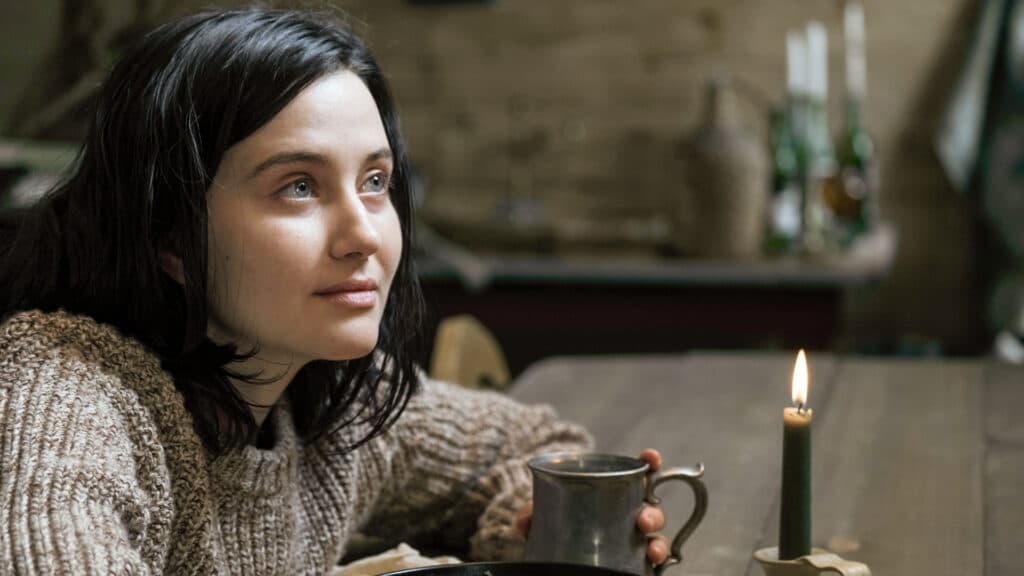
What led you to cast Julia Goldani Telles?
My casting director showed me her work and her portfolio, and there’s just a magic and energy and aura around her that I was immediately captivated by. When I spoke to her for the first time, she revealed to me parts of Emily that I never even thought about. As a director, I always think, “Yeah, I know these characters,” but you know an actor is special when they dive into it and give you all these nuances and all these other dimensions that you never thought about.
At the end of the day, people are talented, don’t get me wrong, but what are you bringing to the table that could add layers or help elevate something? If it’s something that I never thought of, that’s always a plus. Julia’s very physical too, and she always has these incredible choices that she makes, even with blocking. Both of them are so fearless in pushing those choices. It gives each scene a sense of dynamism that I never would’ve thought of. To see her and Demián work together was electrifying.
Did you rehearse a lot with the two actors, or did you just dive in?
[Laughs] We had no time. The prep schedule was so tight. Then a weird storm prevented them from entering the island a few days before production. We didn’t have any time to do wardrobe or camera tests. They basically came to the island, and we went straight into shooting a few hours later. It was so insane. The experience was really meta. It was like life imitates art. We were literally living the experience of Emily and Ismael on Newfoundland.
We basically had a few Zooms because they were stuck in Nova Scotia, so we were able to talk about the characters and talk through a certain number of scenes. As a director, I can tell a lot about actors by having a conversation with them. Knowing how they want to take the character helps inform me on how to tell the story. I’m a director who gives a lot of ownership to my actors because they’re the writers of the scene, not me. They’re the ones reading it. And so I respect them a lot. I respect Julia and Demián so, so, so, so much.
What was the biggest challenge shooting in Newfoundland?
Oh, my God. Where do you want me to start? [laughs] Well, you experience four seasons in a day, so that was wild. We were experiencing 60 to 80 mile-per-hour winds, so we were shut down a few days because of dangerous weather. We were shooting literally on the coast of the North Atlantic, so we could see those Titanic icebergs in the background. Two weeks after we wrapped, the Titanic submersible thing happened right where we were.
It’s a beautifully haunted place. We shot the movie in about 15 days, so it really tested me as a filmmaker. I also feel that a form of magic happens when you’re tested. It was negative degrees below freezing. The vapors from the North Atlantic felt like icicles and needles on my skin. We were in dangerous terrain. We were hiking 35 flights a day. It was really physically demanding, I was sick the whole time. Yeah, it was really fun [laughs]. We survived Beacon [laughs].
How much of it was the actual location versus sets?
We tried to shoot on location as much as possible because of the grand scope of the lighthouse and the island, which was a historical landmark. I’m the type of filmmaker who wants to be as practical as possible, just to really give it a sense of realism and authenticity. Such an immersive experience of a production brings a certain type of magic to shooting.
We did build a few sets for safety issues. For example, at the very top of the lighthouse, we had a couple of stunt scenes that were too dangerous for us to shoot at the top of an actual lighthouse. It gets so windy up there, you can’t hear anything. So, we had to build that. We built a few other small locations, like Ismael’s bunker, because of a dangerous liability. It’s only when we literally could not shoot at those locations that we had to build them. Credit goes to my amazing production designer, Justin Reu, who I’ve worked with a few times on TV shows in Toronto. He is amazing and does not get enough credit.
Do you think sirens are an underserved monster in horror films?
Absolutely. They’re kind of like the Medusa. They’re such feminine characters, and they embody so much female rage. I feel that they are a monster not explored with enough compassion or nuance. In a way, even Beacon doesn’t really go that far in that territory, because it was more of the seasoning on top of the steak rather than the steak itself. The steak itself is really about Emily and Ismael. But I would love to do a monster movie that dives more deeply into who the sirens are, and from a female perspective too, because so many siren films are made by men.
As part of the new wave of women directing horror films, it must be exciting to see that glass ceiling totally shattered now.
More, please. Let’s shatter it more: more queers, more BIPOC [Black, Indigenous and People of Color], more Asian, more all that. We really need to create more space at the table. The table doesn’t have a limited number of seats. Perspectives are everything, and lived experiences are everything. I’m a big believer in authentic authorship. I always feel that if you’re able to give the space to someone who could really give it an authentic representation, no matter what genre it is, that is the right thing to do.
What was the highlight of your Tribeca world premiere?
The whole thing just felt like a dream. I had never experienced anything quite like it before. The biggest highlight was seeing all of my friends and family coming out to support it, and also seeing the reception and how people felt after watching it. That is the greatest reward because at the end of the day, when your movie is out, it’s no longer yours. The most you can hope for is for it to feel significant to those who watched it. The most important thing is to celebrate something that we’ve all worked so hard to finish.
What are Beacon’s release plans? Did you nail a distributor after your Tribeca screening?
We don’t have one yet, but I’m hoping that somebody will watch it, or a lot of people will watch it, and fight for it. My dream is for it to have some sort of limited theatrical release because this movie is such an immersive experience; you really do need to live in the world of the movie. I know that things are changing with our streaming generation and how people are digesting and ingesting content or movies now. I’m a tried-and-true moviegoer cinephile, so I really do hope people get to experience Beacon in theaters.
What’s next for you?
I have a couple of projects in late development, which I’m excited about. But the market’s been slow because of the nature of our industry. I am crossing my fingers, and I’m teaching, which is also nice. Just living life in the present and cultivating community in the film community and other ways outside of just directing cinema.