Vibrant, powerful, and iconic, the mother figure is a key feature of the Hitchcockian landscape. Demanding to be seen, heard, and understood, it is impossible to imagine Alfred Hitchcock's movies without these looming matriarchs. Often associated with the home, they push against the male forces dominating their past and present. Always persisting (even in death), they oppose a patriarchal world that endangers their potency.
By turn, these women are presented as powerful, empathetic, and amusing, illuminating the screen with their magnetism and spark. Occupying some of the most unforgettable Hitchcockian scenes, this list is a celebration of our enduring love for the mightiness of the Hitchcock mother.
-
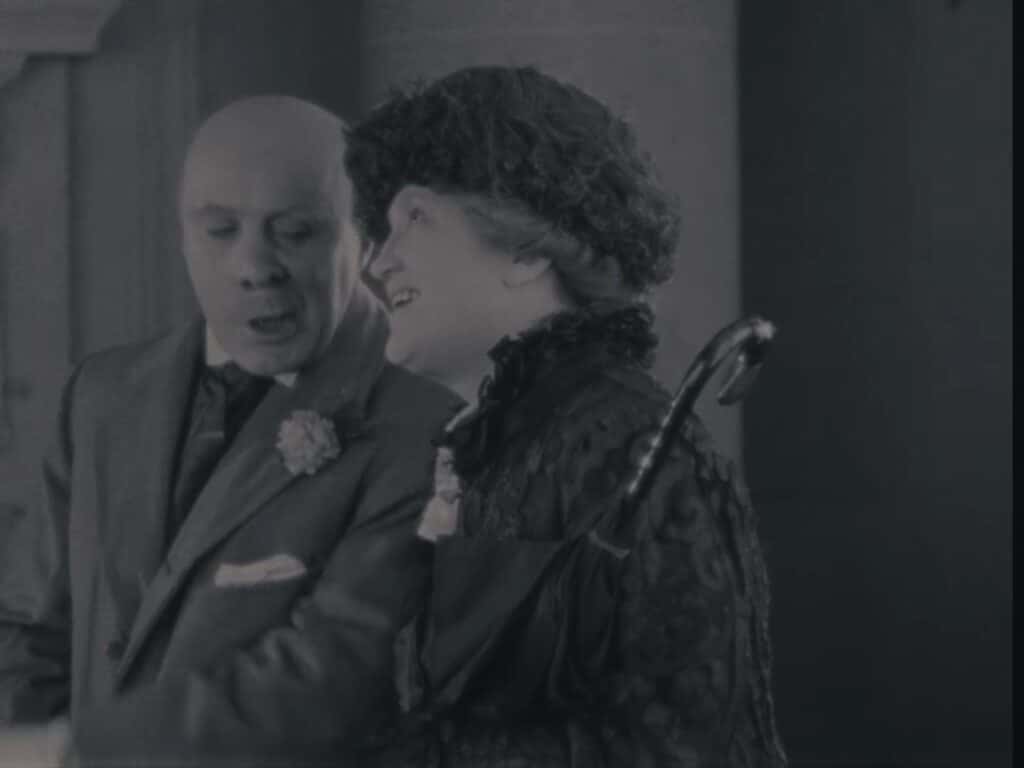
Mrs. Bunting - The Lodger: A Story of the London Fog (1927)

The Lodger, which the director described as “the first true Hitchcock movie,” is the story of a serial killer on the loose in the streets of London. The action revolves around the Bunting family and their boarding house, of which Mrs. Bunting (Marie Ault) presides as mother, wife, and landlady. Hitchcock's choice to show so much from Mrs. Bunting's perspective places us concretely in her point of view.
Ever cautious and on guard, protecting herself from the threat of male violence, Mrs. Bunting's investigatory nature reflects the experience of living as a woman. Sympathetic and relatable, we suspect with and fear for her.
While the breaking news of the Avenger murders is written and broadcast by men, Hitchcock invites and aligns his audience with Mrs. Bunting. The Lodger is an early demonstration of how instrumental the mother figure would come to be in Hitchcock's storytelling.
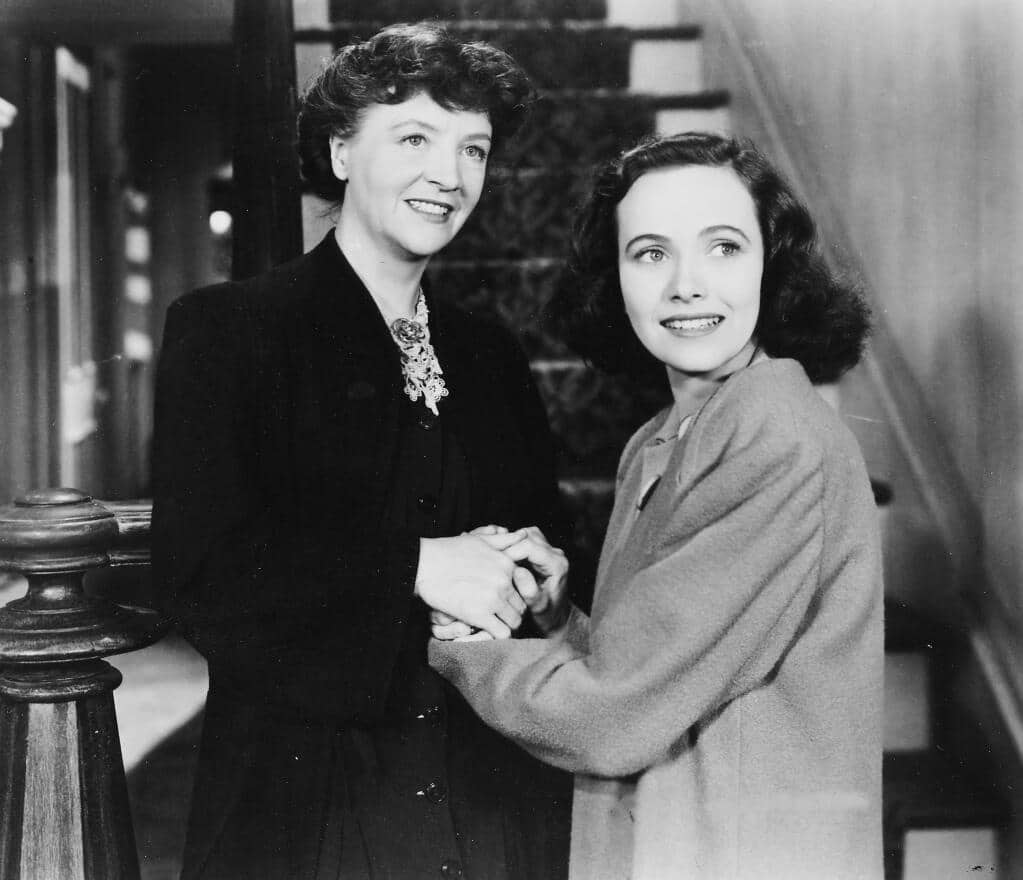
Emma Newton - Shadow of a Doubt (1943)

In one of the director's most poignantly human explorations of motherhood, Emma Newton (Patricia Collinge) in Shadow of a Doubt is a woman who, after losing her identity, briefly and beautifully regains it, only to lose it again. Although a maternal presence in the “All-American Family,” she is, as her daughter Charlie remarks, “not just a mother,” an observation that crucially can only be seen and felt by another female. Emma's desire and struggle to reclaim a self consumed by domesticity and gender hierarchies is depicted with a truthfulness that offers little promise of resolve.
Her connection to young Charlie never becomes more powerful and united than when they take a collective stance against Uncle Charlie's “foul sty” speech. Delivered over dinner, this oration encapsulates his indifference towards the patriarchal violence exercised against women. A warm and tender presence, Emma Newton is evidence that the mothers of Alfred Hitchcock's movies are not exclusively monstrous or possessive.
Her stirring moment of realization: “You sort of forget you're you when you're your husband's wife,” is a lament for a former self and a rumination on the theme of female identity.
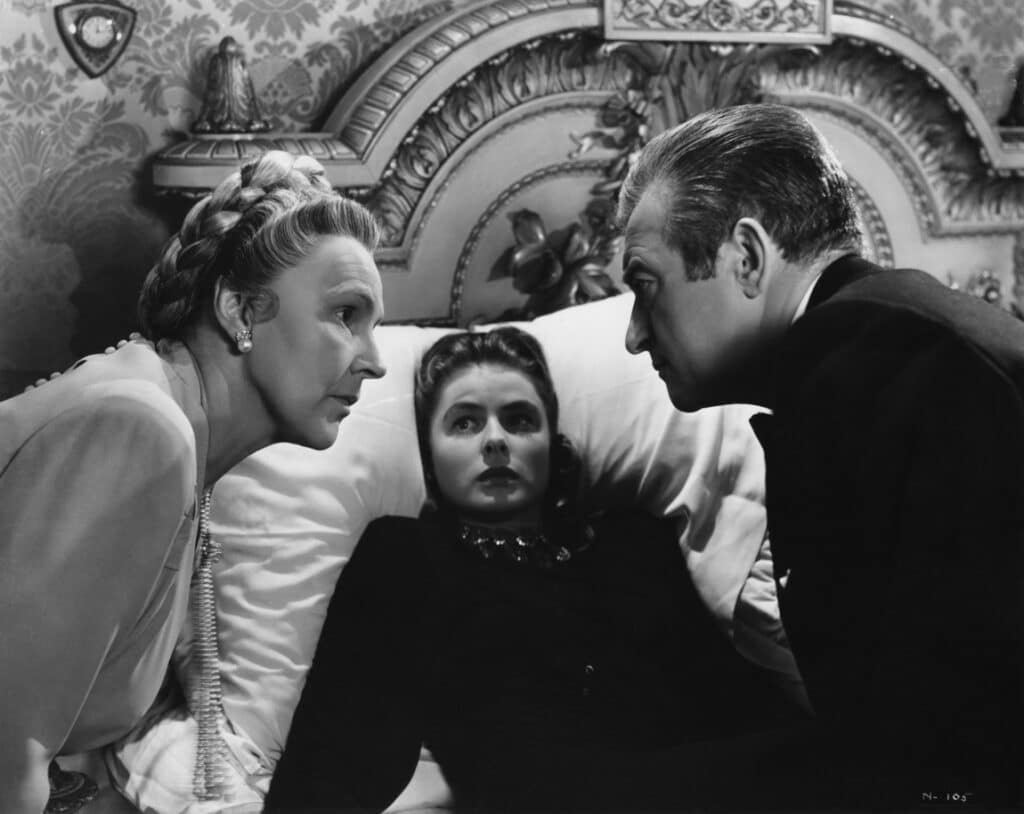
Madame Anna Sebastien - Notorious (1946)

Gliding down a grand staircase, Madame Anna Sebastien (Leopoldine Konstantin) makes an immediate impact in her striking entrance of Notorious. The quiet and deadly embodiment of commanding matriarchy, in marked contrast to her son Alex's lack of self-assurance and action, is a dominating force.
As in many instances of the Hitchcock mother, there is a male void, an absence of a father/husband, which Anna fills with coolness and confidence. In Hitchcock's noirish spy thriller, the clock is ticking, moves need to be made quickly, and she has both the intelligence and resolve to play in the wider -and distinctly male arena of power.
Although she places the interests of her son's survival above political loyalty, in being allied to the fascist organization that meets and dines in her home, this makes it impossible to empathize with her.
Present and assertive right until the film's end, Madame Anna's screen time in Notorious might be limited, but she makes a long-lasting impression that burns bright amongst the congregation of Hitchcock mothers.
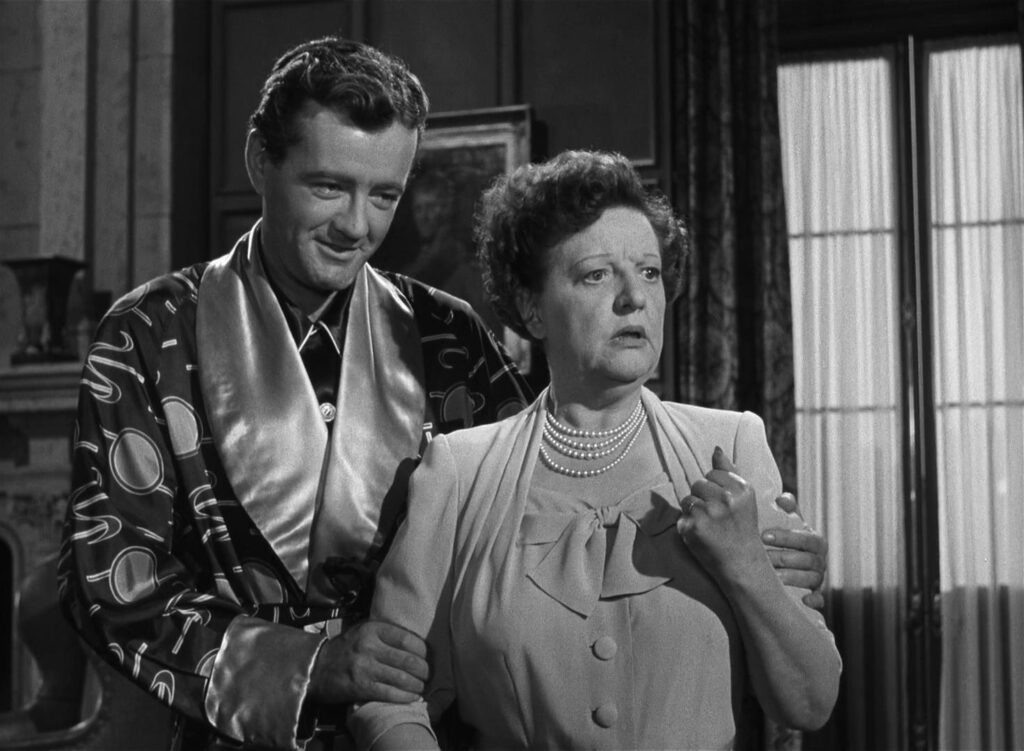
Mrs. Anthony - Strangers on a Train (1951)

A clear foreshadowing of Norma Bates in Psycho, Mrs. Anthony (Marion Lorne) is one of the less remembered Hitchcock mothers. At first, we may assume her to be somewhat giddy and idiotic, shrugging off her son Bruno's psychopathic behavior with indifference and amusement. However, as her first scene with Bruno unravels, so too does our questioning of her mental well-being.
Her language and gestures towards him point to an infantilization of her son. She describes his activities as “scrapes,” “escapades,” and “practical jokes.” She is obviously frozen in the past, still viewing him as a child. She also tends to Bruno as a mother would to a young boy, filing his nails while calling him “naughty.”
Hitchcock gives us the most honest and revealing insight into Mrs. Anthony in her pastime of painting, which she repeatedly says she does because it “soothes” her. Through art, she finds a fullness of expression that she cannot release elsewhere. Her unconscious thoughts come to life on canvas and as her latest artwork (an abstract face amidst chaotic swirls of darkness) suggests, she is a woman battling disorder and disarray.
Jo McKenna - The Man Who Knew Too Much (1956)

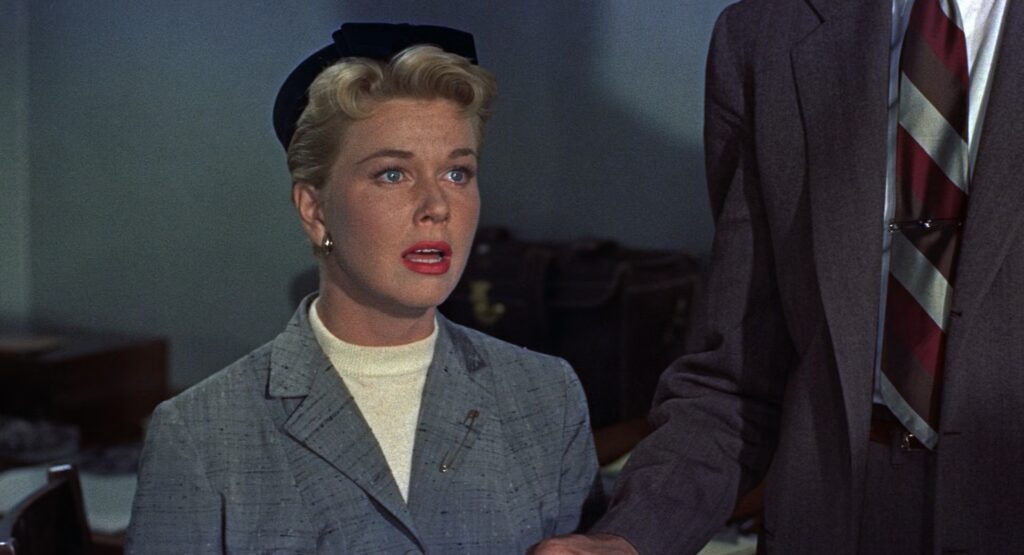
Jo McKenna's (Doris Day) life is turned upside down on holiday in Marrakech when her husband Ben learns of an assassination resulting in the kidnapping of their son. She is also contending with deeper-rooted, long-term struggles, having put her successful singing career on hold for Ben, a man clearly threatened by her ability to overshadow him. Like Emma Newton in Shadow of a Doubt, Jo's voice is minimized, resulting in her losing touch with herself in sacrifice of others.
In what is surely one of the most disturbingly overlooked scenes in all of Hitchcock, Jo is sedated by her husband as he seeks to control not just what she knows but how able she is to respond. When Jo returns to London, a performance space and a hotel room filled with friends marks a return to herself.
At the Royal Albert Hall, she lets out a scream designed not just to alert those assembled about the assassination, nor is it simply a mother's cry for her child. Most critically, it is a call in recognition of herself, an expression of reconnection. Whole-hearted and determined, using music and song to bring her family back together, Jo McKenna represents one of the director's most remarkable and optimistic mother figures.
Clara Thornhill - North by Northwest (1959)

Even before we meet her, Clara (Jessie Royce Landis) is highly featured in the first ten minutes of Hitchcock's wrong man epic. Her son Roger O Thornhill asks his secretary not once, but twice to call his mother, remarking how she need not: “sniff his breath like a bloodhound.” This comparison to an animal bred for hunting is telling; mother is predatory.
Roger's anxiety to contact his mother increases, and although he finally manages to reach her, this is only after his arrest. Upon finding himself in trouble, mother is the first person he calls. Notably, this dependency is not reciprocal as Clara has long since stopped defining herself as “Mother.” Dressed to the nines, she has plans that don't involve him. In court, she sits in support of her son but also scoffs at the notion of him as a “reasonable man.”
During her (too short) screen time, Clara becomes an accomplice in Roger's adventures— a return to the Townsend House, a scheme to access Kaplan's hotel room, and a tense elevator moment. Inches away from the threatening men pursuing her son, she asks if they plan to kill him. Joining in their laughter, she will never discover the answer to her question as we see her for the last time, calling out the amusingly Hitchcockian line: “Roger, will you be home for dinner…?”
Norma Bates - Psycho (1960)
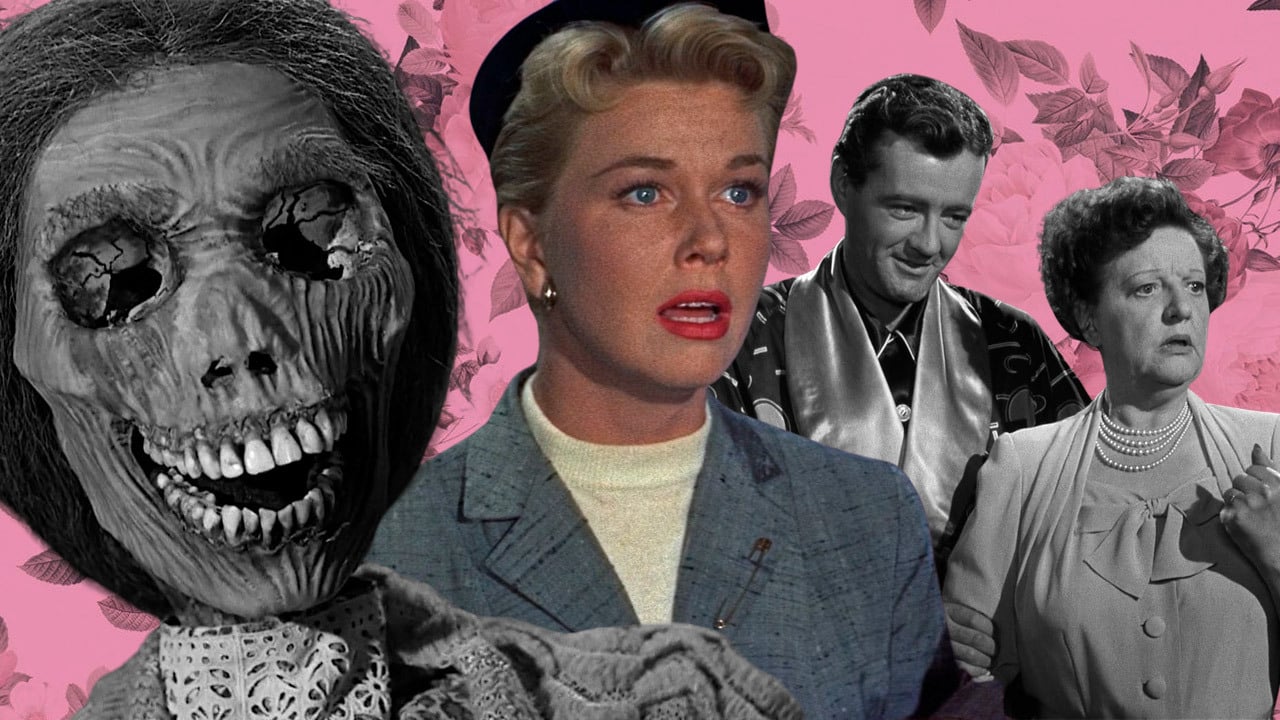
The mother who towers irrefutably over the Hitchcock canon, Norma Bates of Psycho, is the original monstrous feminine. But how far is she, as Professor Tania Modleski points out, “That much maligned woman?” Absent but pervasive, her presence is consumptive, from the muddy swamp where Norman tries to conceal evidence of murder to the shrine-like bedroom preserved in the gothic family home.
The female force in Psycho revolts against its male counterpart and we hear how Norman was: “Never all Norman but was often only mother.” However, the power displayed in women equals male annihilation. Norma represents fear because she is a powerful female. She symbolizes a threatening prospect in a world governed by male authority.
Ultimately, the female figure carries the responsibility for all human sin, like the Biblical Eve-Norma wears the blame. However, while Hitchcock's most famous mother might be dead, she is (like the eponymous character of Hitchcock's 1940's Rebecca) far from gone. Everywhere we look, she is fighting to be seen. The sheets of her bed still bear her outline, and her preserved, skeletal body ensures it is found with a rip-roaring scream.
Like Marion's car lifted out of the swamp at the film's end, Norma refuses to be intimidated or silenced. Instead, she invokes Robin Wood's groundbreaking theory, “What is repressed must always struggle to return.”
Bernice Edgar - Marnie (1964)

Although Marnie's poster and promotional campaigns advertise it as a “suspenseful sex mystery,” the film revolves around the complex and deep-buried emotional trauma of Marnie and her mother, Bernice (played extraordinarily as a young and older woman by Louise Latham). Bernice has a genuine love for her daughter but this conflicts with the shadow of the unspoken.
Their interactions, shown as a series of lengthy partings and brief reunions, symbolize a desire and an inability to bond. Replaying her time as a mother with a child substitute (Jessie) in a way that is simultaneously tender and painful, Bernice seeks to assimilate the relationship she did not have with her daughter.
Unlocking the secret that connects and puts a chasm between Bernice and Marnie offers a degree of catharsis but no resolution. Although the women have a clearer understanding of one another by the film's end, an emptiness remains. Despite the outing of the truth, the uncovering of the secret that has kept this Hitchcock mother and her daughter apart arrives tragically too late.
Mrs. Rusk - Frenzy (1972)

Frenzy marks Hitchcock's return to London for the first time since 1950's Stage Fright. Near the end of his career, the director's penultimate film marks both a return and a farewell on Hitchcock's part. Having established the presence of the Hitchcock mother throughout his work, in Mrs. Rusk (Rita Webb), all we are given is a fleeting cameo.
Speechless and blindly unaware of her son's psychopathy, Mrs. Rusk is a far cry from many Hitchcock mothers past. Instead, she becomes little more than a symbol. For Bob Rusk, being a good “mother's boy” is associated with respectability, but this is precisely what the director seeks to corrupt.
In a detail that seeks to connect the lineage of Hitchcock mothers, we hear Rusk remark how he keeps a photograph of Mrs. Rusk in pride of place on the mantelpiece. This echoes Marion Crane's mother's picture, which she mentions in the opening scene of Psycho. While this points to notions of a muted matriarch, it also suggests an indisputable permanency. Like Mrs. Rusk's photograph, the mother figures of Hitchcock remain a fixed and irrefutable presence.
In the mood for more Mother's Day horror? Check out our list of 15 Murderous Mothers in horror movies.