

Last Updated on August 15, 2024 by Angel Melanson
Good satire is evergreen. Nearly 40 years after its release, director Jim Wynorski and co-writer Steve Mitchell's thoroughly '80s killer robot movie Chopping Mall takes on a newly urgent and poignant meaning about the dangers of AI and the importance of human creativity in the face of capitalist destruction.
The late Roger Corman gave Wynorski his start in Hollywood, and Roger's wife, Julie Corman, produced Chopping Mall. The film's in-jokes and movie references pay tribute to Roger, both as a director and a producer who nurtured generations of filmmakers with his ingenuity and eye for talent. The film's story about young people trapped in a mall with malfunctioning security robots serves as a warning about the future of automated greed. Taken together, Chopping Mall feels more relevant than ever as it cautions viewers of the destructive consumption of generative AI.
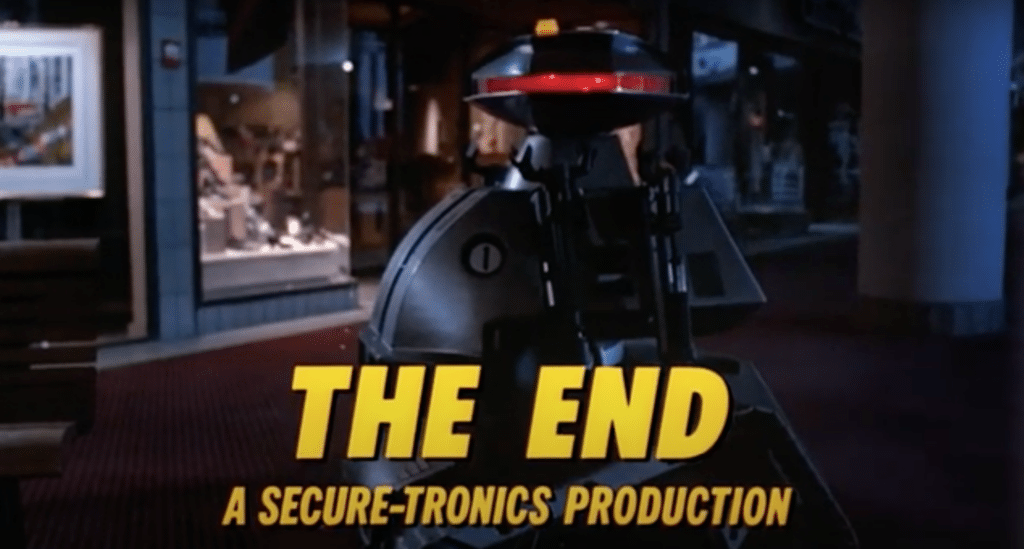
Chopping Mall opens as a movie within a movie, immediately establishing the film's self-aware tone. Business owners gather in Park Plaza Mall to watch a promotional film from Secure-Tronics Unlimited, a security tech firm selling Protector robots that “neutralize” the “bad guys.” In the front row of the wealthy audience, we see Paul and Mary Bland: Corman mainstays Paul Bartel and Mary Woronov reprise their roles from Bartel's film Eating Raoul, in which a square couple resorts to robbery, murder, and eventually cannibalism to start their restaurant.


The word “consumer” has always had a sinister edge, but it takes on an even more frightening meaning here. During the presentation, the Blands talk about getting a robot for their restaurant to “get rid of people [they] don't like,” implying that the robot will kill people so that they can cook them and serve them to their customers, drawing a straight line between economic consumption and the literal consumption of human beings. As corporations look to AI to replace writers and artists (with disastrous results), it's not much of a stretch to say that the technology is likewise devouring people.
The idea of consumption comes up repeatedly in Chopping Mall. Some of the stores in the mall have tongue-in-cheek names – three of the guys gear up to give the killer robots a “Rambo-gram” at Peckinpah's Sporting Goods – but the most significant one is Roger's Little Shop of Pets. It's a fun homage to Roger Corman's 1960 film The Little Shop of Horrors, but it's also a sly reference to that film's darker themes surrounding the ravenous hunger of capitalism and what people are forced to do in order to survive poverty.
The only thing keeping Seymour (Jonathan Haze) employed is sentient plant Audrey Jr., which he feeds by first squeezing out his own blood and then bringing human victims for the plant to eat.
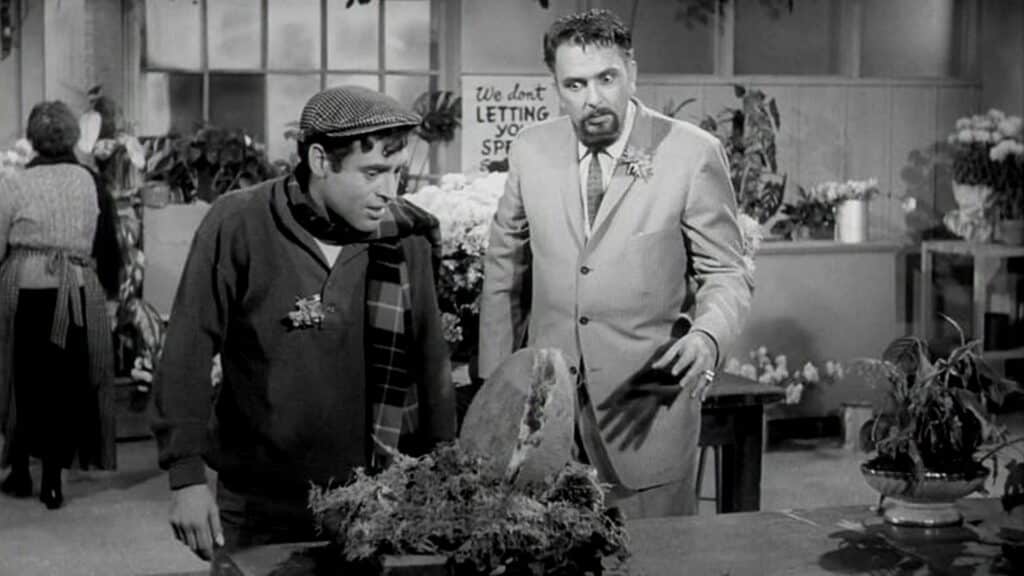
Generative AI produces its “content” by using plagiaristic training models based on people's work and ideas. It siphons off human creativity and spits it back out in a slightly altered package. Just like Audrey Jr., AI drains its victims dry.

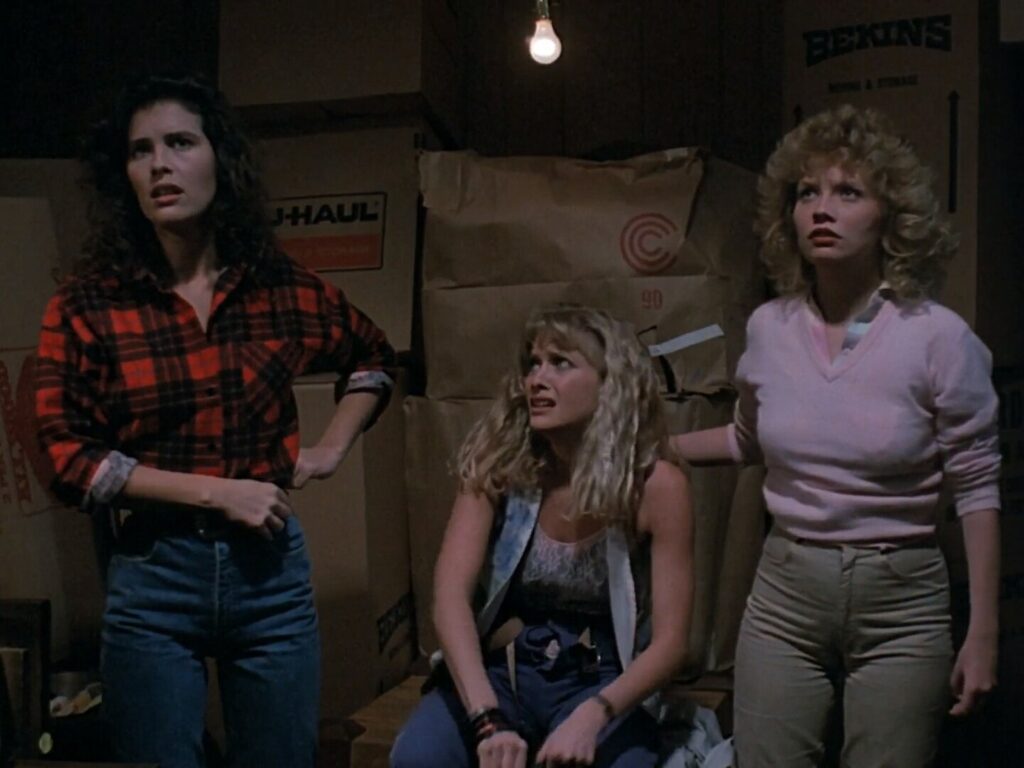
Seymour's tortured subsistence is echoed in Chopping Mall when the survivors hunker down after losing another one of their friends to the robots. At least two members of the group have wealthy family members who own stores in the mall, but Rick (Russell Todd) and Linda (Karrie Emerson) run a small auto shop.
In one of the film's most damning indictments of capitalism, Linda is more worried about the mounting cost of the property damage they're causing than she is about escaping the killer robots: “According to my calculations – provided we survive the night, of course – we're gonna be in hock to this place for the next 85 years.”
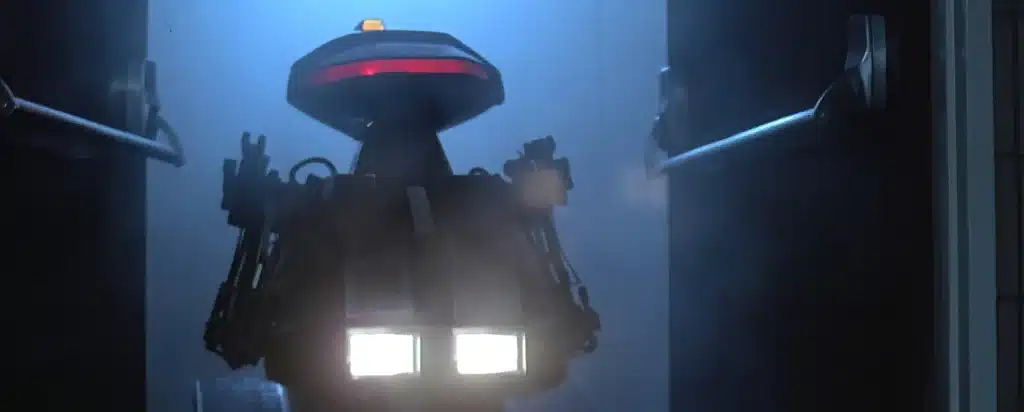
They're in danger in the first place because the mall owner decided to use a machine incapable of nuance or discernment to do a job that can mean the difference between life and death. As we see repeatedly in Chopping Mall and in the films it references, being consumed by capitalism amounts to the same thing.
Prior to the robot attacks, the friends are having a party in a furniture store. While the other couples have sex on various beds and couches, Alison (Kelli Maroney) and Ferdy (Tony O'Dell) watch an old horror movie on TV. That movie is Attack of the Crab Monsters, Corman's 1957 film about scientists who encounter giant mutant crabs that eat people, absorb their minds, and mimic their voices in order to lure further victims.
The parallels with AI are clear: in a world where deepfakes exist and legal concerns abound over people's right to protect their own likenesses, both physical and vocal, a monster that consumes and then weaponizes your identity is a terrifying prospect.
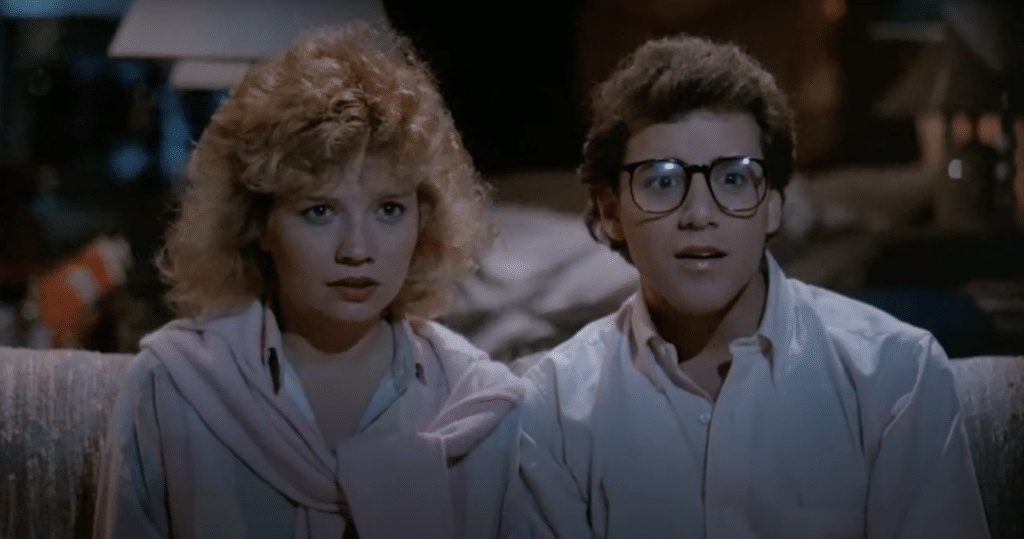
Also terrifying is the environmental cost. The crab monsters slowly destroy the island the scientists are on by burrowing tunnels underneath it. Generative AI consumes natural resources at an astronomical rate, using up so much water and energy that it is effectively destroying the ground beneath our feet just as surely as the giant mutant crab monsters do.
Like so many AI-generated images that reside in the uncanny valley (for now, anyway), the crab monsters' imitation of their victims feels just inhuman enough that the scientists catch on to them. In Chopping Mall, the human survivors use that same kind of imperfect imitation to their advantage. They set up a row of mannequins to use as decoys and stand among them to enact their plan of attack.
A robot shoots lasers at the mannequins because it can't tell the difference between a human being and a crude approximation of one. The survivors then uncover a row of mirrors behind the mannequins, causing the lasers to rebound and disable the robot. It's a striking scene that drives home the film's themes of human identity and the triumph of creative ingenuity over unthinking automation.
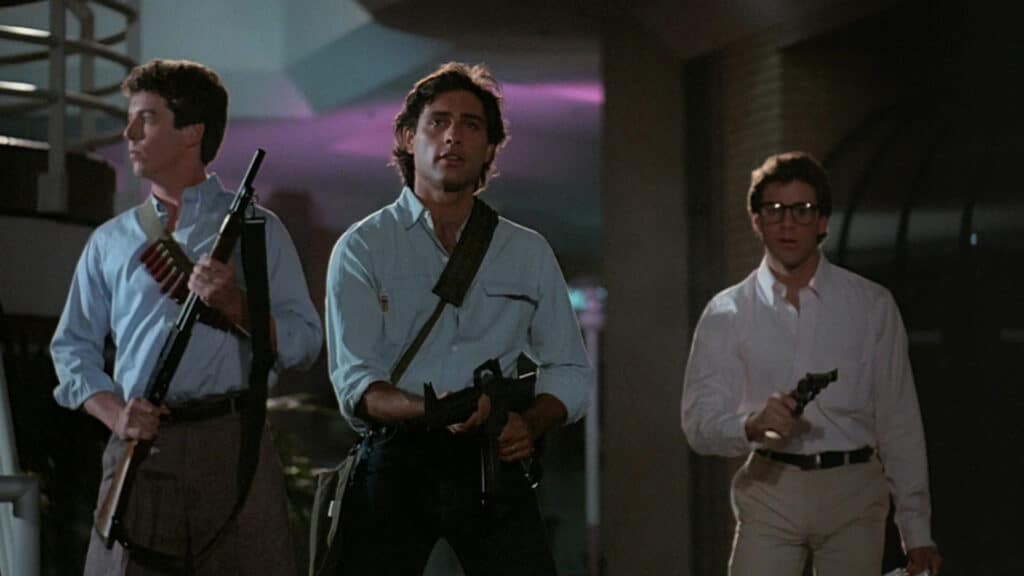
Chopping Mall is a movie all about identity; every visual gag and in-joke emphasizes the personality and creative character of the people who inspired and/or contributed to the film.
Before the party, Alison and her friend Suzie (Barbara Crampton) are working a shift at a restaurant in the mall. The walls are decorated with movie posters celebrating Corman's work and influence; particularly notable are the posters for The Lost Empire and The Slumber Party Massacre. Both movies are directorial debuts — for Wynorski and Amy Holden Jones, respectively – which is a key element of Corman's legacy.
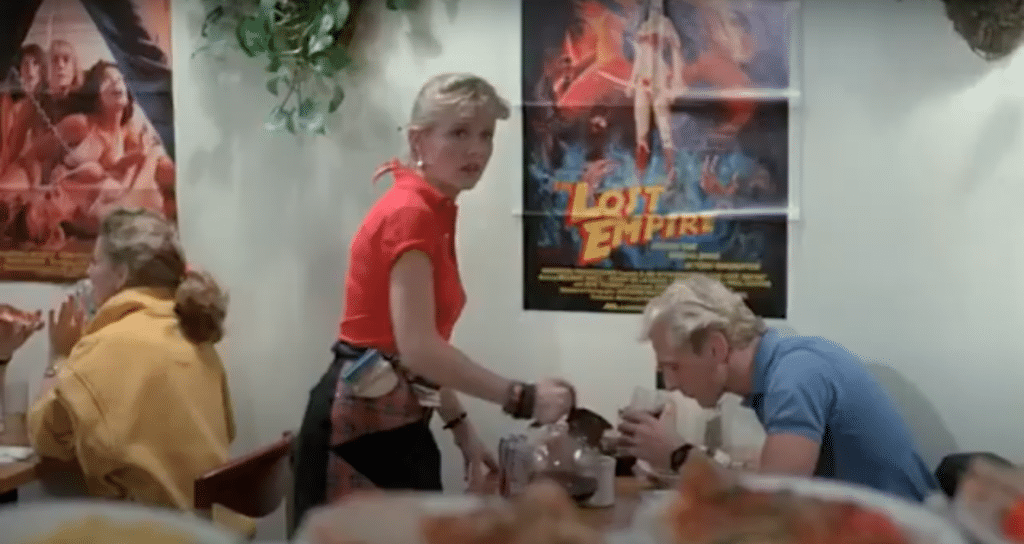
Roger Corman gave so many people their first big break in the movies. Even a small list of the people he hired and mentored is a staggering Hollywood who's who. That's something that only human vision and creativity can do. Generative AI doesn't truly generate anything; it merely recycles and regurgitates. It doesn't allow new talent to flourish because, by its nature, it cannot truly create anything new.
Ironically, Chopping Mall underscores that focus on the future by referencing the past. Dick Miller makes a cameo in the film as a janitor named Walter Paisley. It was Miller's fifth appearance as a character with that name; the first was in Corman's 1959 film A Bucket of Blood, in which Miller plays a busboy with artistic aspirations.
Walter doesn't understand art, though. He parrots lines of spoken word poetry without comprehending them, and his work as an “artist” consists of murdering people and then molding clay around them to pass off their corpses as his original sculptures. Again, the parallels to AI are clear: spitting out someone else's words or slapping a filter on someone else's body is not an act of creation; it is an act of violence.
Chopping Mall's version of Walter Paisley is a working-class guy who just wants to finish his job and go home, but the security robot has other ideas. The robots are supposedly programmed to recognize ID badges, but when Walter presents his badge – invoking worker solidarity by saying, “I'm like you, you know? I work here. See?“ – the robot doesn't recognize his credentials and deems him a threat.

Class solidarity means nothing to technology that the bosses own and operate. The robot kills Walter and utters its mechanical catchphrase, which is both grimly funny and eerily similar to Siri, Alexa, and other anthropomorphized AI assistants: “Thank you. Have a nice day.”
The film also closes on those words, offering audiences who stay through the credits (which feature a cheeky encore of a character's head exploding) one final reminder that they are consumers watching a movie. It's a funny sendoff, but it's also a word of caution to think about what we consume and what consumes us.
By paying tribute to Roger Corman's work and his legacy of fostering talent and taking creative risks, Chopping Mall proves how vital human imagination is. Using character actors to do so – people who are beloved and respected for their talent but rarely get top billing – underscores the film's economic and class commentary while also celebrating cinema history.
But the robots get the last word in Chopping Mall, emphasizing the very real danger that they represent: the danger of automation without discernment, the danger of AI, and the danger of handing the job of human creativity over to machines.
