Editor's Note: This was originally published for FANGORIA on July 31, 2012, and we're proud to share it as part of The Gingold Files.
Drive-in-style horror isn’t the only kind of cinema they don’t make like they used to back in the ’70s. Charles de Lauzirika’s psychological thriller Crave is the kind of tough, uncompromising character study that Hollywood used to turn out with regularity, and should be supported and treasured when it appears today.
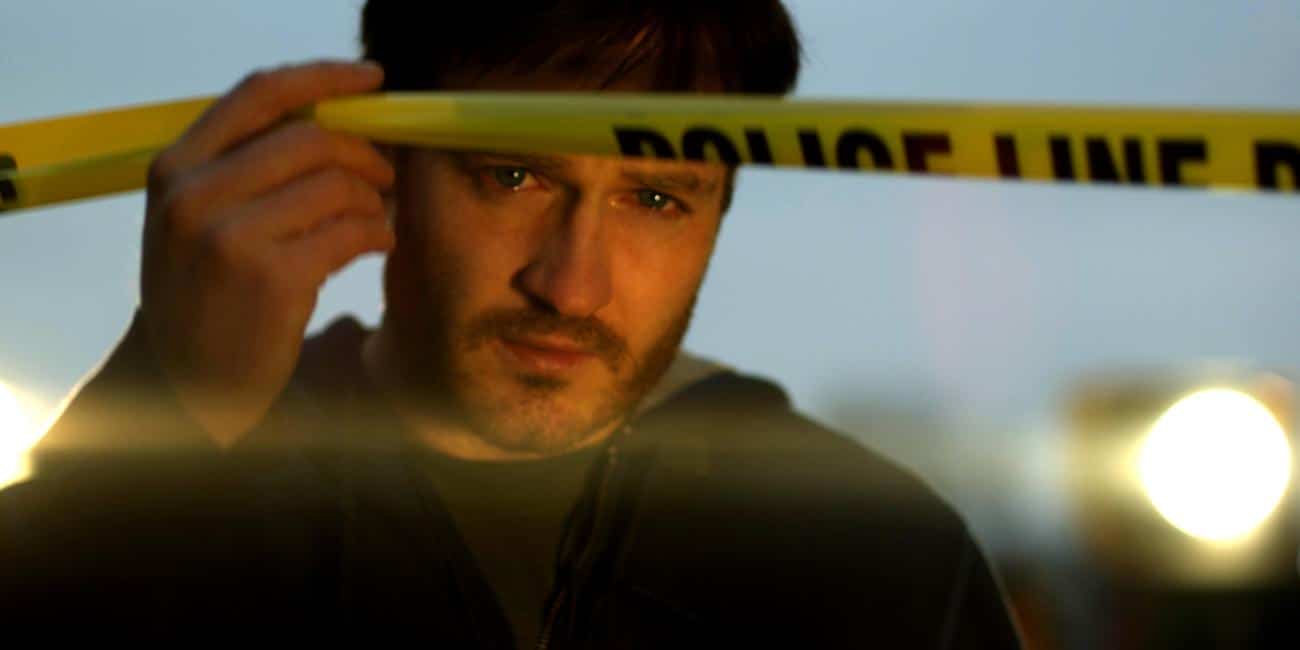
A world premiere at the Fantasia festival in Montreal, Crave isn’t categorically a horror film, though it does employ horrifically bloody imagery and shares many other concerns with the genre. Among them is the blurring of the lines between hero and villain, as embodied in Aiden (Josh Lawson), a Detroit crime-scene photographer who traffics in images of grisly death—and, perhaps not too surprisingly, has them running through his head as well. With no real friends other than a detective he calls “Pete the heat” (Ron Perlman, looking styled to resemble Tom Atkins), Aiden spends a lot of time talking to himself in inner dialogues we’re made privy to on the soundtrack. We also witness his fantasies of dealing with the people who frustrate or upset him, which tend to employ the application of a firearm or sledgehammer. Yet as an early scene demonstrates, he’s the type of guy who’s too cowed by life to actually resort to violence…isn’t he?
De Lauzirika has had an illustrious career assembling DVD supplements and documentaries, most notably for Blade Runner and the Alien series special editions, though his feature directorial debut (which he scripted with Robert Lawton) doesn’t wear any past influences on its sleeve. There are echoes, of course, of Taxi Driver (Lawton’s original pitch was “Travis Bickle meets Walter Mitty”) and other pushed-to-the-breaking-point pictures like Falling Down, with Crave managing the neat trick of both making us fearful of what Aiden might be capable of and engaging us in his fantasies of personal retribution. The over-the-top gore seen in these occasional daydreams is tempered by the fact that we’ve probably all had thoughts like this from time to time, and Aiden’s psychological profile is identifiable enough that we want to see him overcome his demons.

Hope for such salvation comes in the form of Virginia (Emma Lung), the pretty girl occupying the next apartment over. In a vulnerable place due to friction with her boyfriend Ravi (Edward Furlong), Virginia starts to take a shine to Aiden, though he has a problem with speaking his mind (sometimes overlapping with his voiceovered thoughts, to amusing effect) that leads to awkward moments. The thorny relationship that develops between these two dented souls is fully realized in multiple emotional dimensions by Lawson and Lung, both actually Australians who have acted together in the past, but were coincidentally cast opposite each other here—to excellent effect. Lawson’s portrait of a man wrestling with his basest instincts meshes perfectly with Lung’s portrayal of a young woman who has a lot of love to give but is guarded about whom she gives it to. Just as good is Perlman, wonderfully low-key as a gently cynical sounding board and voice of reason for Aiden.
As Crave proceeds, the violence and other bad behavior start to seep out of Aiden’s thoughts and into his life, as he either finds or puts himself in situations that threaten to propel him into very unpleasant territory. As de Lauzirika keeps you guessing about which of these might lead Aiden and/or Virginia to bad ends, he eschews easy visual corollaries to the grimness of the scenario. How nice to see a dark, gritty thriller that achieves that atmosphere without resorting to the monochrome and grain that have become visual clichés of the form; the director and his cinematographer, William Eubank, go for naturalistic colors and bring a number of well-chosen locations to life as a realistic environment for Aiden’s downward spiral to play out in. The sound is also exceptional, particularly the full use of directional effects when Aiden has mental conversations with himself.

For this and many other reasons, Crave deserves to be seen in a theater, and by as many people as possible. Here’s hoping that an adventurous distributor picks up this harrowing, sometimes mordantly humorous, occasionally brutal but never gratuitous odyssey into a damaged, fully realized psyche. It’s one of the best films to appear this year, and a wide audience should be allowed to find out why.