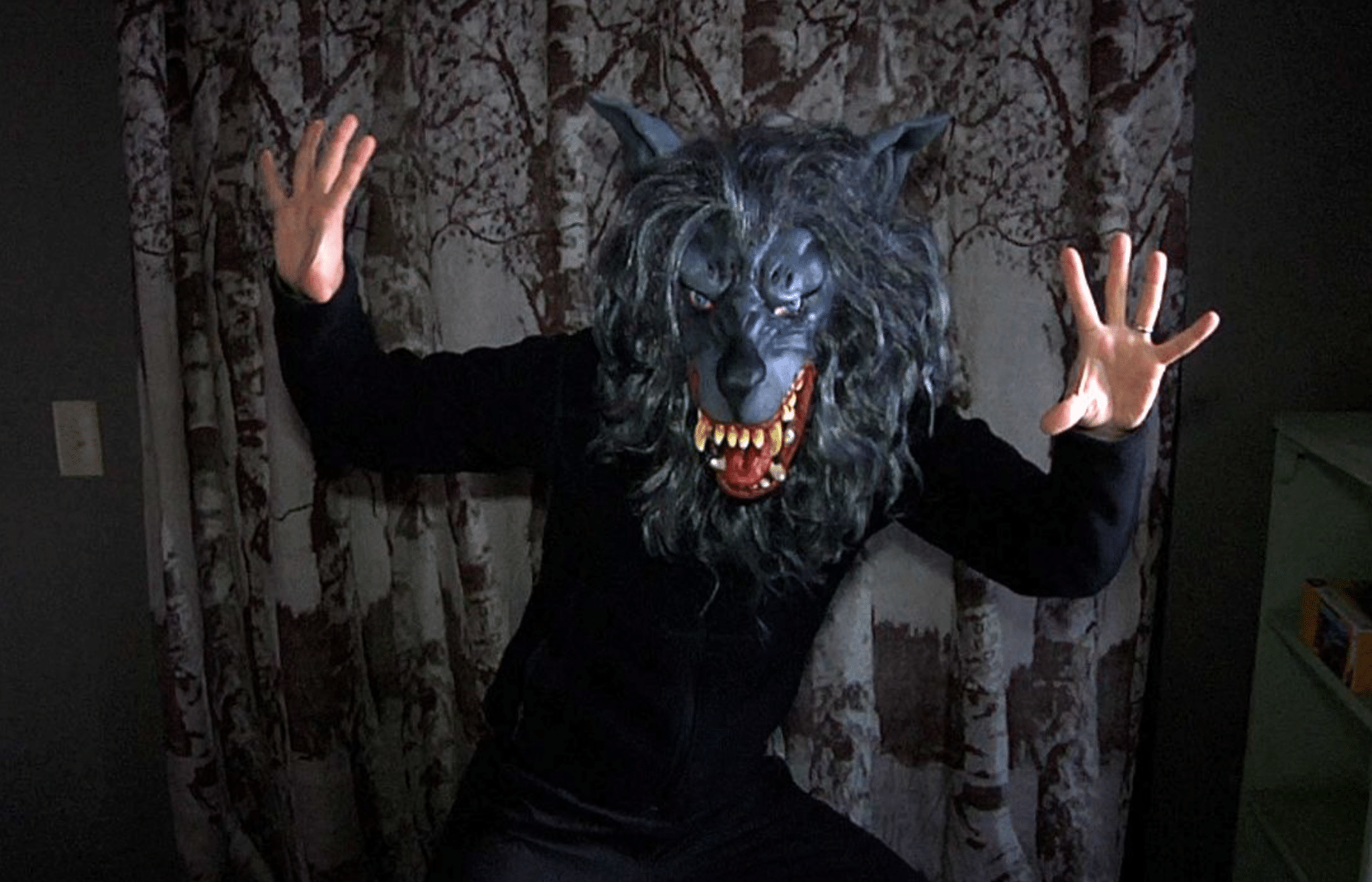
Ever had that feeling in your gut? That the seemingly well-meaning, charismatic and funny new friend you made has something just a little… off about them? Maybe they hold a hug or a stare for too long, or say something that feels a little out of place inside of normal social boundaries. You don't want to assume that they're weird or downright dangerous, because, after all, they haven't actually done anything yet, right? …Right?
If this is a feeling you're all too familiar with, you're probably a fan of Creep, Patrick Brice's 2014 found-footage cult classic that stars Mark Duplass as a charming yet unnerving terminal cancer patient named ‘Josef' who enlists the help of a cameraman, Aaron (Brice), to help him shoot a video for his unborn son. As the day progresses, Aaron starts to wonder if he's made a terrible mistake by isolating himself with the erratic, overly friendly Josef – but by the time he tries to leave, he's already in too deep.
A key player in the ‘mumblegore' subgenre of horror (named after the similarly niche ‘mumblecore' movement), Creep wielded its low budget (reportedly under $500) to its benefit by prioritizing naturalism, utilizing what is arguably the most naturalistic cinematic format via its use of found footage. With just a two person cast (three if you count Katie Aselton's voiceover work as Josef's ‘wife' Angela), Creep forces the viewer along on this journey with Aaron, giving us no option to escape. We see what Aaron's camera sees, we go where Aaron's camera goes, trapped in the frame as Josef enacts his increasingly bizarre behavior. It's this realism that makes Creep so effectively, well, creepy, almost a decade after release.

The Enigma and the Everyman: What Makes Duplass and Brice The Perfect Pair
Of course, the biggest reason Creep is still so beloved a decade after its release is down to Duplass' performance as Josef. It's a role the Emmy Award-winning actor was born to play – hilarious and horrifying all at once. Within minutes of meeting Aaron, Josef is stripped down pretending to play with his infant son in a bathtime ritual he calls Tubby Time. It's an action at once both deranged and heartbreaking as, at this point, we chalk Josef's strangeness up to his diagnosis and his acceptance of learning he only has a few months left to live.
Much like Aaron, we're forgiving of this dying man's strange behavior because who would dare tell a dying man he's acting a little bit… weird? Creep plays perfectly on these social anxieties many of us are all intimately familiar with, the innate, if irrational, fear of speaking your discomfort aloud in fear that it offends another person.
While Duplass' boundless enigmatic energy drives Creep, Brice's performance as Aaron is perfectly matched in its awkward social niceties. As our audience stand-in, Aaron's vulnerability is palpable as the realization slowly dawns on him that all is not what it seems, and yet he is still too polite to outright say what he, and we, know deep down to be true – this man is dangerous. However, at first, Aaron himself is not without suspicion.
In an interview with Bloody Disgusting, Duplass makes his feelings on Aaron, and the film's title, clear, saying “For me, there’s something wrong with both of these guys. Deeply. This concept of, ‘who is the creep in this scenario?'” After all, Aaron is the one wielding the camera, a position usually reserved for those with the upper hand in power.

Power and Control: How Creep Finds Its Fear
Power, trust, and the subsequent abuse of both, are themes that play a huge part in what makes Creep so effectively scary. From the safety of your couch, it's easy to judge the actions of characters in horror movies, to dismissively scoff that “I would've never done that”. But the truth is, none of us know what we would do in any given situation until we're actually in it.
Aaron's overly-trusting nature may be frustrating for viewers who believe themselves to be immune to social pressures, but it's a situation that, reasonably, any of us could find ourselves in. After all, Josef's discretions start small – an ill-placed smile, a seemingly innocent slip up in his story – and it's only really when the night is well under way that Josef reveals his more disturbing side.

Take a look at some of Creep‘s biggest cinematic influences, and you'll further see these themes in action. Both Misery (which is referenced, hilariously, in Shudder's upcoming The Creep Tapes) and Fatal Attraction flip the narrative of positions of power by playing with gender dynamics. Misery especially subverts our expectations of horror archetypes by upending what we'd expect to happen when a meek, homely woman is isolated alone with a surly, alcoholic man.
While Creep‘s central pair are both men, at times, Josef lulls Aaron and his audience into a false sense of security by displaying stereotypically ‘feminine' traits, from his willingness to be emotionally open to the tender, maternal cradling of his imagined Tubby Time son. This is further reflected in the voyeuristic way that Aaron's camera follows Josef, often watching him from behind or in intimate moments of nudity, crying or sleep, typically what you'd expect from the latter in a prey/predator dynamic.
Sure, Creep has more than a few jarring jumpscares, courtesy of Josef's tendency to jump out on an unsuspecting Aaron, but the fear is mostly found in the quieter moments of conversation between Josef and Aaron. One of the most blood curdling scenes, in which Josef recounts a horrific tale of sexually assaulting his own wife, unfolds in total darkness, as Josef believes the camera to be off. It's a testament to the power of Brice's twisting script and Duplass' total gleeful immersion in his role, and it's this contrast that makes the final act of wince-worthy violence all the more shocking.
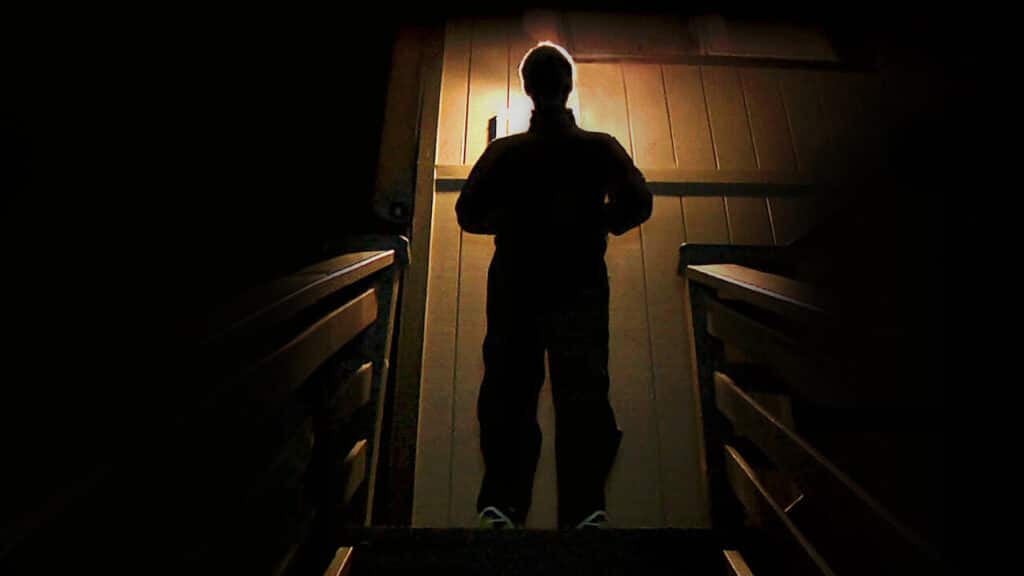
While Creep has gone on to become a beloved cult film in the decade since release, the film has found a particular popularity among female horror fans, despite not featuring a single woman on screen for the entirety of its 82 minute runtime. Ask any woman, and they'll probably be able to reel off to you countless instances in which they have had to weigh up, quickly, whether a man is actually a threat, or if years of being on alert for the mere potential of violence have established an assumption of what could be a perfectly innocent man. It's sadly a reality that most women are far too familiar with, and what makes Creep‘s villain more terrifying than any spectral other.
Human Nature: Creep‘s Influence On Socially Awkward Scares
While a few found footage movies prior to Creep (like The Poughkeepsie Tapes and Megan Is Missing) had featured human antagonists, the biggest hitters in the subgenre had focussed on supernatural or monstrous threats, like those of The Blair Witch Project, Cloverfield, Noroi: The Curse and Paranormal Activity. Following Creep, more and more found footage movies honed in on humanity as a greater, more tangible, threat, one made even scarier by this particularly intimate medium.
The erratic charisma embodied by Josef can be seen in Joe Keery's performance as a maniac Uber driver in 2020's Spree, while 2015's Be My Cat: A Film for Anne puts its psychopath front and center in a similarly knowing display of meta-cinema. Outside of found footage, a distinct rise in so-called “socially-awkward horror” can be seen following Creep‘s release, with films like Speak No Evil, They Look Like People and The Gift all taking advantage of the thin thematic membrane between cringing and screaming.
Like all of the best cult movies, Creep has taken a few years to really find its place in the canon of modern horror. But as society, and the people in power who command it, becomes more and more hostile, our securities in who we can and cannot trust become more eroded. Creep, with its unique and realistic spin on the small ways that terror takes hold, feels more relevant than ever in an increasingly absurd world. In Creep, what we have to fear rings terrifyingly true with each passing year. Not zombies, not ghosts, not blood thirsty demons – just a human man, and an axe to grind.