This year marks ten years since one of the greatest artists of a generation passed away. A decade ago, David Bowie died just two days after releasing his final album, Blackstar, in one of the most poignant goodbyes that wrecked not just one generation, but multiple. He wrote songs that changed how we make rock music, and influenced countless artists that came after him, including plenty of filmmakers and actors.
Everyone reading this — well, unless you’re my mom — is familiar with Bowie’s role in Twin Peaks: Fire Walk With Me, where he very briefly appears as the mysterious missing agent Philip Jeffries, and with Robert Eggers soon to be remaking the cult classic Labyrinth with a scarier bent, it’s not all that wild to say that Bowie’s had a decent influence on the horror genre. (I mean, I’m almost certain Nicholas Cage’s Longlegs was a big fan of Ziggy Stardust.)
But having gone down a rabbit hole and watched his entire filmography — and I mean all of it, the good, the bad, and the very, very, strange — I discovered that he has a much stronger connection to the genre. For one season in 1999, in the midst of making his (comparatively chill) twenty-second album Hours, he secretly played a horror host in the Showtime anthology series The Hunger.

I say secretly only because, when someone says the name The Hunger, they normally think of the film of the same name, directed by the late Tony Scott in his feature debut. And fair enough — not only did that movie’s opening scene with Bauhaus alter my brain chemistry in college, but Bowie also had a supporting role in the film as John Blaylock, a vampire who discovers he may have eternal life, but not eternal youth. The 1983 film is a cult hit with every goth I know, and is heavily discussed in queer circles for its central lesbian relationship.
But the apple doesn’t fall far from the tree. Created by Jeff Fazio, Scott served as executive producer on the series, alongside his brother Ridley — you know, the one that changed sci-fi with Alien? — so its horror credits are more than bonafide. Scott also directed the first episodes of each season, setting the gritty, dark, and twisted tone that set the series apart from shows like The Twilight Zone or Tales From the Crypt.
The series is, as many projects produced in the late ‘90s were, about as grungy as you can get when it comes to television. The low-fi aesthetics aren’t polished or expansive, and tales of sex, betrayal, and obsession are set to the kind of crunchy garage rock that would go on to define soundtracks for films like Queen of the Damned. Not necessarily what you imagine when you think of one of the biggest glam rock stars ever, right?
But somehow — because it’s David Bowie, and I’m still not entirely convinced he wasn’t some otherworldly being — the Let’s Dance singer becomes the exact kind of creep the show needed. (In a complimentary way, of course.) Bowie joined the series in Season 2, following original host Terence Stamp’s exit. While Stamp’s unnamed Host followed in the tradition of characters like The Cryptkeeper, who simply existed to introduce each episode’s story, Bowie — as he always did — shook things up.

His season took a hard left, making Bowie not just the vessel through which each episode was introduced, but his own character. For twenty-two episodes, he played Julian Priest, a famous artist who, while praised, had a rather gruesome medium of choice. (I won’t spoil that here — where’s the fun in that?) It was unlike anything he’d ever done on-screen before, and more gruesome than anything else he did in his last sixteen years after. It’s an island all on its own, an off-shoot of the same creative drive that led him to tour with Nine Inch Nails and write the soundtrack for an obscure, early computer game.
Of course, Bowie wasn’t the only high-profile name to be associated with the series. Aside from the Scott brothers, director Russell Mulcahy, known best for his work on films like Highlander, directed numerous episodes across both seasons, and stars like Margot Kidder, Jennifer Beals, Brad Dourif, and Anthony Michael Hall all appeared in various episodes. The series was part of a packed lineup of projects on Showtime, which was also airing series like Queer as Folk and Stargate SG-1 at the time.
But alas, maybe because of its dated effects, or simply because it was too gruesome for most, The Hunger slipped between the cracks, left to be appreciated only by Bowie completists and horror fanatics who’ve consumed just about everything else there is to see. Though, maybe that’s for the better, since I now have enough sway as a Bowie nerd-cum-horror journalist to recommend it to you, dear reader.
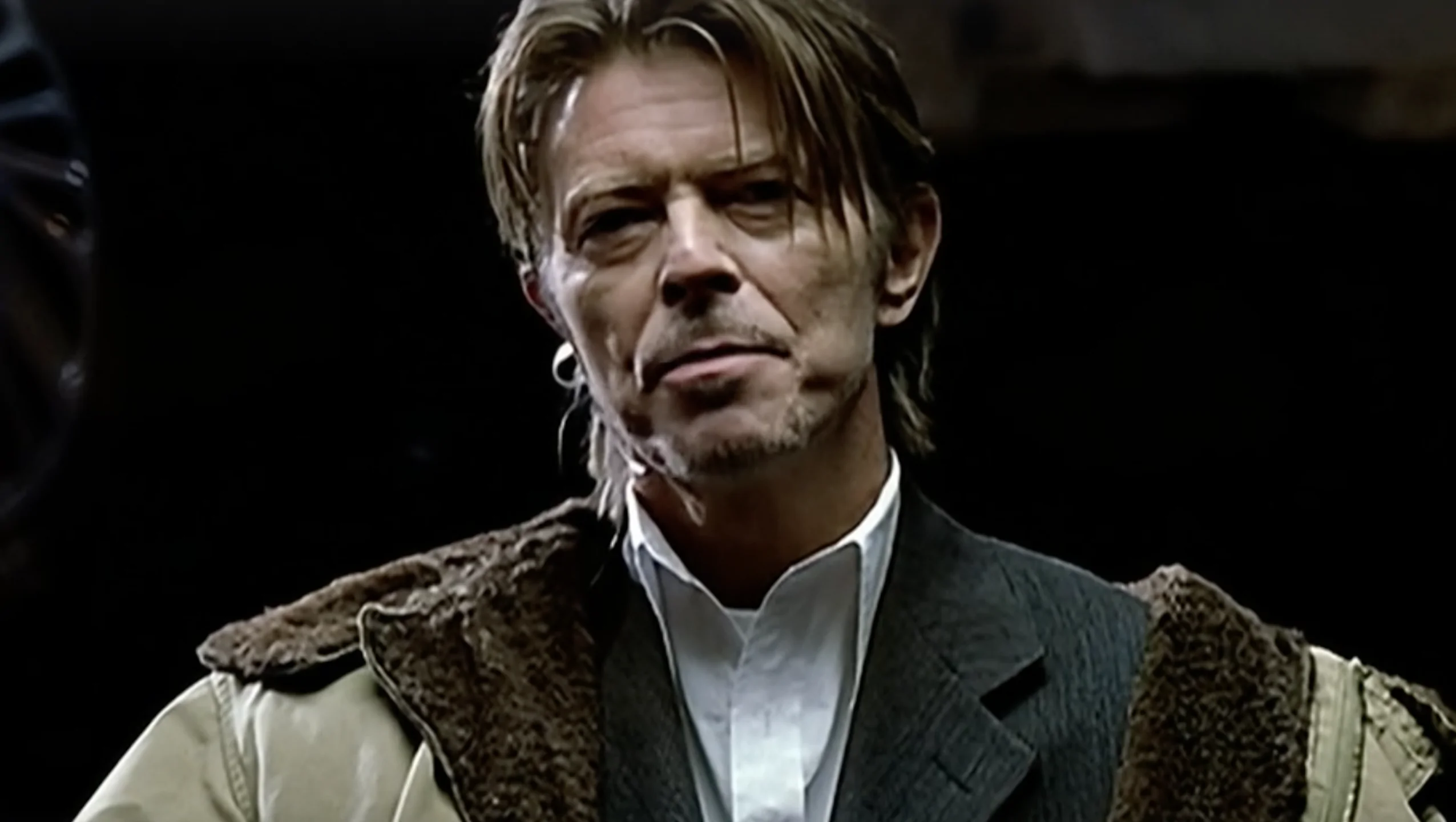
While it’s not the highest profile thing Bowie ever did, I love it because it was such a stretch for him, a man whose most notable screen credits to date were Labyrinth’s whimsical Goblin King and the alien Thomas Jerome Newton in The Man Who Fell to Earth. While he had the eponymous film and Fire Walk With Me under his belt, The Hunger was the only time he ever played a true horror villain, rather than an innocent bystander who became a victim of something more powerful.
I love The Hunger because Bowie gets scary. I’ve met plenty of people who discredited his acting chops simply because of the goofiness of Labyrinth or his (hilarious) ten-second cameo in Zoolander, but he pulls no punches as Julian Priest, and in fact feels more unsettling in his frame stories than most of the tales in the episodes proper. The format of the series expanded and changed as their budget grew large enough to afford the elder statesman of rock and roll, and he, as he always did, rose to the occasion.
For me, it represents all the things I love about Bowie. His willingness to experiment, especially after his ‘90s comeback and marriage to Iman. Nothing felt truly off-limits for him, and he often reached for what felt like the wrong move, at least to the public. You never knew what would come next, and maybe that’s why his death was such a shock to me when I was just a teen. The mic drop to end all mic drops, punctuating a career filled with everything from life-changing music to voice roles on SpongeBob to, yes, a properly terrifying role in an oft-forgotten horror series.
So, if you’ve finished your mournful listens of Blackstar and Heroes, or simply want to see him in something that isn’t Labyrinth for the billionth time, give The Hunger a try. It might just scare the pants off of you.