As Sam Raimi, George A. Romero and Tobe Hooper can attest, you don't need a high budget to make space for yourself in the world of horror. In fact, the beautiful thing about horror as a genre is how low budgets are not a barrier to entry but rather a playground for innovation and motivation.
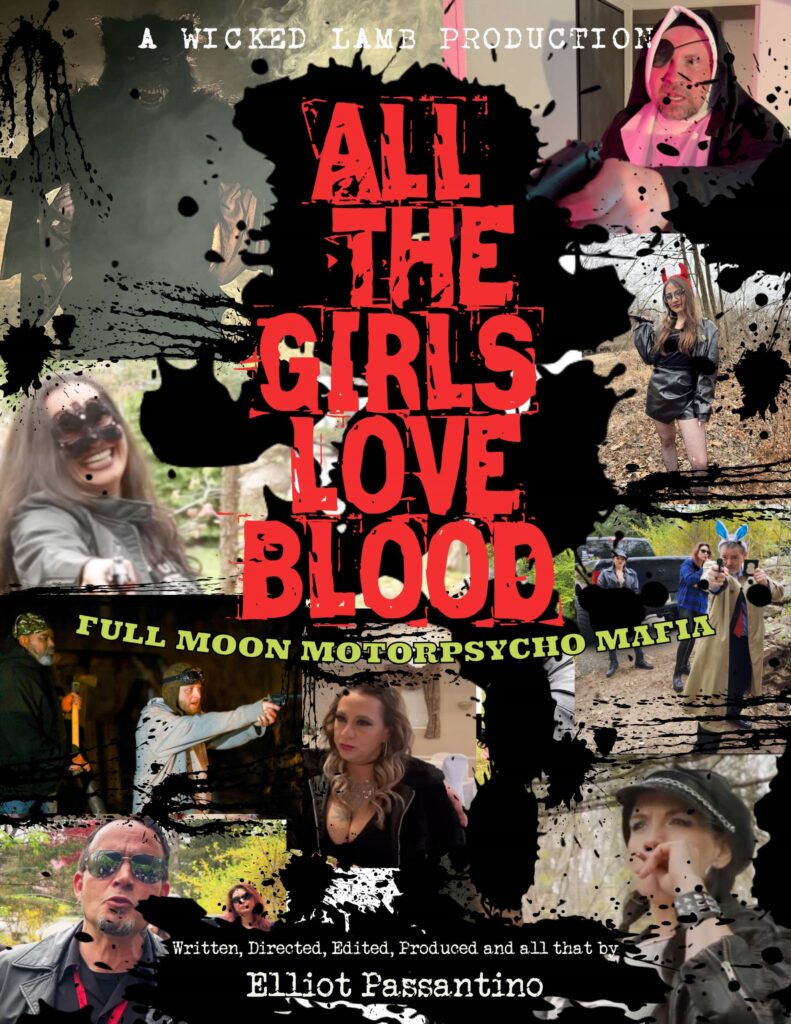
With eight features and a number of Slamdance Film Festival awards under his belt, Elliot Passantino knows more than most that, if you want something done, you have to get out there and do it yourself. The director, writer, actor, producer and musician has been dedicated to his craft for over thirty years, with his latest feature, All the Girls Love Blood: Full Moon Motorpsycho Mafia set to be a midnight movie for the ages. Combining the low-budget charm and frenetic energy of Tommy Wiseau, the surrealism of Conner O'Malley's hyper-online shorts, and the seedy Americana of David Lynch.
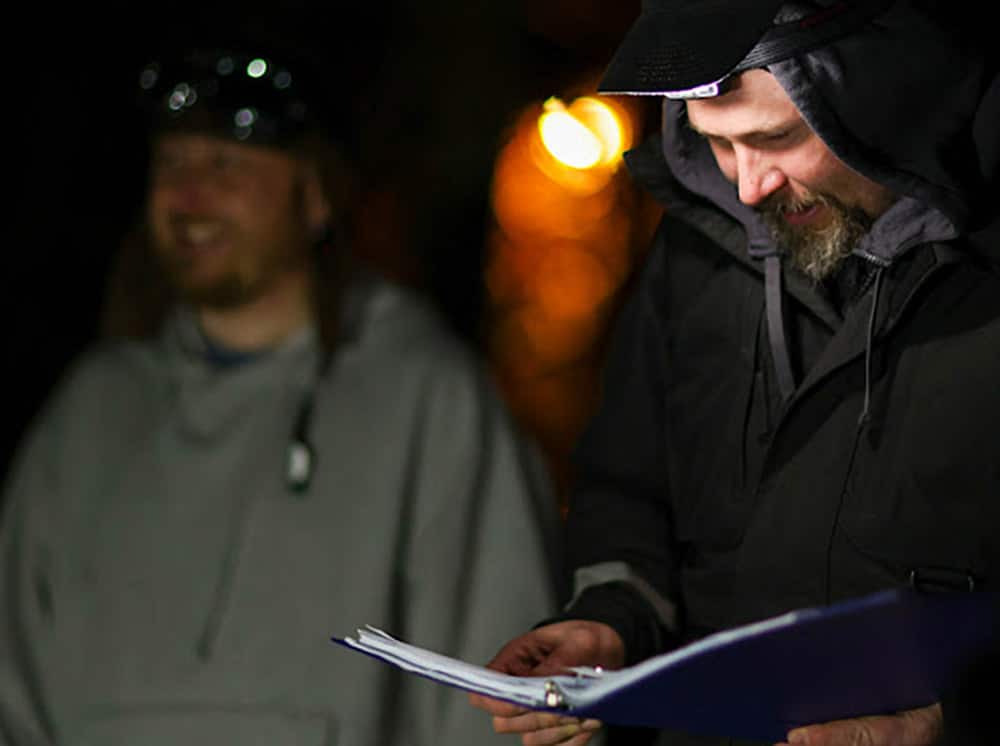
While filmmaking has always been Passantino's dream, he also has a long history of lecturing on horror cinema, a career that came from a compulsion to spread the horror gospel. Back in 2012, in what the filmmaker calls a particularly rough summer, Passantino found himself struggling to find roles even as a SAG-approved actor. His frustration took him back to the drawing board, leading him to return to the core of what he was passionate about and start developing a career for himself as a lecturer. As an avid reader, particularly of cinema history, Passantino found himself looking for a way to apply his learned knowledge to a topic he'd been obsessed with since youth:

“It really all goes back to seeing Lon Chaney on the cover of a book in the library when I was about six. That skull-faced Phantom of the Opera photo didn't scare me – instead, I immediately thought, “who is that?” After that, that's when I met William Henry Pratt, aka Boris Karloff, and Bela Lugosi. From there, horror became this sort of entryway into being a historian. Subconsciously, it started this obsession with dates and facts which then played off into other parts of history. In 2012, I realized horror keeps me going every day and decided to get those books back off the shelf to maybe lecture and ultimately create the most concise classes on the history of horror.”
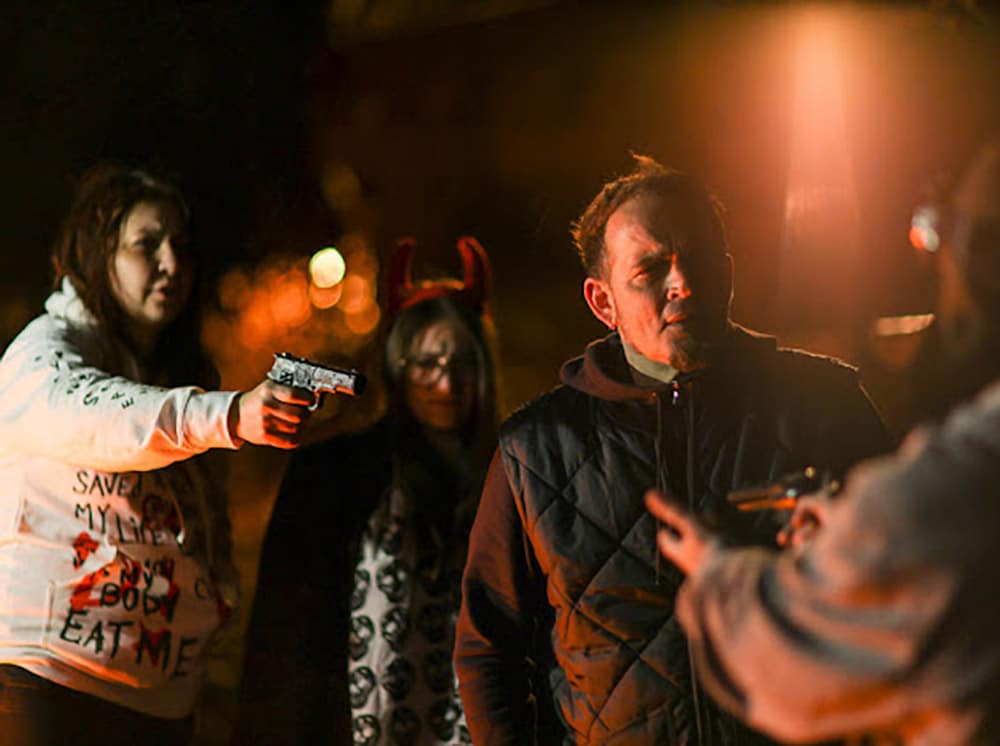
Passantino's love for film is palpable, both in technique – the director wears his influences very directly on his sleeve – and in style. All the Girls Love Blood: Full Moon Motorpsycho Mafia is a non-stop riot of kinetic shoot-outs, hyperactive flashbacks, and a cast of colorful and bizarre characters made up of Passantino's close circle.
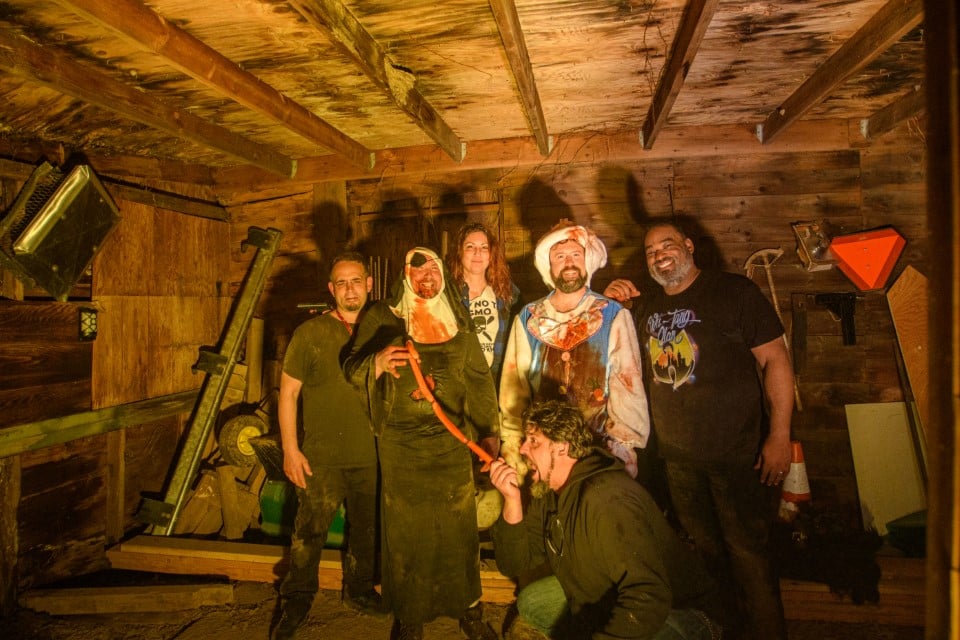
Frankly, it looked like an absolute blast to shoot. That's thanks in large part to his preference for working with friends he's known for years. Josh Bacher, who delivers one of Full Moon Motorpsycho Mafia's most hilarious moments in the form of a bizarre woodland monologue, Passantino calls “one of the funniest guys out there.” His other friend Lou, who plays the hilariously campy-named villain Starpion, helped originate the idea for the script. Like everything Passantino does, this film was a labor of love for the crew, many of whom were shooting alongside full-time jobs.
In this regard, Passantino's work ethic is clear, and, in his own words: there's nobody coming to do it for you – you have to do it DIY style. One of his biggest influences, Kevin Smith's Clerks, embodies that same influence. While Passantino acknowledges the hurdles of a low budget, he also believes in its blessings:
“You have to take the gifts along with the curses. You might not have a big budget, but you get to control everything. I was exhausted, but I had a hand in everything the way I wanted it. James Gunn and Wes Anderson are two heroes of mine, and every detail in their movies up on that screen is theirs. I got to control this entire lunatic world, but at the same time, everyone got to have a say. It didn't matter who was saying the joke – if it was funny, I put it in there. We had a structure, we knew where we wanted to go, but once we were on the ground running, we could play around and have fun. A lot of the comedy came on the fly because we all know each other and have great chemistry, and knew what we could add that wouldn't derail the plot.”
With plot threads involving bumbling white supremacists and a rather on-the-nose nationwide addiction to an opioid referred to as “Christ,” it's hard not to see Passantino's tongue-in-cheek irony at creating this world that takes aim at the seedy underbelly of American culture.
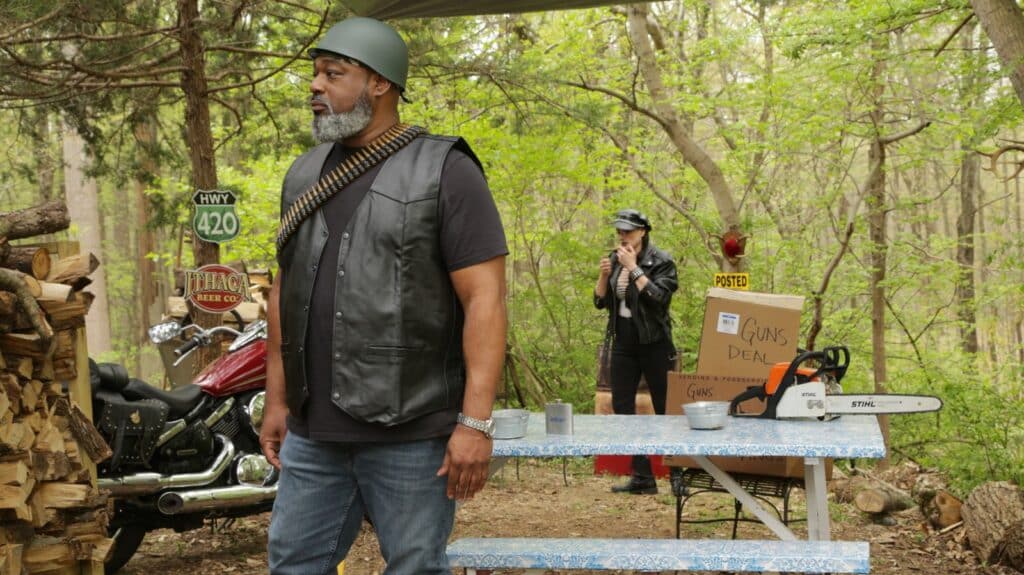
As mentioned, Passantino's work calls to mind some of the sinister surrealism of David Lynch (the filmmaker saw Blue Velvet at just 18, and considers it one of his greatest influences), and while Full Moon Motorpsycho Mafia may seem like a raucous riot concerned chiefly with entertaining above all else, Passantino's directorial technique for the film helped to establish a core theme of social unrest in modern America:
“With this one, I said to the cast: as long as you trust me, trust the script, and trust the edit, we can start to experiment with blending the boundaries of reality. They realized they could do something if it came from their character's own point of view. It's kind of my own political commentary on where the news is now – you never know what's true or not. There's a huge divide in this country, no matter what you think or believe – we don't have a core belief of what is fact. Obviously, that inspires some outright lunacy! You're seeing half of this story people think is actually going on is actually just gossip. There are so many conflicting perspectives in the film. That was the only core social commentary that I wanted.”
Recently, Passantino's films were discovered by a group of young cinephiles who have given the filmmaker his first taste of what it means to have a cult fanbase. Thanks to Letterboxd (an app Passantino is a big fan of because “everyone from Scorsese to the kid working at the video store is there”), said fans were able to get hold of Season in Hell, Passantino's controversial SOV acid-trip nightmare that feels intrinsically tied to a post-9/11 zeitgeist.
What followed was an invitation from the Spectacle Theater in Williamsburg, Brooklyn to host a screening of the film due to popular demand, where the filmmaker was greeted by a passionate group of cinema-goers, although he admits revisiting his old work was a touch dicey:
“It was bizarre. I've had two distribution deals for Season in Hell over the last twelve years. One time, it was even in the window of Kim's Video [the iconic video and music store that once dominated Manhattan] which was like winning an Oscar to me – but I had no idea how people since then had been seeing it. I said I'd definitely come in and do a Q&A, and I was blown away. The audience had seen the film about 5 to 10 times. I was like ‘what is wrong with you?!' [laughs] Even seeing it again… I almost had a panic attack watching it because I forgot some of the stuff I shot. It's like what Sam Raimi said about the tree scene in Evil Dead – oh, that's what I did when I was 26.”
With such a storied filming history behind him and his passion showing no signs of wavering, Passantino is keen to encourage young filmmakers who feel restricted by their low or non-existent budgets to keep pursuing their dreams. His most fervent advice? Patience, passion, and a willingness to experiment.
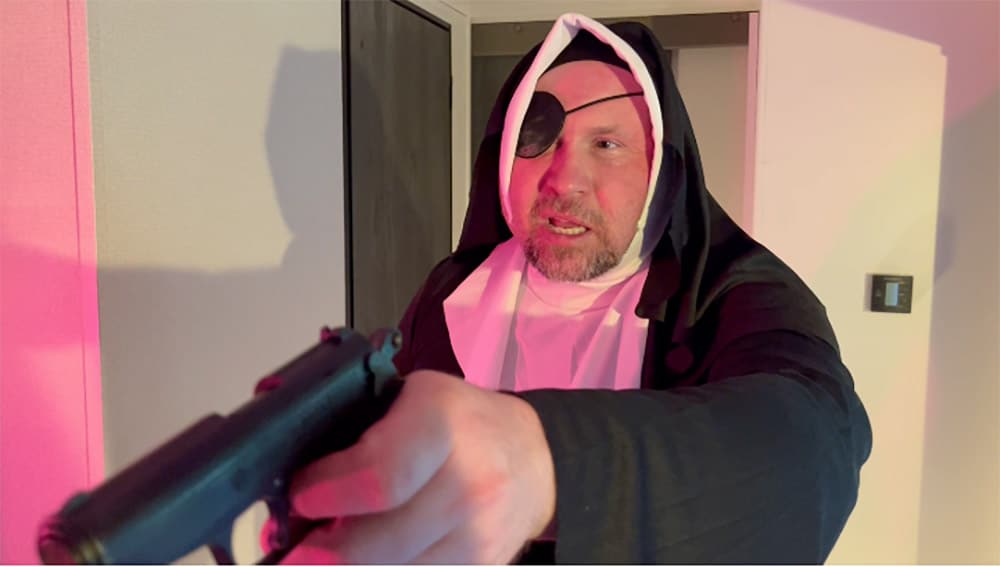
Passantino proudly hails from a time before Google and YouTube were readily available for instant “how to” tutorials, a time when aspiring indie filmmakers just had to “dare.” Armed with a suitcase-sized camcorder, a bunch of props from a post-Halloween sale, and the music he liked, Passantino dedicated himself to learning through trial and error, using guerrilla techniques – “using a wheelchair like Robert Rodriguez did making El Mariachi to create something that was, above all, unapologetically his.
Undoubtedly due to his own academic background, Passantino also believes the indispensable and humble insistence on sitting down and doing the research is a filmmaker's strongest asset. His own influences are as varied as they come, and he would like more fledgling filmmakers to hit the books:
“Know your craft. Kids should be reading more books on filmmaking, and books on the history of horror films. Know your history. Wes Craven, another of my biggest influences, his films from Last House on the Left to The Hills Have Eyes, all say something about America at the time. The story of the Scottish cannibal highway robbers is really the story behind The Hills Have Eyes – a legendary story from history! Craven was teaching, and his experience with literary history inspired his filmmaking. Raimi studied history to make the Necronomicon. More young filmmakers should spend time in the library. Get grounded, so when you make that film, you're really saying something.”
With All the Girls Love Blood:Full Moon Motorpsycho Mafia wrapped, cut and ready to roll, what's next for Passantino? Well, among his “bevy of scripts” is a Star Wars treatment that he's keen to get Lucasfilm's eyes on, plus a TV show that he describes as “Stranger Things meets Harry Potter“, with an episodic structure influenced by real events in American history. His creative mind works at a mile a minute and, most importantly, Passantino knows that, come rain or shine, his creative work is not a choice, but a compulsion:
“I want to do what I love: writing, directing, producing. You can't give up – there will be dips. Every career of every horror filmmaker will have those, but you're in this for the long run. It's about legacy. Season in Hell came out in 2006, and I didn't find out it had fans until 2023! Karloff was 43 when he got Frankenstein. Lugosi was 48 when he got Dracula. But you gotta do the work – and know your art. Like Stephen King says in On Writing, if you can only do that 10 minutes every day, do it.”
Elliot Passantino's book, History of Horror Film, featuring his horror art is coming soon from Bearmanor Media. His band Elliot and the Pool will have their album “War Crimes” on Spotify this fall. In between seeking distribution for his film All the Girls Love Blood:Full Moon Motorpsycho Mafia, he is booking lecture presentations for this Halloween and can be reached through Wicked Lamb Pictures' Instagram.
*Sponsored article