1999 — the dawn of a new millennium approaching. With Y2K panic setting in, the American people didn't know what the 21st century had in store for them. Would MTV remain the gatekeeper of youth culture? Would the rest of those Star Wars prequels be as ill-received as The Phantom Menace? Regardless of all the other trends that were morphing and modernizing to meet the 21st century, by 1999, it was clear that one thing had irreversibly changed: the landscape of horror cinema.
Slasher flicks, the most recent movement in horror films that dominated the genre, had flamed out. Halloween, A Nightmare on Elm Street, and Friday the 13th, the flagship franchises of the genre, tailspinned out of control with a series of ill-advised sequels that saw everything from telekinetic Final Girls to rune-worshipping cults. Wes Craven's Scream managed to revitalize interest in the genre, but the film's savvy approach meant that horror entered its post-modern era where the mainstream releases were self-conscious of horror tropes and deflected with constant winks to the audiences. They were practically conceding to the audience that horror flicks were, among other things, corny, cliched, and best not taken too seriously.
Not to mention that the then-recent mass shooting at Columbine High School, in which the killers' motives were attributed to video games and Marilyn Manson, sent the culture into a moral panic over violent content in the media. That meant the already watered-down tone of horror films at the time had to be even more neutered. Miramax producers were so antsy about the potential backlash that they asked Wes Craven to make the already lighthearted Scream 3 a bloodless sequel. The MPAA had already been at war with genre filmmakers, censoring installments like Friday the 13th: The New Blood the FX department's best work had all been lost to the cutting room floor.
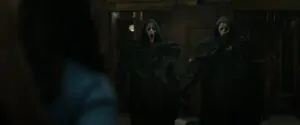
Say goodbye to the classics, the unabashedly spooky and proudly grotesque voices of horror that made the genre home to cultural subversives and provocateurs. Don't expect your heroes to fall upon the sight of unspeakable horrors or a Gothic mansion housing Victorian terrors. Horror cinema would be a funhouse ride that would reflect the contemporaneous culture of their teen audiences. If you wanted the old school, whether it be black-and-white spooktaculars, drive-in staples, or grindhouse splatterfests, you could watch the classics on retrospective programs hosted by the likes of Joe Bob Briggs or Elvira.
In that dune of sanitized and self-aware horror emerged the oasis of Tim Burton's Sleepy Hollow, which celebrates its 25th anniversary this November. An adaptation of Irving Washington's classic tale, audiences and critics alike expected a tasteful tribute to the American Gothic fable of Ichabod Crane and the Headless Horseman. Tim Burton could've simply made a feature-length version of the Disney animated short, which is still a staple of the Halloween season.
As affectionate as Tim Burton is to the roots of Washington's original story, Tim Burton had something different in mind. From Hammer Horror and Roger Corman to exploitation flicks and slashers, he used The Tale of Sleepy Hollow as a vehicle to continue the proud traditions that defined 20th-century horror.
After becoming Hollywood's Golden Boy with megahits like Beetlejuice and Batman, Tim Burton used his clout to revive the glory days of B-movie cinema that inspired him as a child. His first tribute to the era was the biopic Ed Wood, where he cast future Ichabod Crane Johnny Depp (Edward Scissorhands) as the titular Z-Movie director.

Despite being regarded as the man who made the “worst film of all time” in Plan 9 from Outer Space, it's clear that Burton approached Wood's life story with affection and even respect for the maverick auteur. Burton even directly parallels the careers of Ed Wood and Orson Welles to suggest that Alien Invader movies were just as much Hollywood royalty as Citizen Kane.
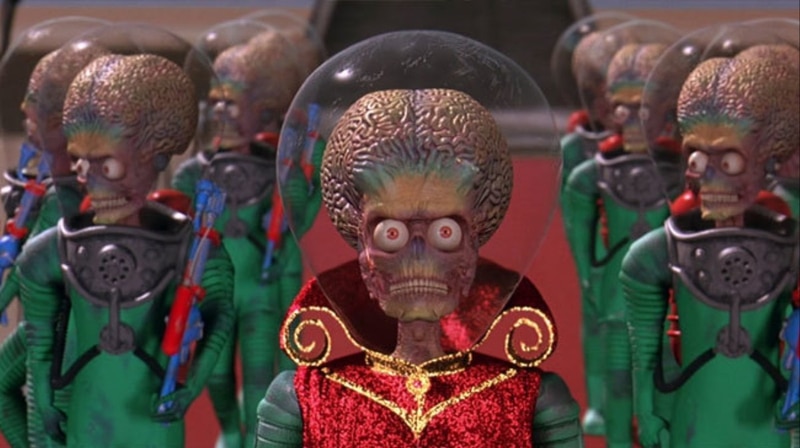
Burton took it a step further by making his own version of an Ed Wood flick with Mars Attacks! Underneath the utterly '90s CGI is an authentic Cold War-era sci-fi B-movie, replete with bug-eyed and cranium-heavy killer martians with laser guns that zap their prey. Unfortunately for Burton, his love letter to yesteryear monster-invasion flicks didn't land with audiences, which preferred the polished and over-produced alternative, Independence Day.
Undeterred by the lackluster response to Mars Attacks!, Burton decided that his next project would be another tribute to not only the gems of spooky cinema that he grew up with but the subgenres and movements that were a part of the mosaic of old-school horror. With that intention, he chose to adapt the infamous tale of Sleepy Hollow, which he described as “the first American horror story,” in an interview with Vanity Fair.
Whether or not Sleepy Hollow is literally the first American horror story, it popularized the genre to the American public consciousness. It proved the perfect vehicle for Burton to craft a love letter to the generations of genre storytellers that came before, and the archetypes and aesthetics that distinguished them. As the Guardian pointed out, Burton was paying homage to everything from “Hammer Horror films of the '50s, '60s and '70s… as well as to Mario Bava's witchcraft movie Black Sunday.”
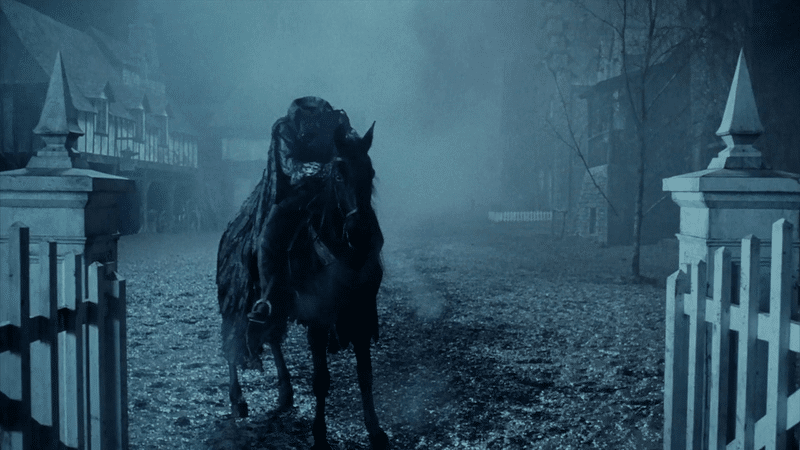
The most obvious and immediate reference in Tim Burton's Sleepy Hollow is to Hammer Horror, a wave of films made by the Hammer production company that pushed the envelope of genre cinema by ratcheting up the violence and sexuality while maintaining the atmosphere and intrigue of Victorian literature. The Hammer influence is apparent in the setting alone, a fogged-up hamlet, rife with bloodletting and promiscuity, in which powdered-wig noblemen are stalked and preyed upon by a vengeful wraith with supernatural properties.
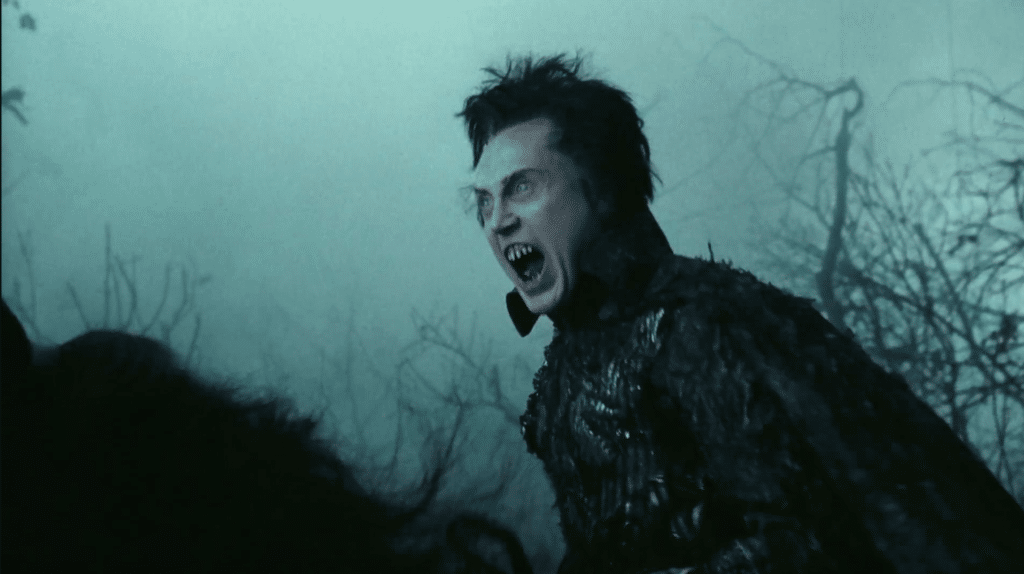
Burton has always paid tribute to Hammer Horror in his films, with his casting of Michael Gould (Horror of Dracula) as Alfred Pennyworth in Batman. In Sleepy Hollow, Burton goes as far as to cast Hammer's Count himself — Christopher Lee (Horror of Dracula, Dracula: Prince of Darkness), marking their first of many collaborations. Lee's Dracula is also directly evoked by Christopher Walken's (The Dead Zone) mute performance as the Headless Horseman's human form, in which he only vocalizes with fanged snarls. That harkens back to Lee's performance as Dracula, whose portrayal was so physical and animalistic that he didn't speak a word of dialogue in Dracula: Prince of Darkness.

At the same time, Burton's elaboration of his literary source material, which he mutates and transfixes to conform to the structure of an exploitation picture, is reminiscent of Roger Corman's series of Edgar Allan Poe adaptations. Corman, the alchemist of Drive-In flicks, took simplistic and straightforward tales such as The Raven and turned them into fantastical tales of warring wizards and dark magic. Corman's adaptations weren't always loyal translations of the original stories to screen, but they're remembered fondly for Corman's singular ability to adapt the text for a new audience and a new generation.
Tim Burton and screenwriter Andrew Kevin Walker (Se7en) embody Corman's spirit by turning the simple cat-and-mouse tale of the original text into a murder-mystery procedural centered on witchcraft and cursed bloodlines. Some critics didn't appreciate Burton's vision of the original story. They didn't care to know about Ichabod Crane's Oedipal complex with his tormented mother, and they didn't need to know that the Headless Horseman was controlled by a witch, or what have you.
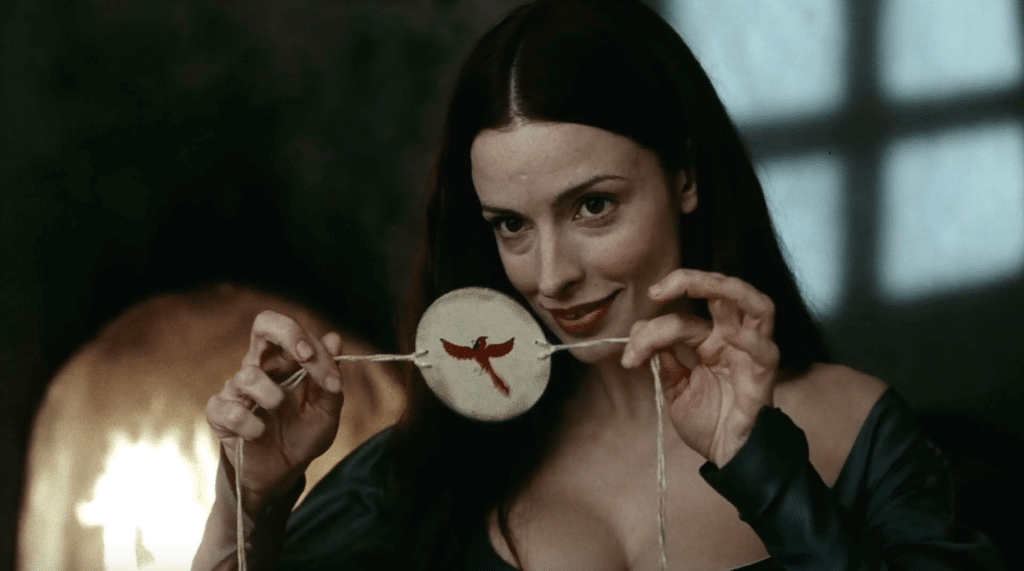
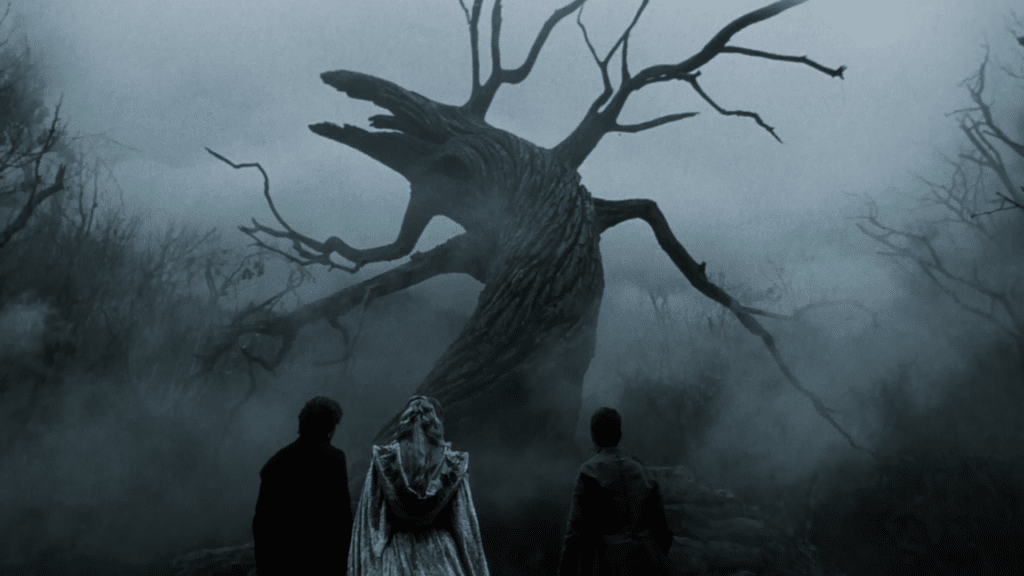
Another element that polarized some media pundits was Burton's embrace of ultraviolence, depicting the Headless Horseman as a superpowered psychopath that could put Jason Voorhees to shame. Burton doesn't shy away from the fountain of crimson blood that shoots out the decapitated necks of the Horseman's victims. If anything, he doubles down, concocting visions of otherworldly gruesomeness, like a forest tree that houses human remains, evoking a Grimms' Fairy Tale rendition of The Texas Chain Saw Massacre.
Burton even addressed the criticisms, arguing, “I grew up watching scary movies and was never afraid of them.” Burton might have disappointed some of his admirers, who preferred the sensitivity of Edward Scissorhands or the evocations of German Expressionism and Film Noir that defined his duology of Batman films. Heady critics wanted to be reminded of F.W. Murnau and Fritz Lang, not so much Tom Savini.
Perhaps the indulgence of gore can't be justified by the text of the original Sleepy Hollow fable. However, when one traces the roots of Burton's prime influences back to Roger Corman and Hammer Horror, it's also important to note that a contemporaneous filmmaker, Herschell Gordon Lewis, was reshaping the horror genre.
1963 saw the release of Lewis' breakthrough, Blood Feast, which would earn him the title “Godfather of Gore” and pave the way for the hacking-and-slashing grindhouse boom of the late '70s. What began as a fringe interest of midnight moviegoers steadily culminated in the mainstream embrace of slashers like Michael Myers and Freddy Krueger. If Sleepy Hollow is a culmination of the theater-going experience for horror fanatics of every generation, then its Hard-R violence is yet another thread in its tapestry. Tim Burton isn't just making an ode to Hammer Horror, he made yet another Hammer installment for a generation that had grown up on John Carpenter and Wes Craven.
Looking back, Sleepy Hollow didn't reset the rules for the then-sanitized state of horror flicks. That wouldn't happen until the explosion of the dubiously dubbed “Torture Porn” with the likes of Saw and Hostel, which wiped away the Scream era more definitively than Nirvana killed Hair Metal.
Sleepy Hollow was a last hurrah, a final goodbye to the rogues and scoundrels that made horror films such an indelible force of popular culture in the 20th century. Thankfully, the influences of Sleepy Hollow live on in various forms. By the time he passed away, Roger Corman had effectively gotten everyone in Hollywood their first job. Hammer Studios has returned to start producing new films using their classic model. Gothic, olden-times chillers like The Witch have returned to relevance with a vengeance.

And yet, no other film in recent memory has so proudly and masterfully adorned the traditions and techniques of old-school horror quite as Tim Burton did with Sleepy Hollow. Rather than filtering these genre staples through a modern lens to produce the most palatable modernization, he embraced all their quirks affectionately and lent his unparalleled eye for visuals and atmosphere.
It's been a quarter century since Tim Burton unleashed Sleepy Hollow onto the unsuspecting public. If that's crazy for you to consider, just think about the fact that a quarter century is almost the exact length of time from Sleepy Hollow's release to the heyday of Hammer Horror and Roger Corman. Hopefully the cycle will continue as genre auteurs continue to champion the proud history of this genre and the host of visionaries that have inspired it, revitalized it, and resurrected it generation after generation.
Catch Sleepy Hollow on the big screen October 13 and 16 as part of the Paramount Scares and FANGORIA rep screenings, celebrating titles from the studio's long horror history. Tickets are available now, and can be purchased right here. Check out the film's anniversary trailer below: