Ick is a pulpy horror comedy bursting with splattery bedlam starring Brandon Routh, Malina Weissman, and Mena Suvari. A strange substance has grown in Eastbrook and the locals just ignore it, until the Ick starts possessing and consuming people. Even then, most Eastbrookers try to ignore it, so it’s up to high school science teacher Hank and his student Grace to battle the Ick and their possessed neighbors.
An homage to classic creature features like The Blob, Slither, and The Faculty, Ick will be in New York and Los Angeles theaters July 24 and everywhere July 27. While Ick has a gigantic soundtrack (Blink 182, Paramore, Chevelle), it also boasts a gigantic orchestral score by the duo Brain and Melissa, who began working with director Joseph Kahn on his second film, Detention. You can get a taste of Ick even earlier by listening to the original score on Spotify or right here on YouTube.
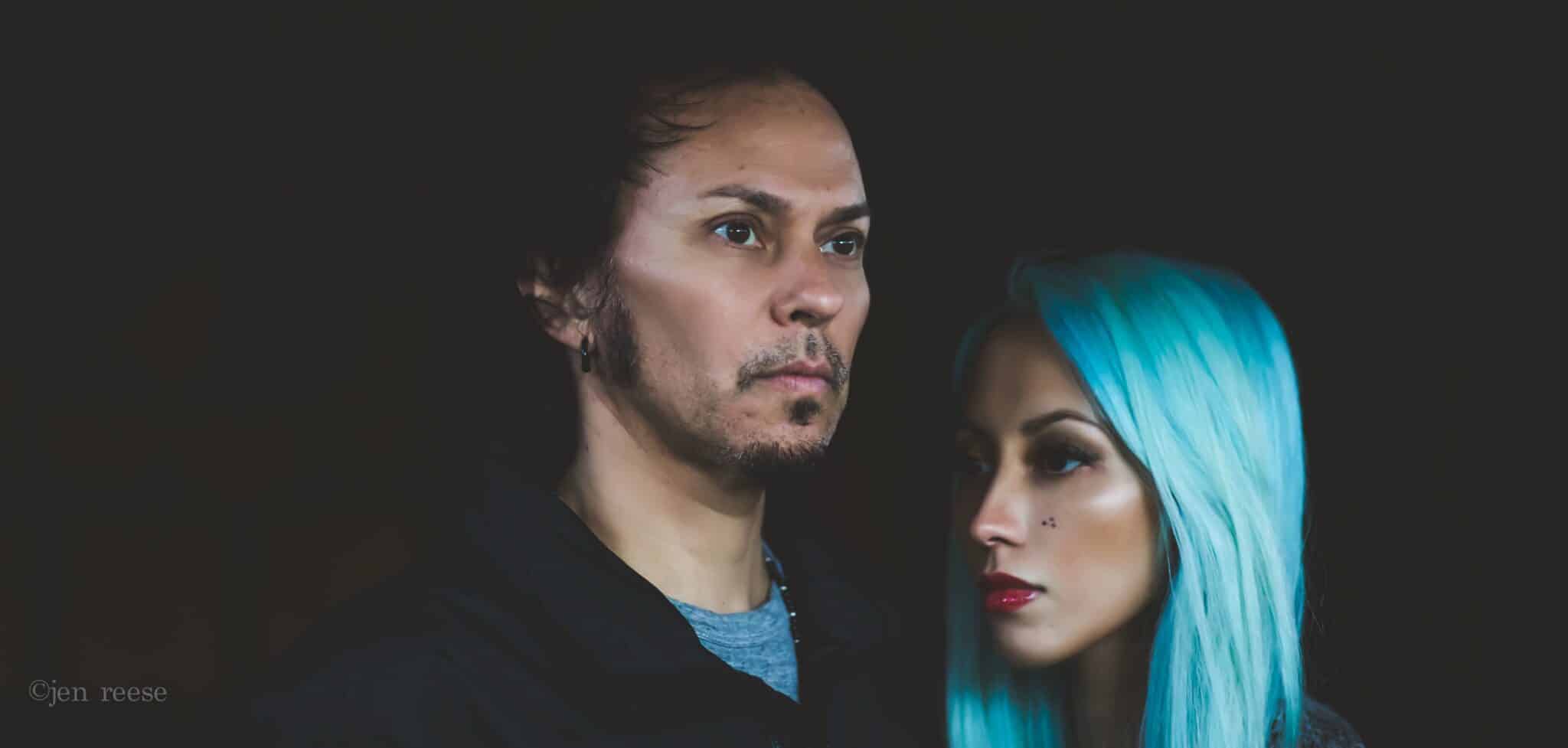
B&M discussed their score for Ick, citing influences from composers like John Carpenter and John Williams, to recent shockers like Terrifier and the Oscar-winning Parasite. Rock musicians who have been/currently in Guns N Roses, they are prolific composers of video game scores like The Last of Us and Call of Duty. So give a listen to how their score evokes the growth of Ick and check out their monster of a process to get it recorded.

How did you develop the score to Ick?
Brain: It starts with [Kahn saying], “Okay, I’m doing this horror thing so kind of want it kind of like John Carpenter.” We get it, old school, synth based. A week will go by or two weeks and then it’ll be like, “Actually, I want to add some James Horner in there too, like on the Aliens score. Maybe we’ll add some of that in there too.” We’re like okay, that would be cool. Then it’s like three weeks later we get “And on top of that, can we do an Alan Silvestri type thing, along with maybe John Williams?” Okay, all right…
Melissa: It compounded and compounded. We were on a Zoom or a call and he was just like, “I just want you to check out this list of score pieces that I’ve compiled. I need the score to be like this.” It was literally the most ridiculous cues from the biggest movies. It was Aliens, Jurassic Park, f*cking Star Wars. It was huge after huge after huge. We never say no to Joseph. We always like to be the composers of yes.
B: Melissa is classically trained. It was tough but you handled it great.
M: Yeah, that’s where some of the heavy lifting comes in for me while Brain really leaned hard into that rad grindhouse horror.
B: I checked out, even though it’s hard to watch, Terrifier, all those kinds of movies to get the current vibe. Then I grabbed the sound elements that were from other video game scores that we had done where we just went to metal shops and did field recordings of just noise.
M: And scrapes.
B: I went around downtown L.A. and did field recordings on real sounds. I was like oh, I can take this pipe clanging, process it and make scary elements. So I was taking care of that side while Melissa was literally with an oboe sound playing parts. We combined orchestra with metal.
How do you use music to scare people?
B: We live and work in this old school 50,000 square foot mansion. A lot of the score was made in the middle of the night and our house would suddenly make a sound – we’d go wait a second, do you hear something? We knew we were doing it right when we were scaring ourselves.
M: In an odd way, our house was involved because the house is so huge and the whole thing is a studio in a way. It has so many weird, dark corners and dark areas. We would just change locations constantly when we were scoring.
B: And write new cues in each location because it’s a lot bigger and older school but it’s like Parasite where it goes down. It’s a four story house so it can go down in the basement and there’s all these crawl holes and all these spaces. There could be a family living down there and we’d have no idea. It’s perfect to make a horror movie in. The house got involved because we would be like okay, hey, we gotta write some scary stuff, we’d be in the basement writing there. Okay, the happier stuff, we’re up in the loft where there’s sun and we see some trees and stuff like that.
How did you achieve the score for jump scares?
B: A lot of those are short 10 – 30 second cues. There’s a big buildup to the part and we’d literally go in and get knives and scrape them together. Especially scary stuff is literally just taking stuff around the house that’s creaking or something, then we process it. We’ll put the pitch up, put it down, put it backwards, throw it back in the computer, mess it up more, process, process, process and it all could have just started from two pans scraping together. We’re just literally recording it with our iPhone, put it in, put it across the keyboard and then you’ve got magic. You’ve got weird stuff happening from found sound. That’s kind of our way to make the avant-garde stuff.
M: Then putting that with the orchestra, seeing some the aleatoric things that were happening that became part of the jump scares. Like basically just having the orchestra or choir and everybody go, “ooooooooOOOOOOOAAAAAAAA.” The live element to it combined with all the process stuff that we do made for some really cool, totally custom and unique sonic textures.
Does the Ick theme build and build like the John Williams Jaws theme?
M: Yeah, the orchestration classically evolves and intensifies. Joseph worked really closely with us on that too because he was very particular about how he wanted the music to build with what was happening with Hank second by second.
B: At first with a lot of the stuff, we didn’t know how it made sense because he would cryptically scattershot: “On this horror scene, design this chase scene to specific cue points and cut points.”
M: Sync points.
B: We would just write a small little snippet and then he would go, “Okay, now it needs to go here.” We would write something, then here, here, chasing his notes.

M: I would say, we stayed up I think at one point for what, 48 hours, maybe close to 72 hours chasing those notes.
B: I didn’t change my shirt for like three meetings and those three meetings are in the 72 hour period and he just kept looking at me strange and I’m like, “So, I slept on the couch, I’m literally wearing the exact same thing.”
M: Brain, be honest. You didn’t change that shirt for months.
B: Yeah, it was pretty bad but even when we were doing one of those major pieces like Ick on the Field or Higher Ground, we would finish it and then we would think this is it, man. We got it. Then we give it to Joseph and then Joseph’s like, “Hey, how about right in the middle here, we just change everything up and the Ick theme comes back in? And then after that, remember that little thing you wrote two months ago for the beginning of this?” Then he would be like, “I need it to cut here, here, here and here” and I’m like dude, that’s like a bar of 17/16, 13/16, 21/16 and 19/16. And it all has to go together…somehow. It did in the end but it became that not by us going, “We’re going to write that” but just by default by the demands. Joseph probably stayed up for six months straight being relentless with us.
M: Brain and I have always seen it as one of the best parts of our relationship with him. On some of those pieces, on Ick on the Field, we f*cking worked on that thing, it was months I think. We would get it done and we would be like oh my God, we’ve been working on it for weeks straight, no sleep, working on this thing and we’re like ah. We send it to him, he’s like, “Wrong. Do it again.” But the thing is it’s so rad to have him, because he has faith in us and he knows we’re going to get it and he knows it’ll be right, but it’s so much better to just have somebody that’s just like, “Nope, do it again” than somebody that’s like, “Well….” Then you’re polishing a turd.
B: Then after all this – we’re done – Joseph calls at two in the morning, “Hey, man, how much would it cost to get a real orchestra on this? I think we just gotta do it. The score’s sounding sick. We gotta get ‘em. And a choir. Can we also get a choir?” This is like two weeks before it world premieres at a festival! We’re like okay, let’s make some calls. We did it remotely with a full orchestra in Budapest. It was awesome. But it was so rad he took that time. He wanted it to go to that next level. Like, “This sounds great, Melissa, this piano string thing, but we need it to sound like the Wilson part of Cast Away where you just want to cry like a little baby.” The only thing that can get that is a real orchestra.
M: The end scene, when things are really not going well for all the characters. He just kept coming back and being like, “More heartbreak. More heartbreak. Break my heart.” And we’re like oh God, how much more broken can you sound? Then we added a choir to it and now any time when the three of us listen to it, we’re always fighting tears because it really is heartbreaking. I’m so proud of it.
Is that the Daddy Daughter theme that’s so emotional?
M: Yes, that theme was also something that just was not happening. We’re not getting it right. Brain, I think you wiped out. It had been 72 hours and you’re like, “I don’t know if I’m going to survive.” He went to take a nap and I just went into this crazy crosseyed mode that was: I can figure this out myself. I just went to a piano and I wrote it. I just sat at a piano, by myself.
B: The middle of the afternoon, I had to go to sleep.
M: It had been 48, 72 hours. It was crazy. The no sleep, both of our eyes were twitching. I wrote it and it had been after maybe what 15 versions of Joseph being like nope, nope, nope, not right, not right. I sent the fifteenth and he was like, “Yup, perfect. Absolutely perfect. Now we can move on.”
Was doing a full orchestral score different for you?
M: I think I’m best at, to be honest with you, pop writing. Joseph knows that. So even in an orchestral composition, he encourages us to lean into our pop sensibilities and go, “Where is the catchiness of this even if it’s f*cking terrifying? Is there something memorable about it that I can sing? Or is there something memorable about it that will stick in my head that’s like a repeated theme?”
B: There’s a little bit of pop writing in all our stuff.