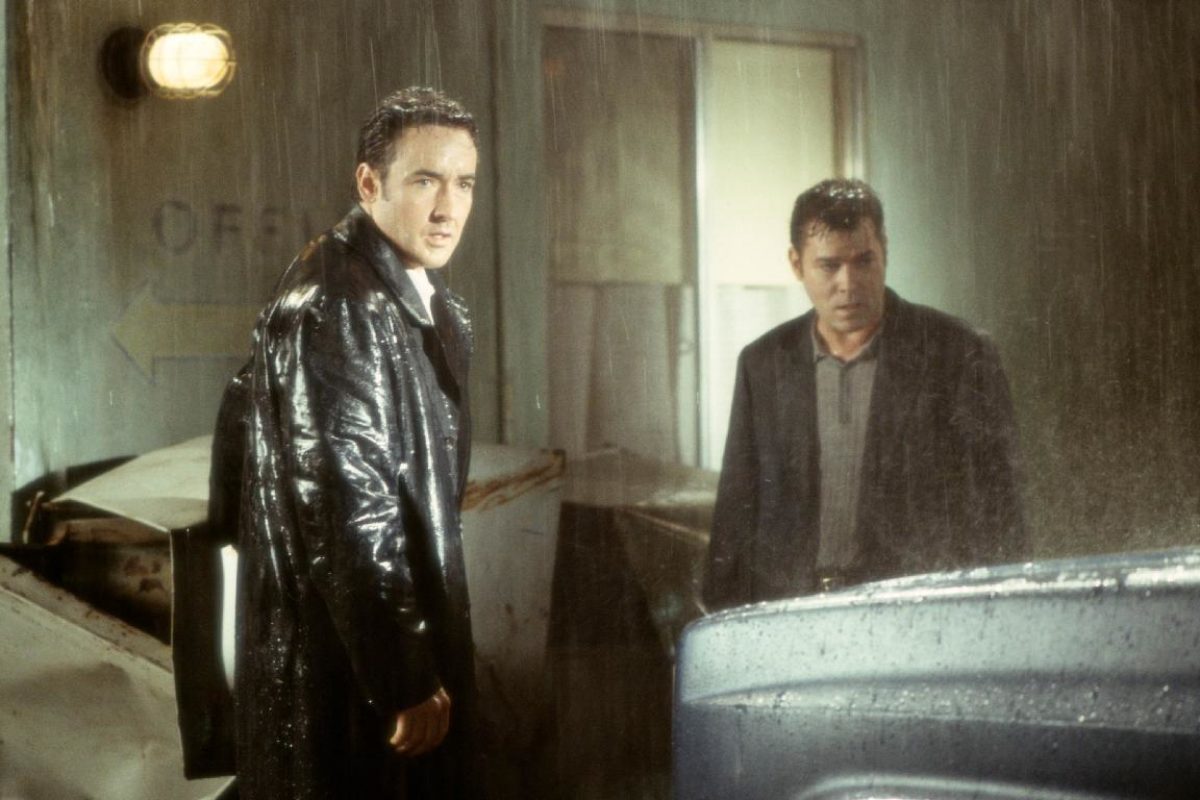
Editor's Note: This was originally published for FANGORIA on September 6, 2003, and we're proud to share it as part of The Gingold Files.
Identity is something of an acid test for whether a movie that hinges on a major story reversal in the final act can work just as well the second time around. In this case, I had pretty much the same reaction to my return viewing of the film as I did the first time (see review here). It’s an intriguing, well-acted, slickly shot suspense shocker that’s cleverly engaging right up until the big plot twist, which serves to negate any emotional involvement with its characters. And those hoping for a different experience on the DVD, which offers a seamless-branching opportunity to view the movie with an “alternative ending and additional scene,” will be disappointed; this new conclusion is just a minor re-edit of the climactic revelatory montage, and the other extra footage is an easily disposable conference-room bit with Alfred Molina’s doctor character.
In other ways, though, the Identity disc from Columbia TriStar shines. That’s literal in the case of the 2.40:1 transfer, which despite the omnipresent rain and darkness never loses clarity or sharpness, boasting great colors and deep blacks that don’t break up into grain and artifacting. (The disc offers the option to watch the movie fullscreen, but don’t even go there; 1.85:1 clips in the accompanying featurette reveal that using even that aspect ratio distractingly crops some of the compositions.) The constant storm sounds fine, too, thanks to nicely varied Dolby Digital 5.1 audio that makes the most of all the thunder and suspicious noises.

The aforementioned mini-documentary, derived from the Starz! Channel, is the expected video presskit, though the behind-the-scenes explanation of how the rain was created (for a “motel” created entirely on a huge soundstage) is kinda neat. Three storyboard-to-scene comparisons (don’t watch ’em before the feature—one gives away a late plot twist) and four additional deleted scenes can be sampled, the latter with optional commentary by director James Mangold. Like the one incorporated into the seamless-branched feature (which isn’t viewable separately), these are minor snippets, but worth watching once for those who want to see a little more of the characters’ interactions.
The jewel of the disc is Mangold’s feature commentary, which is as well-thought-out and thorough a solo DVD talk as I’ve heard in a while. He explains his aesthetic approach to all aspects of the feature without overintellectualizing, noting the challenge of quickly establishing and then juggling the multiple characters, and of shooting the death scenes with a “non-anticipatory camera” so that the audience is just as surprised by them as the other characters are. There’s additional attention given to his work with the actors, plus side trips into his research (the Hillside Strangler case was a key inspiration) and even a funny story involving KNB’s FX dummy of one of the victims. He even points out moments from early in the film that set up the big surprise—one of which appears at first glance to be a major continuity error. All the extras are navigated via cleverly designed menus on a package that has been given just as much care as one of Columbia TriStar’s higher-budget titles.
But the company can be seen as subverting itself just a little bit by preceding its release of the Identity disc with a pair of even better, vintage psychothrillers on DVD (albeit with no frills). Coincidentally, both feature heroines afflicted with a disability: the speechless heroine of Mute Witness (see review in Fango #226) and Mia Farrow in See No Evil. The latter film’s combining of elements from two closely prior suspense hits—casting Farrow (from Rosemary’s Baby) as a blind woman (à la Wait Until Dark), might have proven to be as much of a gimmick as Identity’s switcheroo, but the actress, director Richard Fleischer and scripter Brian Clemens keep the movie realistic and the suspense plausible throughout. (More gimmicky, in fact, are the early-reel suggestions that the violent culture of the then-modern world is responsible for its villain’s psychosis.)

Farrow’s performance is pitched at just the right medium between innocence and hysteria throughout, while Fleischer and cinematographer Gerry Fisher pull off a great example of non-verbal storytelling during the lengthy sequence in which Farrow’s Sarah obliviously shares a house with three just-murdered relatives. The disc’s 1.85:1 transfer is derived from a print, with the attendant mild grain and occasional speckling, but otherwise appears quite good, with fine colors and clarity. As one would expect given the heroine’s condition, sound (and lack thereof) is an important component here, and while the audio is Dolby Digital mono, it’s sharp enough to get the balance of sudden, scary noises and threatening silences just right.