

Last Updated on September 29, 2025 by Angel Melanson
This editorial contains mild spoilers for Silent Hill f and Higurashi.
With the release of Silent Hill f, Konami's iconic survival horror franchise welcomes its first full-fledged mainline game since 2012’s Silent Hill: Downpour. While the series aims to rejuvenate itself with remakes of their most acclaimed installments, the creators also sought to draw fresh perspectives into the fog.
For Silent Hill f, Konami turned to a writer familiar with small town terror and supernatural mystery to breathe life back into the brand. Game creator Ryukishi07 might be a new name to the world of AAA gaming, but to fans of visual novels, he is responsible for some of the most provocative and powerful stories to ever be put on the market. One of his most notable works, Umineko When They Cry, has a word count that trumps even the King James Bible. That said, it was its predecessor, Higurashi When They Cry, that put Ryukishi07 on the map.
Unlike the big budget Silent Hill f, Higurashi initially had a microscopic production and a focused fanbase. Not only were the original circle-fisted sprites drawn by Ryukishi07 himself, but the author’s family were part of the production staff, as shown in the 2005 documentary Akihabra Geeks. His younger brother took charge of the game’s backgrounds and sales, his father conducted research for the game’s story and his mother gathered data on audience response.
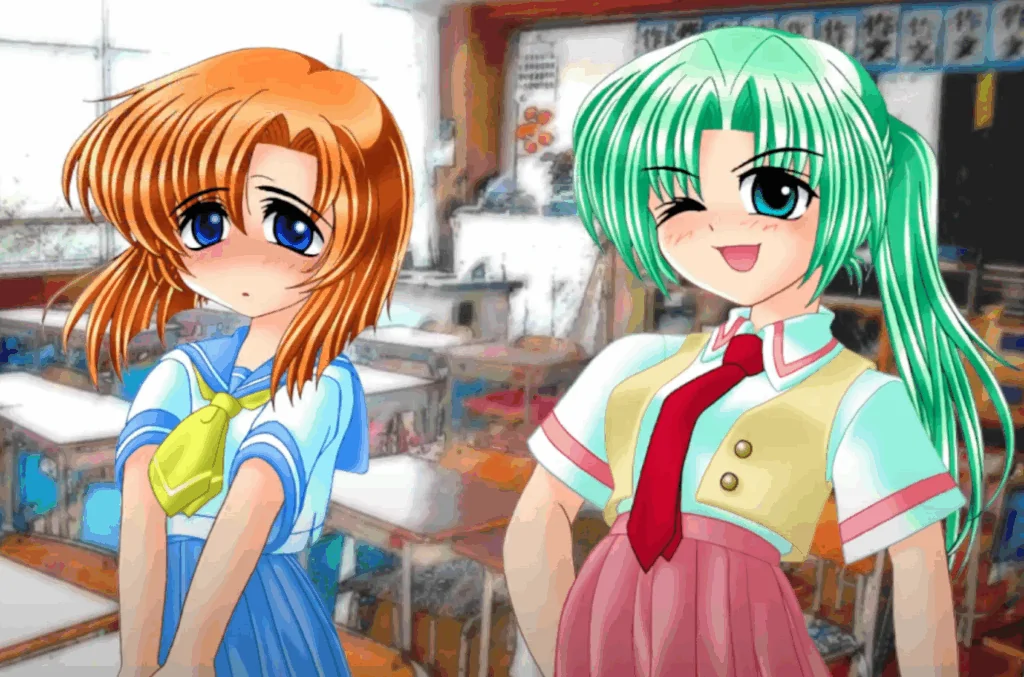
Ryukishi07 has come a long way from his humble beginnings and so has Higurashi. The game’s eight chapters (which were released separately) have now been re-released with updated artwork and voice acting. That is not even mentioning the game’s numerous anime and manga adaptations.
But what is Higurashi even about? Without giving too much away, Higurashi takes place in the town of Hinamizawa — a village so small that students of all grades ranging from elementary to high school all share a single classroom. New to this town is Keiichi Maebara, a spin on the typical visual novel protagonist whose comedic emulation of tropes is a simple mask for a genuine personality. He is the first point of view character for this narrative as an outsider who has quickly found his home in the hamlet.
Keiichi is joined by an eccentric cast of locals, a staple to the small-town mystery genre a la Twin Peaks and Silent Hill. There are his board game-loving classmates like Mion Sonozaki, Rena Ryugu and Satoko Hojou, the friendly-but-sometimes-untrustworthy detective Ooishi, town mascot Rika Furude, and the occult-obsessed Takano.
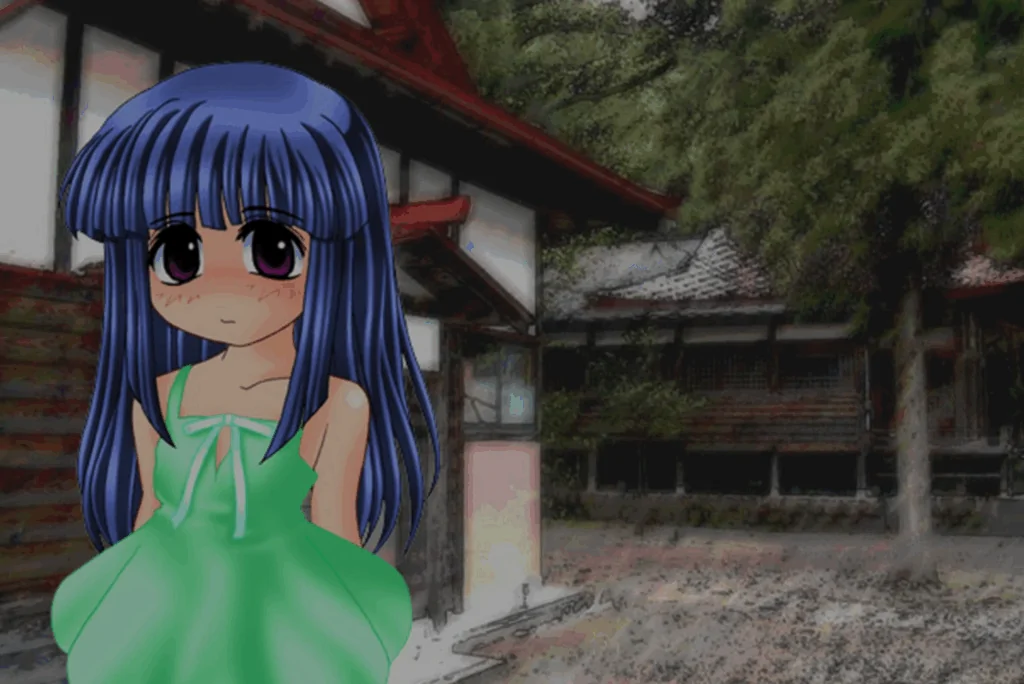
While everyone initially seems friendly, the world slowly unravels as Hinamizawa’s mysterious and violent past begins to unearth himself. In the process, the cast of characters are pushed to the brink in a story of psychological horror that blurs the line between grounded conspiracy and demon-possessed phenomena. Friends grow paranoid of each other, a mysterious curse leaves death in its wake, and shades of slasher horror bleed through the novel’s images. Each chapter features the same cast of characters but in their own timeline, creating this structure that feels like a scary stories you would whisper on a rainy night.
Silent Hill, in many ways, relies on a similar framework albeit with a different flavor of horror. An outsider wanders into a fog-shrouded town and encounters strange townsfolk and monsters born from the human imagination. At a fraction of Higurashi’s playtime, most of Silent Hill’s games focus on creating mystery from the jump while telling a rich and compelling narrative about its characters. Silent Hill 2 famously is a microcosm of James Sunderland’s unstable mentality in the final days of his ailing wife. Silent Hill 3 acts as both a reflection of the tragedy from the first Silent Hill game while portraying the experience of adolescent womanhood in its most unfiltered and horrific form.
Silent Hill f is no different, with one major difference. It does not take place in the titular town. Instead, it is set in an analogous village in 1960s Japan. The game follows Hinako Shimuzu, a high school student who navigates the city of Ebisugaoka. The skeleton of the franchise’s past games is present but everything, from its aesthetic to its music, is unique. Konami recruited artist Kera to provide a distinct brand of horror separate from Masahiro Ito’s iconic designs from the rest of the series.

Although composer Akira Yamaoka has returned, he is joined by composer Kensuke Inage as well as Ryukishi07’s frequent collaborators Dai and Xaki. Here, they traded in the hard rock themes of the original games for music more fitting of its time period and setting, emulating ancient Japanese court music with more acoustic instrumentation. The team had a goal of creating a game that was “100% Japanese horror” in contrast to the previous games which served as an interpretation of western horror from a Japanese perspective.
And that is what makes it a perfect match for Ryukishi07. Beyond the inclusion of lore-filled notes and the incredibly specific research about small town natural disasters, the greatest connection between When They Cry and Silent Hill f is their goal of utilizing horror to have socially conscious conversation. Drawing upon his past experiences as a social worker, Ryukishi07 uses Higurashi to reflect on the realities of Japan beyond the rose-colored glasses tourists often wear. In fact, there is an entire chapter late in the game where several hours are dedicated to the protagonists navigating the frustrating bureaucratic red tape that prevents social workers from helping a child trapped in an abusive household.
On the other hand, Silent Hill f draws upon the 1960s Japanese women’s movement, centering the issue of structural patriarchy even in its opening minutes. It is a core obstacle for its protagonist Hinako, whose angst and repressed desires are informed by a mix of her treatment as more “masculine” by her closest friends as well as the societal confines she is forced to face because of her identity as a woman.

This winds up being a similar arc faced by Higurashi’s Mion, whose tomboyish personality has led to a deep insecurity and a wish to be seen beyond that mask. In several chapters of the game, this inner conflict gives way to a vicious spiral that catalyzes a bloody fate. Oddly enough, both games do somewhat share similar endings — that is if you get to the true ending of both games. Silent Hill f has five different endings, most of which end in brutality or unease. Each of Higurashi’s chapters end tragically.
However, the nonstop horrors of both of these games do have a light at the end of the tunnel, and it boils down to the characters gaining the courage to finally express and communicate their troubles to each other. It is Ryukishi07’s ultimate thesis: friends are valuable, and the ability to move forward comes through vulnerability. To get that optimistic finality, players will have to trudge through and replay Silent Hill f multiple times, while players of Higurashi will need to get to that eighth chapter. But it is worth the time.
With all their similarities, there are a few key differences players may be aware of if they are curious about trying Ryukishi07’s other catalogue. For the most part, Higurashi does not have “gameplay” per se. It is a pure visual novel consisting of static sprites and textboxes that can take nearly 100 hours to read through depending on the player. Tonally, Silent Hill f is rather close to Higurashi’s darkest moments, but it is also valuable to know that the rest of the game can be described as a slice of life with all the lightheartedness and comedy that might come with it.
Where physical monsters are the demons that haunt Ebisugaoka, the evil that lurks in Hinamizawa are immaterial terrors that leave much to the reader’s imagination. Silent Hill f serves as a litmus test and a bridge between two wildly different genres of horror. For those who enjoyed the stress of managing resources, solving puzzles, and struggling to battle monsters, survival horror games like Resident Evil, Alan Wake II, Signalis, or the upcoming remake of Fatal Frame II may be their speed. For the others who are seeking more of Silent Hill f’s story, there are tens of hours of pure unadulterated horror waiting for them where cicadas cry.
Silent Hill f is now available to play on PlayStation 5,Windows and Xbox Series X/S, and via Steam.
