We FANGORIA readers know horror. We know it as an unshakable part of our core. Sometimes it is obvious to us, visiting as a creature from beyond the grave in search of flesh, and sometimes it is less so. The seemingly typical suburban neighbor who moonlights as a serial killer, or the overly friendly politician with the sneaky smile that tells you they’re up to something sinister. Big or small, loud or quiet, we know that horror is everywhere. Because the human experience can be, indeed, horrific.
The unfortunate, inescapable truth is that the world is full of horror. But horror cinema has also always been full of the world.
Before film, horror was a staple of literature, theater, and folklore used specifically as allegories for the socio-political struggles of time. Mary Shelley’s Frankenstein (1818) explored fears of unchecked scientific progress in regards to the Industrial Revolution. Bram Stoker wrote Dracula (1897) during the Victorian era, reflecting fears of foreign invaders, sexuality, disease, and shifting gender roles.
19th century Grand Guignol Theater used shocking graphic spectacles of violence and gore as commentary on political climates, class divides, and moral panics. So when the silent era ushered in film as a new artistic medium, it was no coincidence this tradition of horror storytelling as political metaphor continued.
Horror films have always reflected the political climate of their time. Below are a few that I find particularly significant. This list is both expansive and still not all encompassing enough, but I hope that it serves as a beacon of hope for you, should you need it now more than ever.

Horror has never had it easy. It has always been the thrashing punk rocker shouting at the gates of cinema in bold spite and defiance of this meat-grinder we call life. But when the angry flood of zombie predators, knife wielding axe murderers and possessed demon vampires from hell come to take us, it will remain. Steadfast. A fearless reminder of our brave humanity and the resilience of our spirit. Because when the terrors persist (and as every horror fan knows, they always do), we remain worth fighting for.
The earliest films of the silent era eagerly embraced politically charged horror.
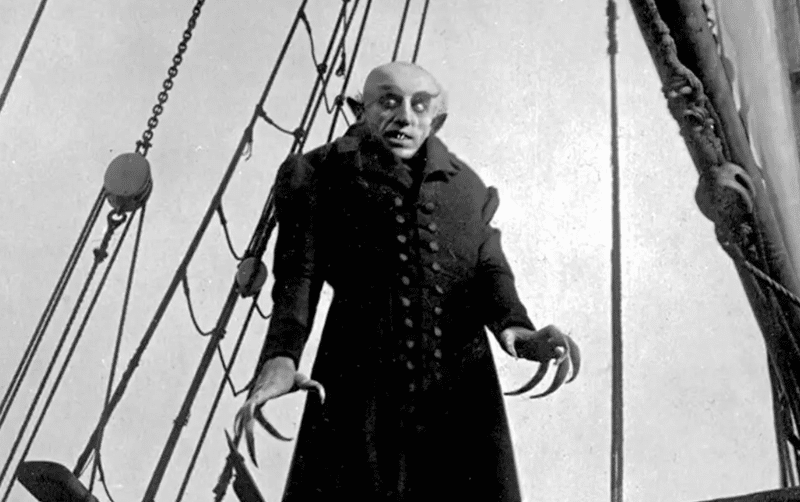
1. Nosferatu: A Symphony of Horror (1922, directed by F. W. Murnau) references a fear of a “foreign other.” A real cultural fear spread through xenophobic propaganda in post WWI Germany. Orlok is an outsider from the East (Transylvania), bringing disease, disability and death to the unsuspecting town. His appearance (hooked nose, elongated fingers, and hunched posture) reference harmful anti-Semitic caricatures. The film is an allegory for the inaccurate conspiracies and fears being perpetuated at the time about immigrant people. Its successors (The Phantom of the Opera (1925) and The Hunchback of Notre Dame (1923)) also touch on these themes and the idea of “the other” becomes a staple in horror messaging still used to this day.
During the Great Depression and World War II Horror films became powerful metaphors for economic despair and emphasised anxieties around sexuality, gender and war-related trauma.
2. The Mummy (1932, directed by Karl Freund) explores the consequences of Western arrogance towards other cultures. The film critiques Western exploitation by showing how archaeologists, in their pursuit of wealth, disregard sacred traditions which ultimately unleash forces they cannot control. It is a cautionary tale about the dangers of cultural arrogance, and how the West’s need to colonize other civilizations leads to its own peril. Later, Poltergeist (1982) will also tackle this theme through the desecration of indigenous land, wherein Western society attempts to move the tombstone markings of their brutality, but the bodies (as do the consequences of these actions) remain.

3. The Wolf Man (1941, directed by George Waggner) explores masculinity, animalistic impulses, and PTSD from World War I. Larry Talbot’s transformation into a werewolf has him constantly grappling between civilized restraint and primal aggression. His violent, uncontrollable urges symbolize the fear of unchecked animalistic impulses within men, suggesting that beneath the surface of refined masculinity lies something wild and dangerous. Larry’s curse is also a parallel of the psychological scars of returning WWII soldiers. His transformation is involuntary, much like how PTSD forces people to relive horrors they cannot escape.
4. Cat People (1942 directed by Jacques Tourneur) is an allegory for xenophobia, sexual repression, and the fear of women’s independence. Protagonist Irena’s inability to conform to a heteronormative romance marks her as a queer outsider, haunted by a curse that transforms her desires into something monstrous. Her struggle against assimilation culminates in a psychiatrist’s violent rape in attempt to “cure” her, criticing the foundation of the American Dream as one founded on repression, forced conformity and violence. The fear of queer “otherness” at a monster metaphor continues to be explored in films like Tony Scott’s The Hunger (1983).
As the world moved into the atomic age, Sci-Fi Horror reflected fears around nuclear power, communism, and societal conformity.
5. Godzilla (1954, directed by Ishirō Honda) was directly inspired by the Hiroshima and Nagasaki bombings, and the Lucky Dragon No. 5 incident. Godzilla is created by nuclear radiation. The monster's destruction of Tokyo mirrors real-life images of wartime devastation. Dr. Serizawa’s ethical dilemma over using a new weapon to stop Godzilla, reflects a larger moral dilemma about scientific progress and the arms race while criticizing American military occupation, portraying Japan as a nation struggling for autonomy in the face of global superpowers.

6. Invasion of the Body Snatchers (1956, directed by Don Siegel) reflects Cold War
anxieties, particularly fears of communist infiltration and McCarthy-era witch hunts which led to the persecution of those deemed “un-American.” The film’s pod people strip individuals of their emotions and uniqueness which turns humans into emotionless drones, highlighting fears of being forced into oppressive social structures and a communist ideology. It also nods to identity erasure of the 1950s, for LGBTQ+ people and other minorities who faced intense pressure to suppress themselves and conform to societal expectations. The true horror of the film is the horror of losing one’s true self.
These themes continued into the 1960’s and 70’s as horror reflected the Vietnam War, civil rights movements, and various societal breakdowns.
7. The Birds (1963, directed by Alfred Hitchcock) tackles environmental horror just as the dangers of the ecological damage caused by the indiscriminate use of DDT are being reported in scientific journals. It uses ordinary birds to portray nature as an uncontrollable force that turns against humanity. It highlights the power of nature against the fragility of perceived human dominance. Arguably the most chilling moment in the film is the discovery of Dan Fawcett’s corpse, whose eyes have been pecked out by the attacking birds. Having been “blinded” to nature’s warnings, he is now violently and physically stripped of his ability to “see” the consequences of his actions.
A more modern take on this could arguably be Josh Ruben’s Werewolves Within (2021), which is set in a town divided over a proposed gas pipeline. The film exposes how fear, misinformation, and self-interest prevent people from working together, mirroring real-world political tribalism. The real danger isn’t just a werewolf, it’s the way corruption and human selfishness destroys communities from within.
8. Rosemary’s Baby (1968, directed by Roman Polanski). Director’s own horror aside, the film used themes of second-wave feminism to critique male control over women’s bodies. Rosemary is manipulated, gaslit, and is ultimately raped as a vessel for Satan’s child in exchange for her husband’s success. It symbolizes how patriarchal institutions (marriage, medicine, and religion) often strip women of bodily autonomy and is a reference to reproductive rights, consent, and the way women’s voices are dismissed. The film is a chilling allegory for the fight against male-dominated control over women’s agency which goes on to be echoed in films like Bryan Forbes’ The Stepford Wives (1975) and Rose Glass’ Saint Maud (2019).
9. Night of the Living Dead (1968, directed by George A. Romero) is a landmark critique of race relations and civil rights struggles in America. The “godfather” of zombies, Romero establishes them as a symbol of anarchy through the collapse of systems of civilization and the fragile rules we attempt to put in place to “protect” us. He takes this a step further with the casting of Duane Jones as leading man Ben, the calm and capable Black protagonist. The character assumes leadership over a group of white survivors, and challenges white authority figures, but its ending is the most chilling and powerful racial metaphor of the film. After surviving the night, Ben emerges from the house, only to be shot by a white militia who “mistake” him for a zombie (or simply see him as a threat). His lifeless body is then thrown onto a pile of burning corpses, evoking images of lynchings and racial violence during the Civil Rights Movement. Released the same year as Martin Luther King Jr.’s assassination, Night of the Living Dead reflected the brutal reality of racial injustice and the systematic dehumanization of Black Americans.
Romero later expands on this in Dawn of the Dead (1978) where he combines racism with a critique of consumerism and the decay of American society. He brings in legendary effects artist Tom Savini to increase the practical violence with the intent to shock the baby boomer generation out of the apathy and mindless consumption, which his zombies become a metaphor for.
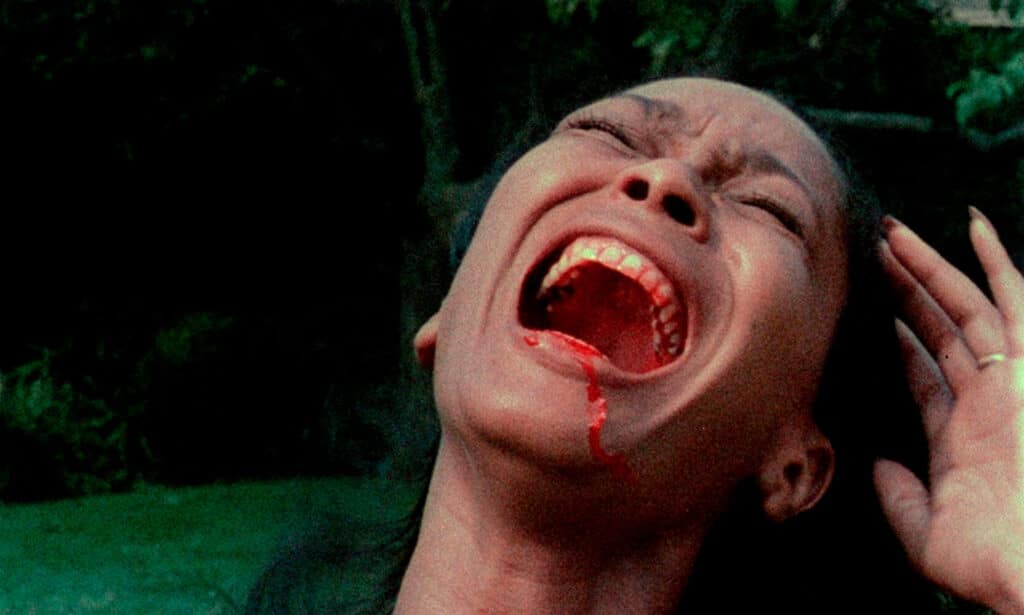
10. Ganja & Hess (1973, directed by Bill Gunn) references Blaxploitation films of the time with commentary on race, colonialism, religion, and capitalism. It presents an intellectual and affluent Black protagonist, Dr. Hess Green (Duane Jones), whose vampirism (caused by an ancient African dagger) becomes a metaphor for the complex relationship between Black identity, power, and assimilation in a white-dominated world. The film critiques colonial exploitation by using blood as a symbol of oppression while also exploring the duality of Christianity as both a tool of redemption and a mechanism of control within the Black community. The film was so controversial, it was heavily re-edited and rebranded for “mainstream,” commercial appeal but its themes are still reflected in works like Remi Weekes' His House (2020) and Spike Lee’s remake, Da Sweet Blood of Jesus (2014).
11. The Texas Chain Saw Massacre (1974, directed by Tobe Hooper) embraces feelings of nihilism wherein the traditional institutions government, law enforcement, and family fail to protect people. The Sawyers were once slaughterhouse workers but lost their jobs due to modern, mechanized butchering methods which made their skills obsolete. It reflects the real economic struggles of rural working-class Americans, particularly in industries that rely on physical labor and are being replaced by automation. The family turns to cannibalism as both a survival mechanism and a twisted continuation of their slaughterhouse trade- turning human beings into livestock using the very tools of their former job (meat hooks, sledgehammers, and chainsaws). It identifies the similarities of human and animal suffering, and how industrialized violence, both in war and food production, has numbed society to brutality. Much like the family has been reduced without remorse, they too reduce people to meat for consumption.
12. Black Christmas (1974, directed by Bob Clark). The character of Jess Bradford (Olivia Hussey) is widely regarded as one of the most progressive white female protagonists of all time. Years before Laurie Strode, Jess is not only sexually active but explicitly advocates for abortion. She is the first slasher heroine to openly challenge patriarchal control over women’s bodies and has to do it while navigating incompetent law enforcement which fails to protect her. Unlike later slasher films, which traditionally punish sexually active women, the film does not frame Jess’s choices as a moral failing. Instead, it exposes how violence against women is a societal issue enabled by systemic failures.
John Carpenter and producer Debra Hill built on these themes in Halloween (1978), using Michael Myers as a symbol of senseless violence against women. While Lydia (P.J. Soles) is punished for her defiance, Laurie Strode (Jamie Lee Curtis) fights back, aiming to protect future generations. In not passively waiting for change or to be “rescued,” she ultimately perseveres.
13. Carrie (1976, directed by Brian De Palma) again comments on the patriarchal fear of female sexuality through its indictment of religious fanaticism. Carrie’s telekinetic powers awaken with her first period, directly linking her supernatural abilities to puberty and the fear of the power that comes with womanhood. Her mother’s oppressive control reflects how religious dogma has long been used to shame and suppress female autonomy. Carrie’s prom night massacre isn’t just an act of vengeance- it’s a message of violent reckoning against a world trying to contain and punish women.
14. Suspiria (1977, directed by Dario Argento) similarly critiques institutional control over women and the exploitation of female youth. But unlike its predecessors, which depict male control over women, Suspiria shows how patriarchal systems also influence women in power to compete with and punish other women. Represented by the witches who sacrifice young women to maintain their own power, the film explores how some institutions can misleadingly promise empowerment but ultimately consume and discard women. It is a precursor to films like Darren Aronofsky’s Black Swan (2010), Nicolas Winding Refn’s The Neon Demon (2016), and Carlo Mirabella-Davis’ Swallow (2019).
15.¿Quién Puede Matar a un Niño? (Who Can Kill a Child?) (1976, directed by Narciso Ibáñez Serrador) explores the consequences of colonialism and war through its story about an island where children have risen up and slaughtered all adults. The film even opens with real historical footage of war crimes, showing children affected by Nazi concentration camps, the Vietnam War, the Spanish Civil War, and other global atrocities drawing clear parallels to the unseen victims of war: the children. This is explored in a more modern context in Issa López’s Tigers Are Not Afraid (2017).
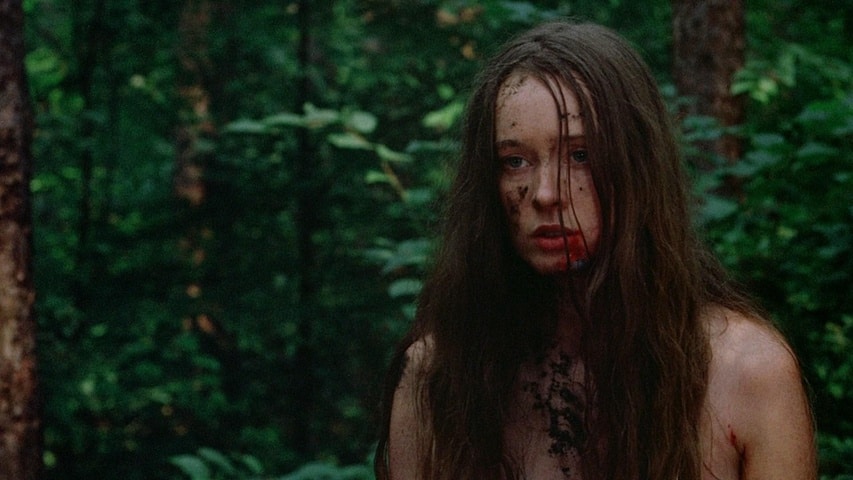
16. I Spit on Your Grave (1978, directed by Meir Zarchi). The existence of the rape-revenge subgenre is a socio-political commentary in itself, as an assertion of female agency in a world where the justice system fails victims. While Ingmar Bergman’s The Virgin Spring (1960) predates this film, the revenge in I Spit is enacted by the victim herself, instead of a man on her behalf. Jennifer’s (Camille Keaton) slow, methodical revenge force the audience to confront the horror of male sexual violence. Critics like Roger Ebert deemed the film “misogynistic trash” and it was banned in multiple countries for its raw and unflinching critique of rape culture. Despite ongoing debates over the film, the influence rape-revenge genre and its unapologetic portrayal of female vengeance make it a landmark in politically charged horror.
17. Alien (1979, directed by Ridley Scott) takes reproductive horror a step further while commenting on corporate exploitation and gender politics. It shattered traditional roles for female characters in sci-fi of the time, by introducing Ellen Ripley (Sigourney Weaver) as a capable and commanding lead. Ripley is not a traditional sex symbol nor damsel in distress. She is a competent, level-headed survivor whose battles go beyond the Xenomorph itself. The alien serves as a grotesque metaphor for penetration and childbirth, exploring fears around bodily autonomy, sexual violence, and forced reproduction. Meanwhile, the Nostromo crew are portrayed as corporate expendables, reinforcing themes of capitalist dehumanization where profit is valued over human life.
Then into the 1980s, where horror explored themes of capitalism and criticism of conservative Reaganomics.
18. The Thing (1982, directed by John Carpenter) uses the concept of an alien organism which spreads through bodily fluids, as a metaphor for both the AIDS crisis and fear of assimilation. The film’s paranoia and blood testing scene reflect anxieties about HIV infection and the societal stigma around it. The creature’s ability to perfectly imitate its host again nods to the societal loss of identity or being consumed by an external force (ie: one's government). By blending the themes of infection and distrust, with the established horror trope of “the other,” The Thing remains a chilling reflection of living in a pandemic still relevant today.
19. Child’s Play (1988, directed by Tom Holland) was released shortly after the Cabbage Patch Kids boom which resulted in hysteria over a frenzied demand for dolls. Similarly, Chucky (Brad Dourif) is a mass-produced toy infused with the soul of a serial killer, reflecting how corporations prioritize profit over safety. It also explores class struggle, as Karen Barclay (Catherine Hicks) can only afford to buy a possibly stolen one from a street peddler,much like how low-income families are regularly forced to take financial risks that leave them vulnerable. The franchise itself has also had a major impact on LGBTQ+ representation in horror, largely due to creator Don Mancini. Later films, especially Bride of Chucky (1998) and Seed of Chucky (2004), introduced overt queer themes, with characters like Glen/Glenda, Chucky’s gender fluid child, making the series one of the few long-running horror franchises to openly embrace queerness, camp, and fluid identity as central themes. It actively celebrates queer identity, self-acceptance, and chosen family.
20. Society (1989, directed by Brian Yuzna) is a biting satire about class warfare, economic disparity, elitist corruption and the predatory nature of wealth. Bill Whitney (Billy Warlock) discovers that the rich are not just metaphorically feeding off the poor for resources but are, in fact, an incestuous, shape-shifting race that physically absorbs and consumes the lower class. Its infamous flesh-melding orgy showcases the parasitic nature in which the wealthy prey on the working class for their own gain, still relevant in today's socio-economic landscape; Matt Bettinelli-Olpin and Tyler Gillett explore class warfare and ritualistic violence in Ready or Not (2019). Elsewhere in the 1980s, the wealthy alien overlords of John Carpenter's They Live (1988) and Martin Sheen's psychotic, man-of-the-people politician in David Cronenberg's The Dead Zone (1983) address themes that have never felt more pertinent.
In the 1990s, horror films expanded on socio-political themes around gender and commented on pop-culture.

21. The Silence of the Lambs (1991, directed by Jonathan Demme) dissects gender politics and society’s obsession with violent men. Clarice Starling (Jodie Foster) is constantly undermined in the male-dominated FBI, forced to prove herself in ways her male counterparts never have to. The film exposes how serial killers like Hannibal Lecter are mythologized and even admired, while the brutal reality of gendered violence (embodied by Buffalo Bill) is often ignored until it becomes too monstrous to look away from. It calls out the institutions that enable violence and the culture that glorifies it, and by showing very little of Lecter himself it reminds audiences how often what you can’t see is much scarier than what is presented in front of you.
22. Interview with the Vampire (1994, directed by Neil Jordan) used vampirism as a metaphor for privilege, queerness, and historical oppression. While the film does not directly address slavery, it’s no coincidence that Louis (Brad Pitt) originally owns a plantation in 18th-century Louisiana and portrays vampires as immortal elites who exploit and consume the lower classes, much like aristocrats and colonizers throughout history. Louis struggles with his nature and the queer subtext of he and Lestat’s (Tom Cruise) relationship challenges heteronormative family structures, with Claudia (Kirsten Dunst) taking on the role as their “adopted daughter” to form same-sex family unit- similar to how LGBTQ+ families are often forced to exist in secrecy for fear of persecution. Much like John Ajvide Lindqvist’s Let the Right One In (2008) and Ana Lily Amirpour’s A Girl Walks Home Alone at Night (2014), it asks, “What truly makes someone a monster?”
23. Scream (1996, directed by Wes Craven) satirizes and dissects horror itself while criticizing how media warps our perception of violence and the way media influences real-world behavior. Its characters are hyper-aware of slasher tropes and the “rules” of horror movies. But when real-life violence unfolds, those rules are meaningless (ie: Drew Barrymore as the false protagonist). In blending self-referential humor with brutal killings, the film critiques how Americans have become desensitized to violence, treating murder as entertainment.
24. American Psycho (2000, directed by Mary Harron) uses dark satire to criticize capitalism, toxic masculinity, and how wealth and power insulate the wealthy elite from consequences. Patrick Bateman’s (Christian Bale) crimes go unnoticed because he fits perfectly into a soulless, consumer-driven society, wherein corporate elites are shallow and devoid of real identity. It not only comments that capitalism breeds sociopathy but also how wealthy men can commit atrocities without consequence, as long as they maintain their status. Bateman’s violence against women and the working class symbolizes the unchecked brutality of the rich, reflecting how privilege and greed dehumanize both perpetrators and victims in high-powered capitalist culture. This theme also goes on to become a recurring franchisable subject with James DeMonaco’s The Purge (2013).
Post 9/11 horror tackled fears around war, terrorism and surveillance.
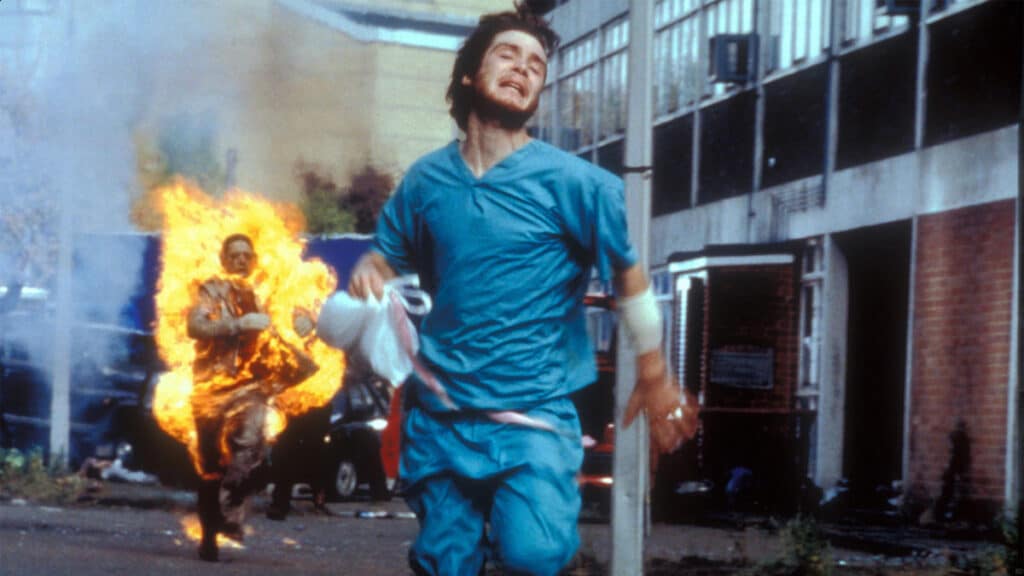
25. 28 Days Later (2002, directed by Danny Boyle) explores themes of government failure, martial law, and societal collapse in the wake of a biological catastrophe. Though it was filmed before the 9/11 attacks, its imagery was hauntingly prophetic. The film’s most famous sequence features Jim (Cillian Murphy) wandering through a deserted London, covered with missing-person posters – a direct parallel to the real-life images seen in New York City after 9/11 as families searched for victims of the attacks. A precursor to Matt Reeves’ Cloverfield (2008) and John Hillcoat’s The Road (2009), it highlights failures of government through environmental disaster, showcases how a single incident (the virus release) can have global consequences.
26. Saw (2004, directed by James Wan) pulls directly from ethical debates surrounding the use of torture techniques at Guantanamo Bay and CIA black sites which sparked controversy about whether these actions were justified in the name of national security. The film’s infamous “games,” where victims must endure brutal, dehumanizing scenarios, mirror images of the hooded detainees and techniques used by the U.S. government. The film’s villain believes suffering is necessary for enlightenment, much like the justifications used for “enhanced interrogation.” In future installments Jigsaw even targets corrupt law enforcement (Saw II (2005) and insurance executives (Saw VI (2009)) well before Luigi Mangione was making headlines. Similar themes are also explored in Pascal Laugier’s Martyrs (2008).
27. Pan’s Labyrinth (2006, directed by Guillermo del Toro) is an anti-fascist allegory which takes place during the dictatorship of Francisco Franco in post civil war Spain (1944). Through Ofelia’s (Ivana Baquero) journey the film critiques authoritarian rule, the oppression of the innocent, and the brutality of fascism, embodied by Captain Vidal (Sergi López), a ruthless enforcer of Franco’s regime. It uses figures like the Pale Man (Doug Jones) -who hoards food while children starve- as a symbol of authoritarian greed. Ofelia’s defiance and ultimate sacrifice reflect how resistance, even in the face of inevitable destruction, is a form of victory against tyranny. Del Toro’s The Devil’s Backbone (2001) also takes place during the Spanish Civil War and explores the horrors of fascism and war profiteering.
28. The Mist (2007, directed by Frank Darabont) was released during the height of the Iraq war and criticised religious extremism, mass hysteria, and the weaponization of fear. Throughout the film, fear motivates the characters to make extreme, irreversible choices, much like the justification for the Iraq War based on a fear of weapons of mass destruction, which were ultimately never found. The mob mentality inside the grocery store mirrors this post-9/11 hysteria, and critiques how fear can override reason, leading people to embrace authoritarian leaders and justify violence. The ending where David (Thomas Jane) kills his loved ones only to see the military arrive to save them moments later, is a chilling reminder of the consequences of fear-based extremism that he is now forced to live with.
29. Jennifer’s Body (2009, directed by Karyn Kusama) critiques systems of misogyny, sexual violence, and female exploitation. The title itself references the policing of female bodies, but this film subverts the rape-revenge horror trope. While Jennifer’s (Megan Fox) transformation reflects the demonization of female sexuality, her feminine rage indiscriminately kills young men. Additionally Needy’s (Amanda Seyfried) complex relationship with her highlights female friendships, jealousy, and internalized misogyny in a patriarchal world later commented on in Julia Ducournau’s Raw (2016).
And today, modern horror explores race, class, and identity and generational systems of abuse.

30. Return to Nuke ‘Em High: Volume 1 (2013, directed by Lloyd Kaufman – the king of horror-satire). This film (in which I also star) is a punk-inspired critique of corporate greed, environmental destruction, LGBTQ+ representation, and the exploitation of youth culture. True to Troma’s signature style, the film delivers a scathing critique of real-world corporate pollution, food conglomerates and environmental negligence while keeping sacred the queer relationship of the film’s protagonists at a time when same-sex marriage was not nationally recognized in the United States. Not only did the film’s production emphasize the use of preferred pronouns on set, but when the film premiered at the Cannes Film Festival we were honored to be recognized by Le Figaro as “the first lesbian wedding in France” just days after the country legally recognized same-sex marriage.
31. Ex Machina (2014, directed by Alex Garland). Sitting along the edge of horror and thriller, the film highlights the ethical implications of artificial intelligence, gender politics, and the illusion of control over technology while serving as a precursor to Isa Mazzei and Daniel Goldhaber’s Cam (2018), Gerard Johnstone’s M3GAN (2022) and now Drew Hancock’s Companion (2025). Tech mogul Nathan (Oscar Isaac) has a god complex reminiscent of many billionaires today and Caleb’s (Domhnall Gleeson) interactions with self-aware Ava (Alicia Vikander) deconstruct how men design and control women (both in tech and in society) only to fear them when they refuse to be submissive. The reveal of previous AI models being dismembered, trapped, or discarded echoes classic Frankenstein-like horror themes about experimentation and the consequences of playing god, while Ava’s escape doesn’t just ask if AI will surpass us – it asks if we ever had control in the first place.
32. The Witch (2015, directed by Robert Eggers) explores the history of American religious extremism and the consequences of a world that fears female independence. By grounding the horror in historical authenticity, the film forces audiences to confront how deeply ingrained religious extremism was in shaping our societal norms, many of which still echo in modern debates over female agency and autonomy. However it is Black Phillip’s ultimate question to Thomasin (Anya Taylor-Joy) that is the real conundrum. When he asks her “Do you want to live deliciously? Do you want to see the world?” Just as the devil says to the biblical Eve at the tree of knowledge, he is also asking Thomasin if she is willing to educate herself in the workings of the world, and ultimately, have the power to change it.
33. Train to Busan (2016, directed by Yeon Sang-ho) uses zombies as a metaphor for government negligence. This time the outbreak reflects how disasters hit poor communities the hardest while the rich protect themselves at any cost. The train itself becomes a microcosm of South Korean society, where wealth determines survival, and the privileged manipulate, abandon, and sacrifice the working class to maintain their own security. It directly criticizes the failures of government and corporate elites, reflecting how (in real-life crises) authorities prioritize profit over people, leaving the most vulnerable to die – a theme painfully relevant to pandemics, economic collapse, and systemic oppression.
34. Get Out (2017, directed by Jordan Peele) is a chilling commentary on systemic racism, white liberal hypocrisy, and the commodification of Black bodies. The title not only references Eddie Murphy’s joke about horror tropes but acknowledges the hyper-vigilance of black Americans as a result of slavery and race-based violence. Its plot highlights the insidious nature of “polite” racism – wherein white progressives claim to admire Black culture but ultimately seek to control and benefit from it. The sunken place is a metaphor for suppression and echoes real-world issues of cultural appropriation, the fetishization of Black bodies, and the illusion of post-racial America, reinforcing how systemic racism persists in subtler but equally dangerous forms. Peele’s Us (2019) and Nope (2022) further expand on these themes as do films like Bomani J. Story’s The Angry Black Girl and Her Monster (2023), and Nia DaCosta’s remake of Candyman (2021) along with the original (1992).
35. Doctor Sleep (2019, directed by Mike Flanagan) explores the generational trauma of addiction, domestic abuse and systemic exploitation. Just like his father in Stanley Kubrick’s The Shining (1980), adult Danny Torrance (Ewan McGregor) struggles with alcoholism as a means to suppress his pain and psychic abilities. While he attempts to break the cycle, he is forced to carry the burden of his abuse – often placed on survivors instead of their abusers. The introduction of The True Knot cult which preys on children with psychic abilities mirrors how many institutions exploit vulnerable situations to profit from human suffering. The film highlights how personal trauma, addiction recovery, and systemic oppression operate as one and the Overlook Hotel becomes a broader examination of how abuse -both personal and societal- feeds on fear and pain across generations.
36. Censor (2021, directed by Prano Bailey-Bond) is set during Thatcher-era Britain’s “video nasty” hysteria of the 1980s, wherein a conservative movement led to the Video Recordings Act (VRA), which gave the British Board of Film Classification (BBFC) the power to censor or ban films it deemed immoral. Naturally, many horror films were scapegoated for corrupting society while real systemic issues went ignored. Censor follows a real-life censor whose own trauma warps her sense of reality, and the film argues that the true horror isn’t violent media – it’s repression, institutional control, and the fear-mongering that keeps people obedient.
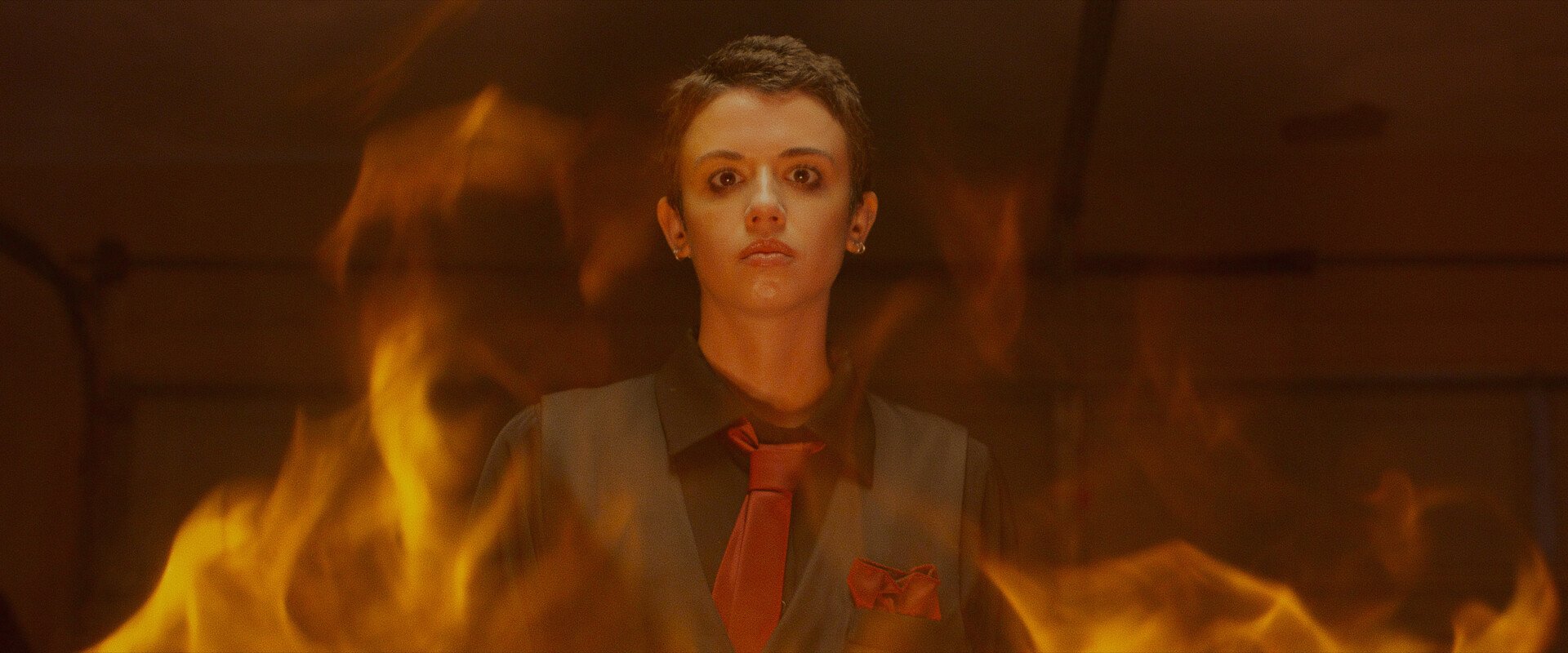
37. Faceless After Dark (2023, directed by Raymond Wood) critiques gender dynamics in the entertainment industry, toxic fandom, internet culture, and the film industry itself. The film showcases an openly queer, non-binary protagonist (my Terrifier co-star Jenna Kanell) and flips revenge-horror upside down. It comments on how media fuels parasocial relationships, entitlement, and real-world danger while also challenging how women in horror are often commodified rather than compensated fairly for their work. As the character Bowie is pushed to the psychological brink, Faceless intentionally blurs the line between fiction and reality forcing audiences to confront the perils of fandom and horror itself. Kanell, who also co-wrote the film with Todd Jacobs, says “the film is partially about the relationship between how we experience gender and how we are forced to present it.” Gender identity and power dynamics are also explored in films like David Slade’s Hard Candy (2005) Christopher Landon’s Freaky (2020), and Julia Ducournau’s Titane (2021).
38 and 39. The First Omen (2024, directed by Arkasha Stevenson) and Immaculate (2024, directed by Michael Mohan) both follow women who uncover corruption and hypocrisy within religious institutions of power by way of non-consensual impregnation and the subsequent control exerted by authorities over their bodies. Both films are beautiful critiques of religious institutions’ ongoing influence over women's reproductive rights. Together, they comment on the loss of bodily autonomy and the systemic control of women's bodies, along with the painful horror that is the loss of one's bodily autonomy.
40. The Substance (2024, directed by Coralie Fargeat) quite literally rips apart ageism, beauty culture, and the way women’s bodies are commodified by society. Elizabeth Sparkle’s (Demi Moore) quest to create a younger version of herself, comes at a grotesque, violent cost. The drug itself references modern black-market diet products and beauty procedures, and serves as a clear metaphor for the way women self-destruct in pursuit of unattainable perfection – not just through plastic surgery and products, but through an entire capitalist system which profits from by punishing them for aging. These themes are also explored in Georges Franju’s Eyes without a Face (1960) and Jen and Sylvia Soska’s American Mary (2012).