
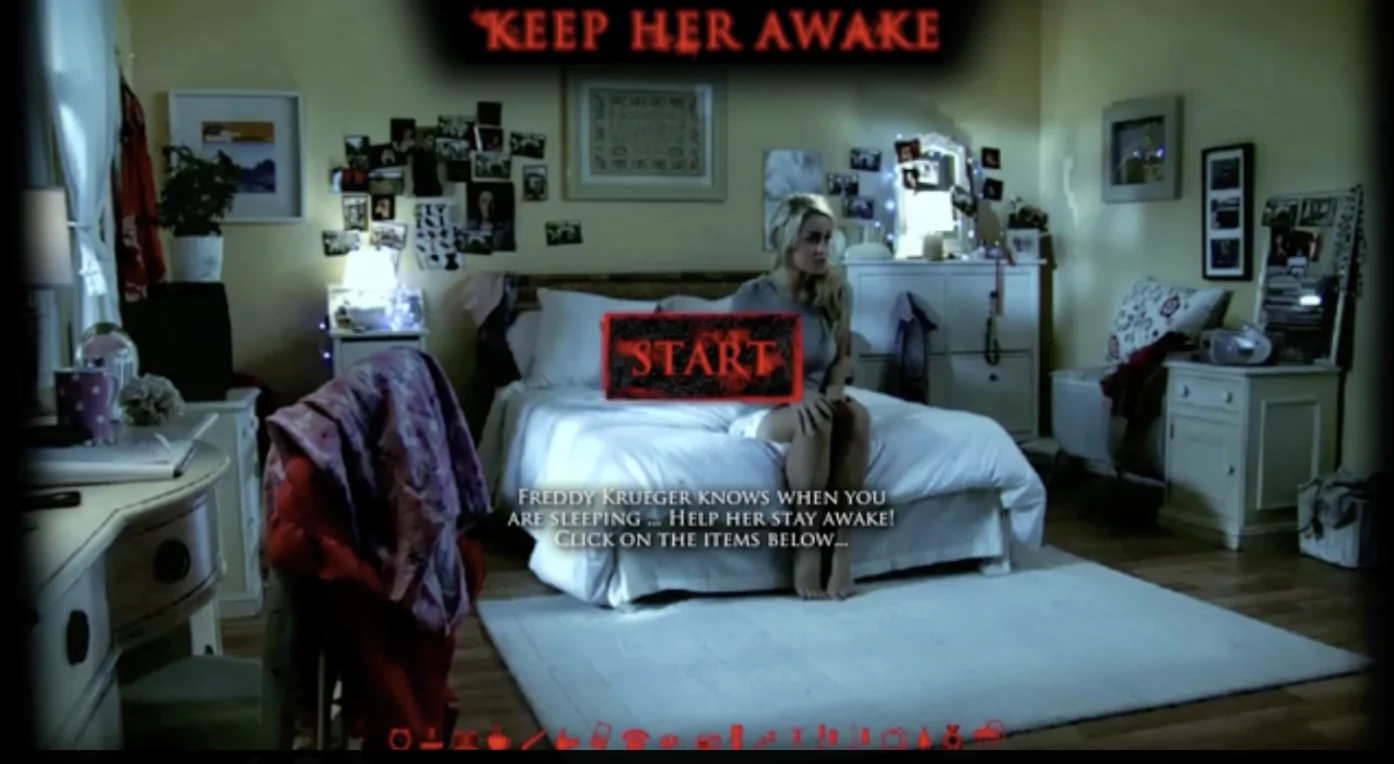
Keep Her Awake, the short-lived online game created to promote 2010's A Nightmare on Elm Street, has always sounded more like a dare than a marketing campaign. The rules were almost rude in their simplicity: keep a girl from falling asleep, or Freddy Krueger gets her.
Sixteen years later, with footage resurfacing on Vimeo, Keep Her Awake feels less like a forgotten promo stunt and more like a preserved relic from the last feral days of Flash-era horror marketing.
What Was Keep Her Awake?
Before the A Nightmare On Elm Street 2010 remake hit theaters, Warner Bros. released Keep Her Awake, a promotional tie-in built around one very Elm Street idea: the player must keep a young woman awake so Freddy cannot reach her.
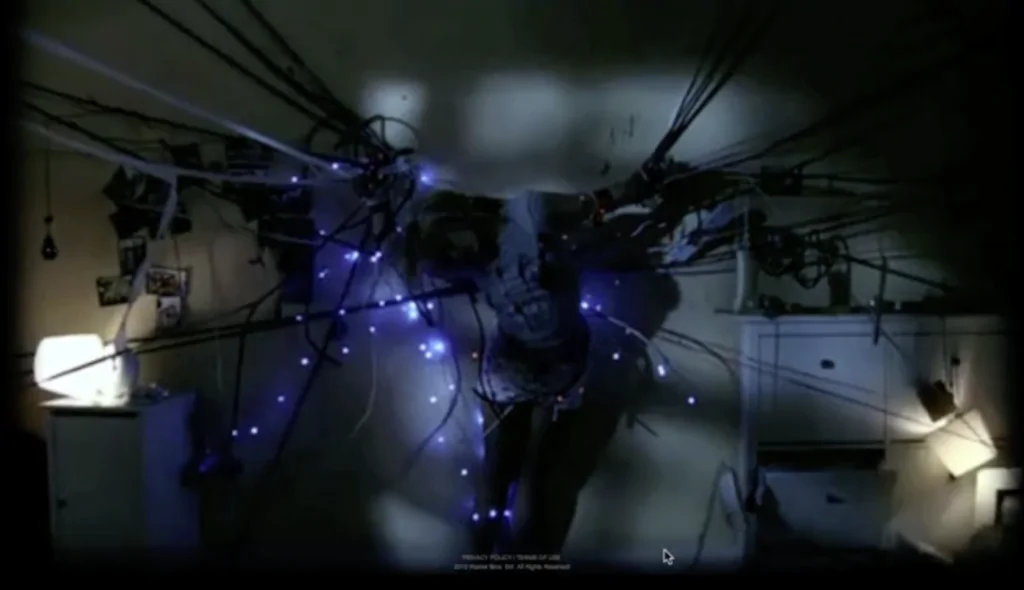
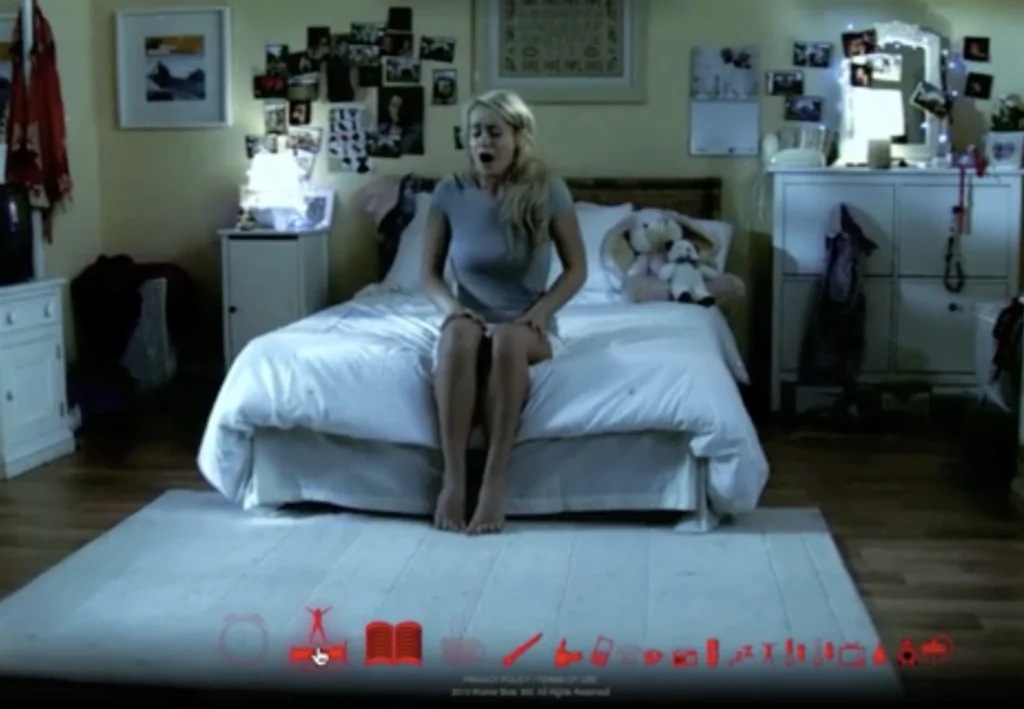
It was not a traditional game in the sense of running, jumping, or collecting anything more useful than anxiety. It played more like an interactive movie, using pre-recorded live-action footage of a girl alone in her bedroom as she grew visibly exhausted.
The player chooses what she does next. At first, the options feel familiar enough: coffee, lights, cold showers, and loud distractions. All the standard sleepover survival tactics (if your sleepover has been cursed by a burned dream demon with finger knives).
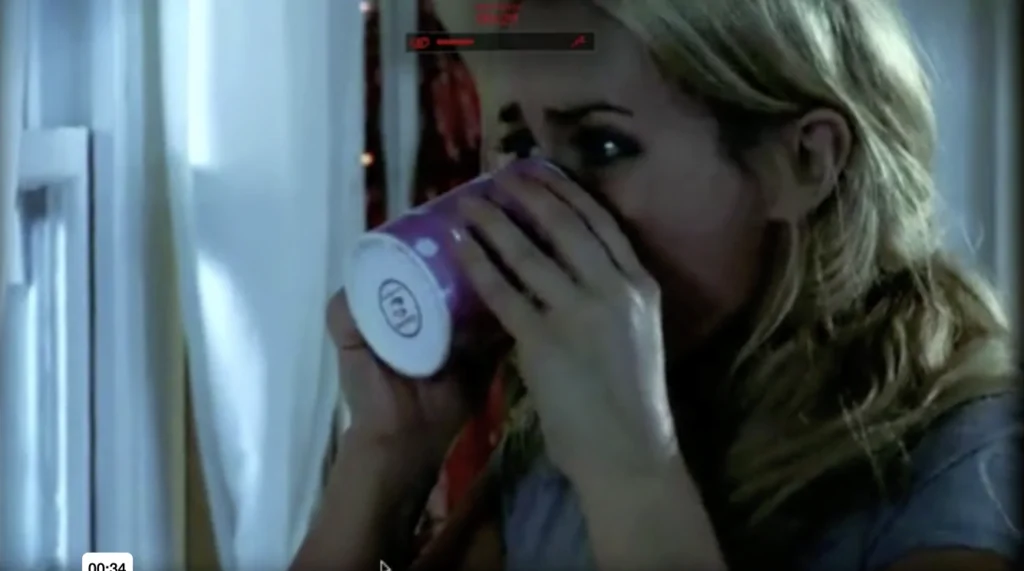
But the sleep meter keeps climbing. That is the nasty little engine of the whole thing. You are given choices, but the game never really lets you feel in control. The longer it runs, the clearer it becomes that you are managing a countdown, not solving a problem.
The Choices Were the Point, and the Problem
As the character gets closer to sleep, the options become more desperate. Contemporary coverage from Dread Central and Vulture noted that the game pushed players toward pain-inflicting methods alongside the more ordinary attempts to stay awake.
One Warner Bros. promotional email reportedly teased the game with: “Caffeine pills, self mutilation, a cold shower — what will you do to keep her awake?”
Subtle as a boiler room furnace.
That is where Keep Her Awake becomes both more interesting and more uncomfortable. The player is technically trying to save her, but the game still makes you decide how much harm is acceptable in the name of keeping Freddy away. And, the site didn’t have any age verification.
Yikes, kiddos. In other words, it turns you into both the protector and the threat. Very Elm Street. Extremely 2010.
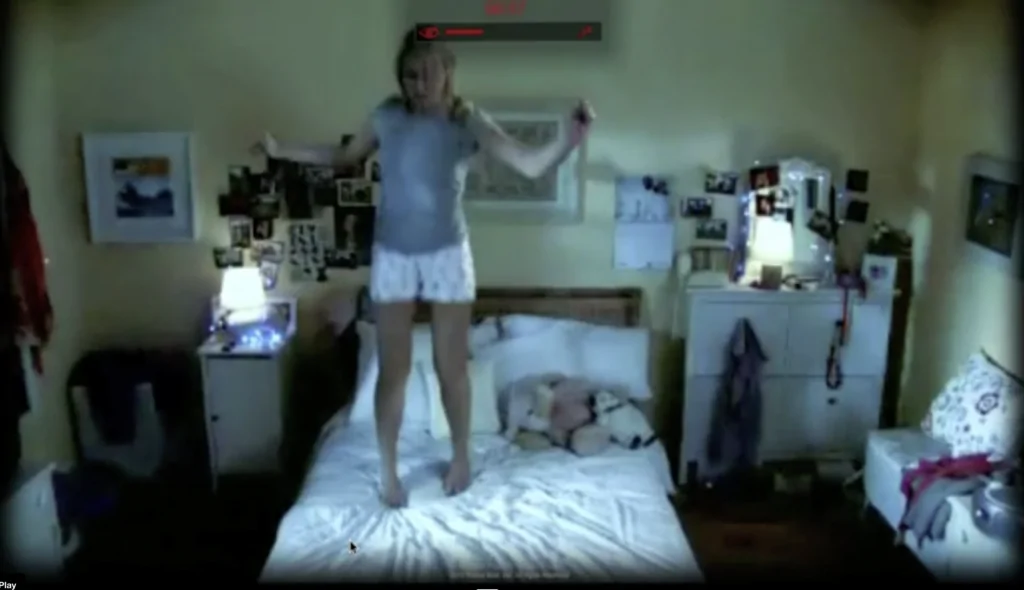
Despite the pearl-clutching over giving the audience that kind of power, extreme methods of staying awake are not alien to the franchise. Nancy Thompson burns herself on a pipe to wake up in Wes Craven’s 1984 A Nightmare on Elm Street. Jennifer Caulfield uses cigarettes to stay awake in A Nightmare on Elm Street 3: Dream Warriors. The 2010 remake also leans into the body as a brutal alarm clock.
What makes the game different is the interface. In the films, these moments happen to characters under pressure. In Keep Her Awake, the player clicks the button. The concept moves from horror imagery into audience participation, and that is where the marketing starts to feel radioactive.
A Flash-Era Horror Artifact
To understand why this thing existed at all, you have to remember what the Internet looked like in 2010. Studios were still treating online spaces like haunted laboratories. They were building fake websites, interactive campaigns, alternate reality game-adjacent curiosities, and browser experiences that were meant to make a movie feel like it had escaped the theater.
Horror was an especially good vehicle for this because it already understands participation. The genre wants you to look closer, open the door, read the cursed tape label, and click the link you absolutely should not click. Marketing people saw that and did what marketing people do: built a campaign around it and hoped nobody asked too many questions in the meeting.
Keep Her Awake was born from that exact moment. It was direct, interactive, and not especially interested in subtlety. It did not just tell audiences that Freddy kills you in your dreams. It made them babysit that rule.
That mattered for the remake. This was the first theatrical A Nightmare on Elm Street film without Robert Englund as Freddy Krueger. Jackie Earle Haley was stepping into one of horror's most recognizable roles, and the movie needed to sell audiences on its version of Freddy, and fast.
A browser game where you are actively trying to keep Freddy out of the room does that efficiently. Maybe too efficiently. Sometimes the sledgehammer does hit the nail. Sometimes it keeps going through the table.
Why So Much of This Disappeared
The game also belongs to another vanishing category: Flash media. Flash once powered a huge portion of the playful, strange and disposable internet of yore, including browser games, animated shorts and marketing sites that were never built with preservation in mind.
Adobe formally ended support for Flash Player at the end of 2020 and began blocking Flash content from running in Flash Player in January 2021. That was practical, but it also made huge chunks of early internet culture practically inaccessible overnight.
This is why a promotional game like Keep Her Awake can feel oddly important now. It was never meant to be permanent. That was part of the texture. You clicked, you played, you talked about how weird it was and then the internet moved on.
Unfortunately, the internet moving on is also how media becomes a rumor. A thing that definitely happened, probably, according to screenshots, scattered memories and one friend of a friend who swears they played it before it vanished.
The Footage Resurfaces
For years, Keep Her Awake existed mostly in that strange digital limbo. Then footage began circulating again of an old Vimeo upload titled “NOES”, from an account simply called “Ralph”. It is not a playable restoration, but it is actual footage from the game. For lost horror marketing ephemera, that counts as a small miracle in a dirty sweater.
The resurfacing also picked up steam through fan discussion around YouTuber Pigpen's “The Nightmare on Elm Street Iceberg Explained”, where viewers were pointed back toward the surviving clip. That is very fitting. Lost media rarely returns with a clean press release. It usually crawls out of a comment section holding a link.
The clip gives the game a different kind of afterlife. Screenshots can tell you what it looked like, but footage restores the mood: the slow exhaustion, the limited choices and the unpleasant feeling that the entire experience was designed to make you complicit.
That is the part that lingers. Not because Keep Her Awake is some lost masterpiece. It is not. It is a promotional stunt with a high-concept hook, but it may have been abandoned before the first status meeting.
But it understood the assignment in one way the remake itself often struggled to: Freddy is scarier when the dream logic becomes personal. The game makes the player responsible for the body that must stay awake. That is cruel, simple and very effective.
Why It Still Matters
The easiest thing to do is dismiss Keep Her Awake as edgy marketing. It was edgy marketing. But that does not make it useless as a time capsule.
It captures a moment when studios were still figuring out how horror should behave online. Not every experiment aged well. Some barely aged at all before someone realized the legal department might want a word. Still, those experiments show how badly horror marketers wanted audiences to do more than watch.
They wanted audiences to participate. To click. To make choices. To feel like the movie had followed them home, opened a browser window and started breathing down the back of their neck.
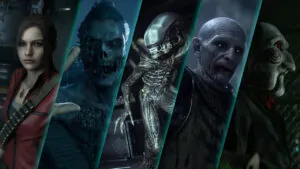
That impulse never went away. It just evolved. Horror marketing now lives across TikTok filters, immersive screenings, haunted pop-ups and full-scale video games. Freddy himself has an official modern game presence through Dead by Daylight, where he appears as The Nightmare alongside Quentin Smith and Badham Preschool.
That is something. But it still feels like entering Elm Street through a side door.
Still Awake
Keep Her Awake probably shouldn't return in the exact form it existed in 2010. The discomfort around its harsher choices is not a side note. It is part of the reason it became infamous.
But the footage matters because it preserves a strange little piece of Freddy's digital history. It shows a franchise trying to translate dream-stalking into interaction at a time when studios were still throwing horror at the internet to see what screamed back.
It also proves, accidentally or not, that A Nightmare on Elm Street is almost obnoxiously suited to games. The rules are clean. The stakes are built in. The player's agency can be weaponized. You do not need much to make Freddy interactive: a clock, a sleep meter, and the terrible sense that the game has already decided you are losing.
For now, Keep Her Awake survives as footage, memory and a warning from a less cautious internet. It was not the definitive Freddy game, rather a short-lived dare with a sleep meter.
Still, as a relic, it gets one thing exactly right: Freddy works best when sleep stops being private and becomes everybody's problem.
Perhaps someday we’ll stop looking back at old Elm Street games and actually have the pleasure of looking forward to a new one. A Fredhead can dream.
Watch the footage from Keep Her Awake below.
