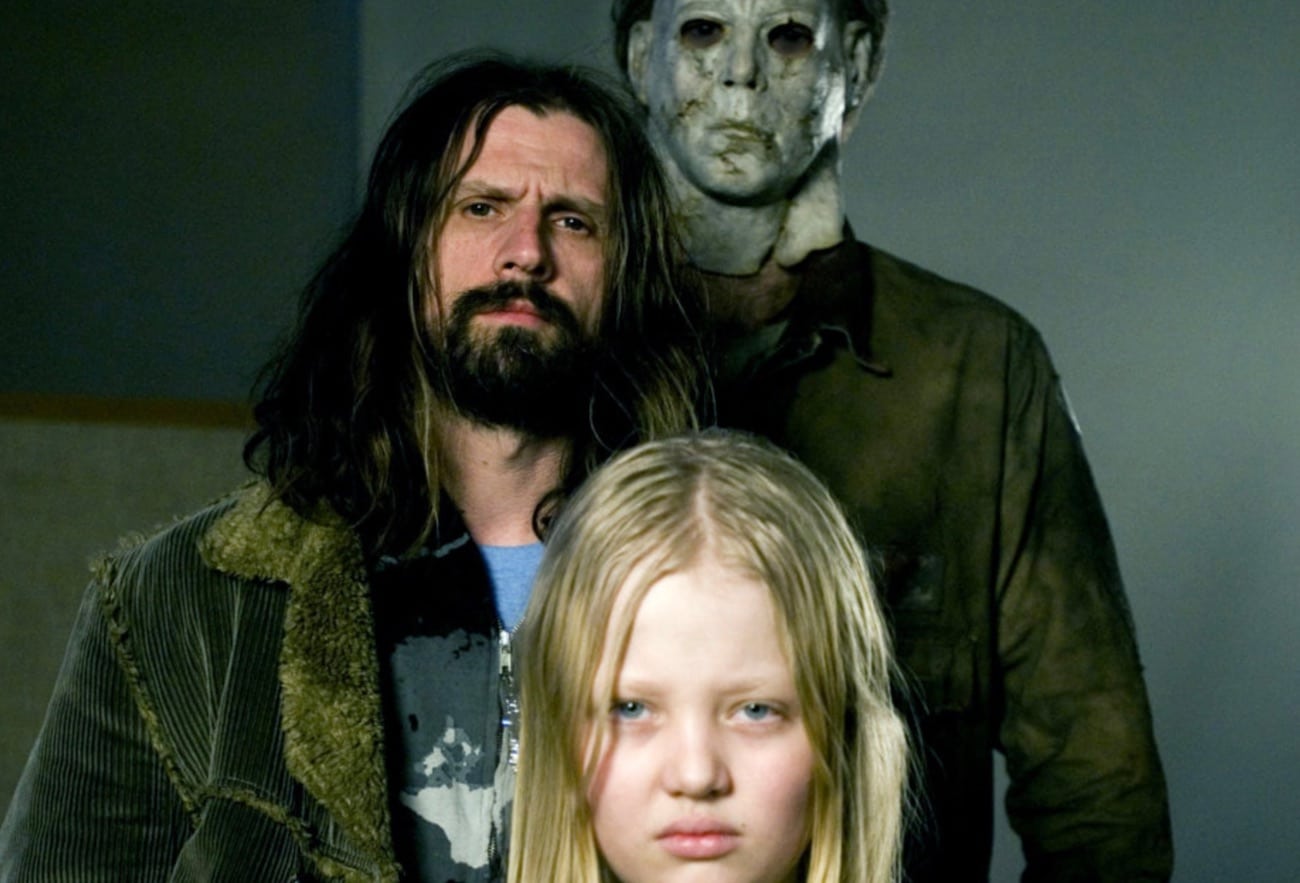
Editor's Note: This was originally published for FANGORIA on September 8, 2008, and we're proud to share it as part of The Gingold Files.
The Michael Lives documentary that appears on the three-DVD Collector’s Edition of Rob Zombie’s Halloween (coming October 7 from Dimension/Genius) warrants separate review for a couple of reasons. First off, at four hours and 18 minutes, it’s longer than many movie-and-supplement disc packages combined, and second, as the only new feature on that triple-decker, it’ll be the sole deciding factor behind whether fans of Zombie’s revisit to Haddonfield will consider the set worth double-dipping for. The answer is a simple, very big yes; even those devotees who already paid for the previous two-discer of Halloween will easily feel they’ve gotten their $24.95 (or less at many on-line sites) worth just to add Michael Lives to their library.
Not only does its lengthy running time never drag, but almost none of it rehashes material seen on Halloween’s previous DVD edition (reviewed here). Distilling what must have been days of footage, Zombie (who presumably oversaw this project, though no director is credited) and editor Glenn Garland have shaped a day-by-day visual chronicle of the production in which no nook or cranny goes unexplored. It’s all here, from the early location scouts (which may make some viewers jealous that Rob Zombie never came to their house, contemplating how Michael Myers might rampage through their living room) to the reshoots undertaken three months after principal photography wrapped. The only significant area not explored is postproduction, though we do get to see Tyler Bates beginning his creation of the score.
Throughout it all, a couple of impressions are made clearly and often. One is that Zombie is an impressively hands-on, decisive filmmaker, who’s both open to collaborative ideas and unafraid to speak his mind when he thinks something “sucks.” We see him offering his thoughts on everything from design elements to acting and costume choices (just before shooting one scene at Smith’s Grove Sanitarium, he has the actors change their costumes to now indicate it will be set on a different day). The other is that Malcolm McDowell, who plays the reimagined Dr. Sam Loomis, is a hoot and a half to make a movie with. As he cracks up and entertains everyone on the set (particularly funny is his goofing around with fellow genre veterans Udo Kier, Brad Dourif and Tom Towles), it’s easy to see why Laurie actress Scout Taylor-Compton, who’s young enough to be his granddaughter, admits to having a crush on him. It’s also easy to see why at one point, after Michael actor Tyler Mane fights a losing battle to keep a straight face while a just-off-camera McDowell explains how his wife is into rubber, Zombie can be heard telling the latter to behave himself so they can get the shots done.
Interviews with every major onscreen and behind-the-scenes player are sprinkled throughout, along with endless visual anecdotes. Real bats buzz the Myers house during a night shoot; Young Michael actor Daeg Faerch seems to enjoy playing in the fake blood just a little too much; preteen extras in the school scene solicit autographs from Daryl (Spy Kids) Sabara in between takes; Dee Wallace and Pat Skipper spend a couple of spare moments recording Laurie’s parents’ answering-machine message; the truck stop bathroom where Ken Foree battles Michael is built in the middle of the school’s gymnasium; a small tower with a partial wall atop it is built across the street from one location to cheat a through-the-library-window shot; Zombie brings one of his own taxidermy specimens to a graveyard location to serve as Michael’s crucified four-legged victim; etc., etc.
Michael Lives is packed with these kinds of fascinating little details that illuminate the ins and outs of making a movie, and even those who weren’t crazy about this Halloween will find much to enjoy here. “I’m gonna get tired of that after a while,” Zombie quips early on, answering a cell phone whose ringtone is John Carpenter’s classic musical theme; the same can absolutely not be said of this documentary.