Last Updated on April 5, 2024 by Angel Melanson
Editor’s Note: This was originally published for FANGORIA on March 26, 2004, and we’re proud to share it as part of The Gingold Files.
High-concept movie descriptions that combine two previously successful titles are always applied at the new feature’s own risk, as the immediate suspicion is that it won’t live up to either of its two cited forebears. It also suggests that there isn’t much in the way of originality going on. So don’t be put off when you hear (which you will, if you haven’t already) that Open Water is “Jaws meets The Blair Witch Project”—not just because, well, it’s kinda true, but because Open Water manages to capture and combine the best elements of both. And if that doesn’t work for you, here’s another simple phrase you’re bound to hear repeatedly applied to Open Water as it nears its August release by Lions Gate: It’s the get-under-your-skin scariest movie in years.
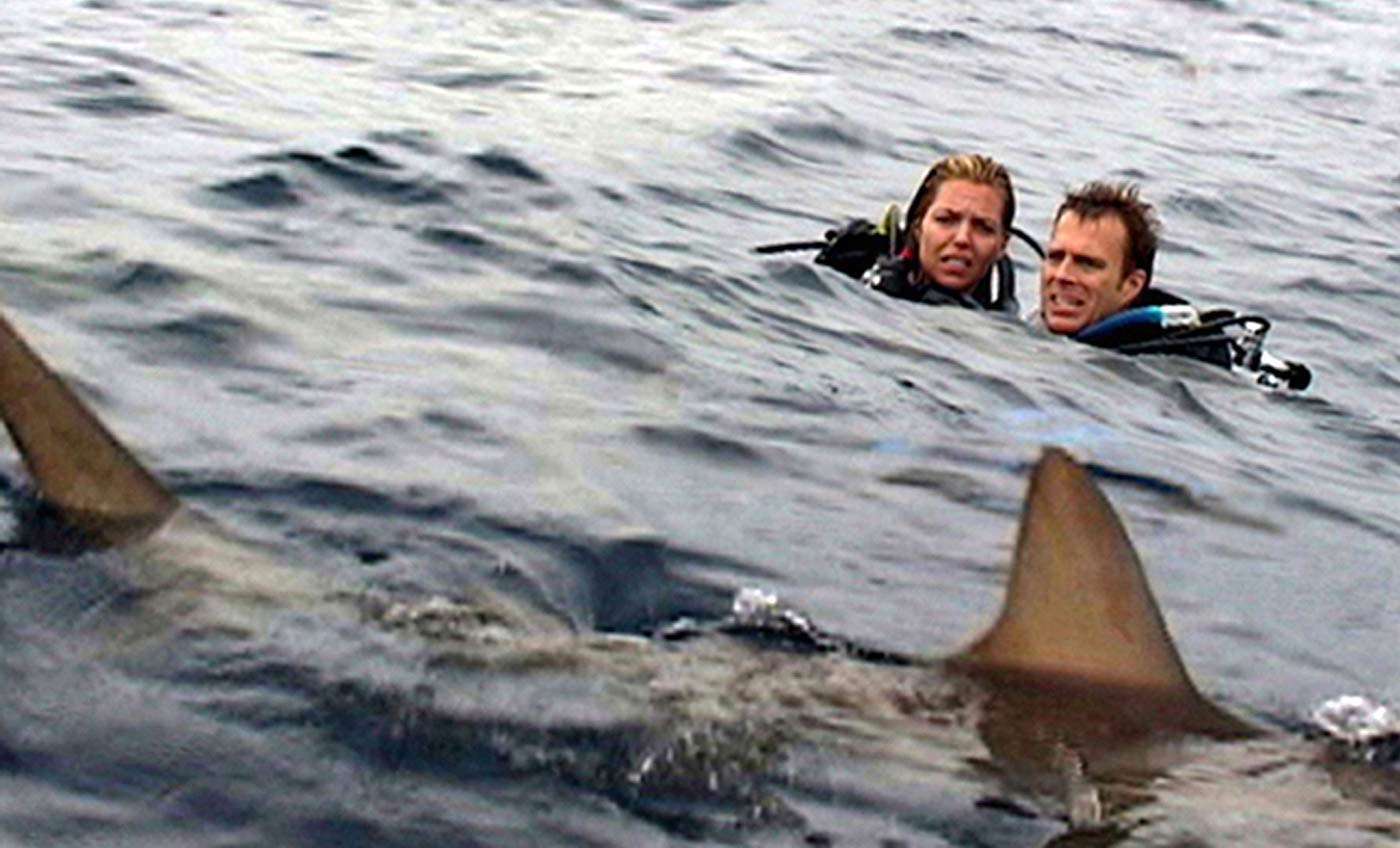
Like Blair Witch, this is a vérité-style digital-video project (albeit with a much cleaner and more colorful look) that exploits a very basic human fear. Instead of being lost in the woods, Open Water’s protagonists, young couple Daniel (Daniel Travis) and Susan (Blanchard Ryan), become stranded well out to sea after their diving-excursion boat leaves without them. (Those who felt hoodwinked by the “it really happened!” Blair Witch hype may be unnerved to learn that this story is based on a true incident.) Part of what makes Open Water so effective is the matter-of-fact way writer/director Chris Kentis presents the banal human errors that leave Daniel and Susan adrift, and the similarly composed manner in which the two first react to the situation. It’s just a mistake, they think. They can’t have been abandoned—the situation will be made right soon. Then the sharks show up.

Because it’s a movie, of course, we know from the moment those errors begin that a terrible predicament awaits Daniel and Susan, and Open Water builds a dreadful anticipation even before the boat departs. Once Daniel and Susan are left alone, Kentis lets us see the slowly gathering sharks only as they do—a quick glimpse of a fin here, a tail suddenly slashing the surface there. And these predators aren’t the rogue marauding monster of Jaws, or the recently prevalent CGI critters of the species Cablepremierus northamericanus. They’re the real thing, actually circling and cruising beneath the couple, not always seen clearly (or at all) but contributing throughout to Daniel and Susan’s gradually building, perfectly acted terror.
What could have amounted to a stunt (actors in the water with real sharks!) becomes a harrowing viewing experience because Kentis allows us to get to know Daniel and Susan before they take the plunge, and thus we always relate to their dramatic experience, rather than the performers’. Kentis doesn’t overburden them with too much “characterization,” either; they’re just a pair of likable, overworked folks who, as the movie opens, have been in desperate need of a vacation for a while. Their reactions to their plight are basic and human as they alternate between clinging to each other, succumbing to panic and inevitably blaming each other for the dire straits they’re in. Neither one ever loses sympathy, and while it couldn’t have been hard for Ryan and Travis to feign terror while bobbing amongst the carnivorous fish, their reactions remain in character throughout.
Kentis takes advantage of the physical freedom of digital moviemaking by getting the camera up close to the actors’ faces, shooting from surface level to put the audience right in the drink with them. He and his wife/co-cinematographer Laura Lau occasionally drop beneath the water to show us more than the couple know (or want to know) and once in a while he cuts back to the resort where Daniel and Susan were staying, as life goes on without awareness of their situation. Yet Kentis is not one for easy ironies—his focus is on primal emotions, and he stirs them up with a simplicity and directness that many filmmakers with much greater means at their disposal can only dream about.

He also leaves one wondering just how much danger his lead couple were actually in during the shoot, though speaking personally, that wasn’t an issue while I was watching Open Water. I didn’t know before sitting down to see the movie what precautions had been taken to ensure the actors’ safety, and I didn’t want to know. I simply assumed everyone came out all right and submerged myself in the experience, and got a serious case of the chills. Open Water debuts in New York and Los Angeles August 6 before going nationwide on the 20th—and the fact that it’s hitting theaters late in the summer is something for which the diving/tourism industry can only be grateful.