Last Updated on March 16, 2024 by David Obuchowski
PART 2: THE PAIN OF FLEETING JOY
In the first installment of this essay, the author spoke with Elina Löwensohn and Galaxy Craze, who, respectively, played the roles of Nadja and Lucy in the 1994 film, Nadja. Elina shared the upsetting true story behind her dislike of butter, a detail that was carried over into the film; Galaxy expressed uncertainty over her own name. The author reveals that his love of the film is inextricably linked to his own severe feelings of inadequacy as an artist.
“You’ll have to tell me, what year was it shot?” Martin Donovan asks me.
In Nadja, he played Jim, husband of Lucy (portrayed by Galaxy Craze). If there were three “big names” in Nadja at the time of its release, it would have been Suzy Amis (now Suzy Amis Cameron, whom I could not reach for this essay), Peter Fonda (who died in 2019), and Martin Donovan, who had become very recognizable thanks to his roles in multiple Hal Hartley films.
He’s even more widely recognizable now. Even my kids have seen him on the screen, thanks to his turn as a villain in 2015's Ant-Man. But around twenty years before his appearance in the Marvel Cinematic Universe, he played Jim in Nadja: the loving, somewhat depressed, somewhat perplexed husband of Galaxy’s Lucy. I tell him it must have been made sometime around 1993.
“Okay, so by that time, if it was shot in ‘93, I think it was after I’d wrapped Amateur, the Hal Hartley film with Isabelle Huppert. I’d done like four movies with Hal by then. I had done Trust, Simple Men and Surviving Desire. So if that’s correct, even if it was before Amateur, I’d gotten some attention from the Hartley films,” he explains. “Hartley had rapidly gained this international reputation as an American indie original voice through the festival circuits, which were an entirely different thing back then, around the world. It was because of Hal, because of Trust, for instance, that Jane Campion wanted me to audition for Portrait of a Lady. That was because of Hal.”
Martin not only auditioned but landed the role of Ralph Touchett in that film, appearing alongside such actors as Nicole Kidman, Barbara Hershey, John Malkovich, Shelley Winters, Richard E. Grant, Mary-Louise Parker and other immediately recognizable names. Jane Campion, the director, was already an internationally acclaimed filmmaker. Her film directly preceding Portrait of a Lady was, in fact, The Piano, which was nominated for eight Academy Awards (winning three of them). It also won the Palme d’Or at Cannes.
But for this time period, Portrait of a Lady was more of an outlier for Martin. The Hartley films, Martin says, “didn’t translate into studio Hollywood interest.” Perhaps, he says, that was because unlike some breakout films like Sex, Lies, and Videotape, which he says “made like 30 million dollars… Hal’s movies didn’t break out like that even to a modest box office. They made their money back and had a very strong following, but a movie like that you could make back in the ‘90s and get a return based on X amount of cities and theaters and it was sustainable economically. That’s my sense of it. Hollywood wasn’t kicking down my door, except for maybe like Jane Campion. So I sort of spent the ‘90s in indie film.”
So where does Nadja fit in? Surely, it must loom large, must have made a significant impact on his career? “I’d put it in the same kind of category [as Hartley’s films],” he tells me, adding, “maybe even more of a niche. But that’s hard to measure.”
He reflects on it a little more, and says, “I know it got a lot of attention in the festival circuit. But it was too niche, I’m guessing.” And then he adds, “I don’t know why Hollywood wasn’t kicking down my door. Something about how these films didn’t break out. So I didn’t either.”

It’s a hard thing for me to understand how he can be saying he didn’t “break out” considering the many films I’ve seen him in. I point this out to him, and he doesn’t argue these facts. But it’s true that while he appears in a movie like Ant-Man, he’s also not playing the lead.
“Look,” he says, “I’m not complaining. I feel incredibly fortunate. My god, I’ve worked with some of the most brilliant people over the years and I really have a lot to be grateful for. I’m just saying that if you were going to measure in terms of mainstream profile, Jared [Harris], at the moment, is going to be much higher than mine, at least. He’s getting these fantastic roles. High profile things.”
And then he adds, “But I’m plugging along, you know… A lot of this stuff is to pay the bills and occasionally things come along that are really interesting. That still happens so I’m very fortunate.”
***
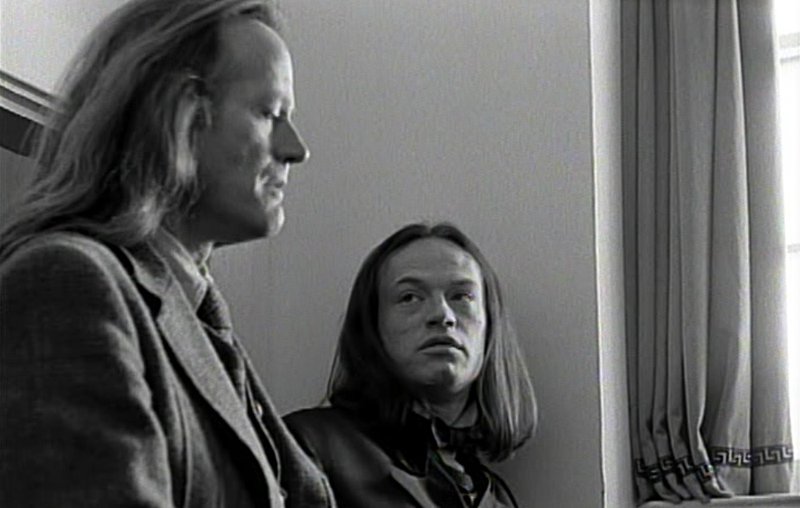
Martin Donovan hasn’t just brought up Jared Harris arbitrarily. Harris portrays Nadja’s twin brother in Nadja.
The actor was born in London, son of legendary Irish actor Richard Harris and Welsh actor Elizabeth Rees-Williams. Martin is correct that Harris has achieved a high degree of mainstream success. And while I’m usually not dazzled by blockbuster films or popular TV shows, I find myself intimidated by the guy who’s King George VI in The Crown, Lane Pryce in Mad Men and Valery Legasov in Chernobyl. Not to mention Edgar in Nadja.
I nervously dial his number at our agreed-upon time, and the voice at the other end is groggy, gruff, and absolutely American. I’m completely thrown, and I have a moment of panic. Am I wrong? Is he American? Is he English but was raised in America?
“Hi,” I sort of stutter, “is this Jared?”
“Who’s calling?” The question isn’t in reply to my question. It sounds more like a general demand that would have been made no matter what I’d asked.
“My name is David Obuchowski,” I answer, feeling like an idiot.
“I don’t know David Obuchowski,” he says. “Who are you?”
Who am I? In that moment, I haven’t a clue. Someone trying to – what? Write something about myself and my own failures? Write something about a movie that’s 25 years in the past? Something that, in Martin’s words, didn’t break out? My inferiority complex kicks in.
I don’t know David Obuchowski. Who are you?
“I’m a journalist,” I say, feeling a little like an imposter, while also feeling foolish because I’ve obviously dialed the wrong number and am speaking with some random guy whose nap or game shows I’ve interrupted. But instead of hanging up, I stammer out, “I’m sorry, I had an appointment to talk to Jared.”
A beat.
“Oh!” There’s a heavy sigh, and then a very pleasant voice with a definite British accent says, “Give me one second. I get so many, what do you call it, phishing calls. It’s why I don’t answer the phone as me.”
Had he not said this last part, I would have absolutely believed that the first guy had simply handed the phone over to someone else. Relieved, but still nervous and even more thrown off-balance than I had been moments earlier, I laugh and say, “Oh! I was pretty sure you have an accent,” and then I immediately realize how stupid (or even potentially offensive) it is to say that to someone, as if any accent other than my own is an accent. I quickly clarify, “well, to me an accent.” Exhale. “That was brilliant,” I add.
Jared laughs. “It’s really annoying, you get so many these days now. They trick you into saying stuff so they can get info from you. It used to be that phones were a really useful tool for communicating with people. Now you never answer them because you know that someone is calling but they’re not calling [to really talk to] you.”
So if they’re not really calling to talk to you, he figures, why be you in the first place? He simply answers not as himself, but as a character. An American character.
The first American character I’d seen Jared Harris play was the role of Jimmy in Smoke. It was a wholly different voice he used, but it was an American accent to be sure. In Nadja, Jared is Nadja’s twin brother, Edgar. And so his accent is Romanian.
“I had done a lot of work with accents,” Jared tells me. “You have to when you go through the English theater training. We had dialect and accent classes in drama school for the whole time that we were there. So, that part of it I found okay.”
But Jared not only speaks with a Romanian accent in the film, but he also speaks a great deal of actual Romanian in it, too.
This was something I’d discussed with Elina Löwensohn. “I think the only scenes I had with him were in Romanian, if I’m not mistaken,” she had told me.
“Elina put my dialogue onto a tape and I listened to that and broke it down from there, basically. It was kind of like music, I suppose,” Jared recalls.
When I’d been talking with Elina, she couldn’t help but laugh a little. “What I was amused by and [what] I thought was a little bit ridiculous, and nobody would know unless they were Romanian,” Elina remembers, “is that I had such a hard time understanding what he was saying in Romanian, poor guy, because he learned everything phonetically and he tried his best but it was really very difficult to understand what he was saying in Romanian. So I was guessing the end of each line so I could come in with my line.”
I can’t help but relate this story to Jared (figuring it’s probably going to make it into the essay anyway). “She was probably too kind to mention that to me, and make me self-conscious. But, honestly, I’d learnt it phonetically so you’re going to put stretches in the wrong place and not end sentences in the right place. It’s very difficult. I’ve had to do it on a few things. I had to do that on The Terror and learn Inuit.”
But for Nadja, he says, it did need to go beyond the phonetics. Given the subject matter of the film – the plot, action – Jared says, “You have to know which word means ‘heart’ in [Romanian]. Which one is ‘heart,’ which one is ‘stake.’ You have to understand the construction so you can put the stress in the right place.”
***
But this is the part of Nadja that I don’t really care about so much. The vampire stuff. Blood-smeared mouths. Stakes through hearts. Shit like that.
What makes me love Nadja nearly beyond measure is the photography, the music, the atmosphere, and that, more than anything, it’s a story about human relationships. Longing, loving, searching, deserting. There’s no demon more terrifying than our own personal demons.
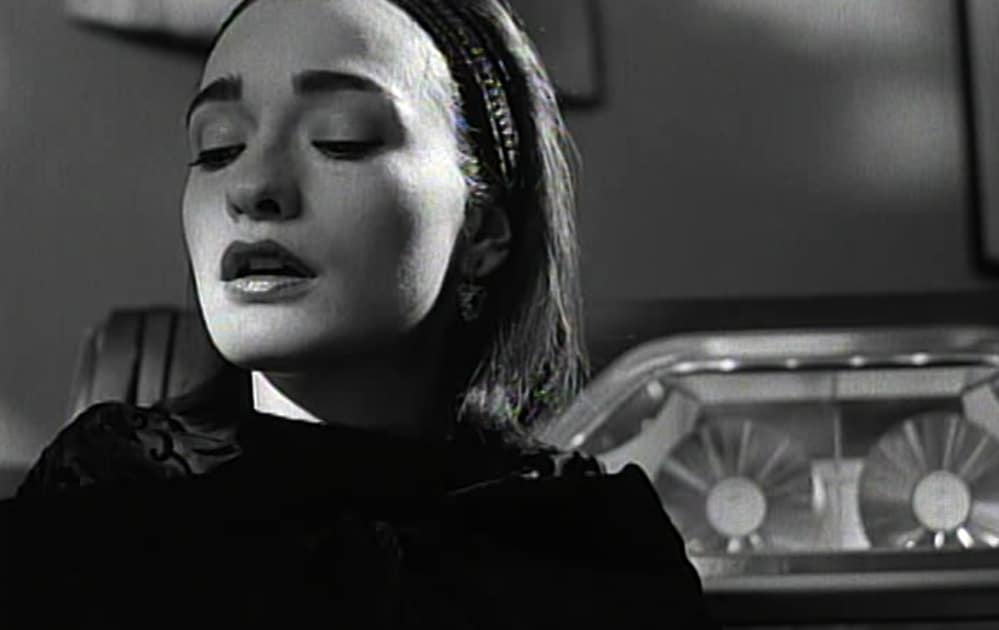
At the very beginning of Nadja, Nadja seduces a man and then drains his blood. But then not long after, she’s back at the bar and she meets Lucy. She’s drinking by herself because her husband, Jim, is out with his crazy uncle (Van Helsing) who’s just been bailed out of jail after he killed someone (Dracula, of course).
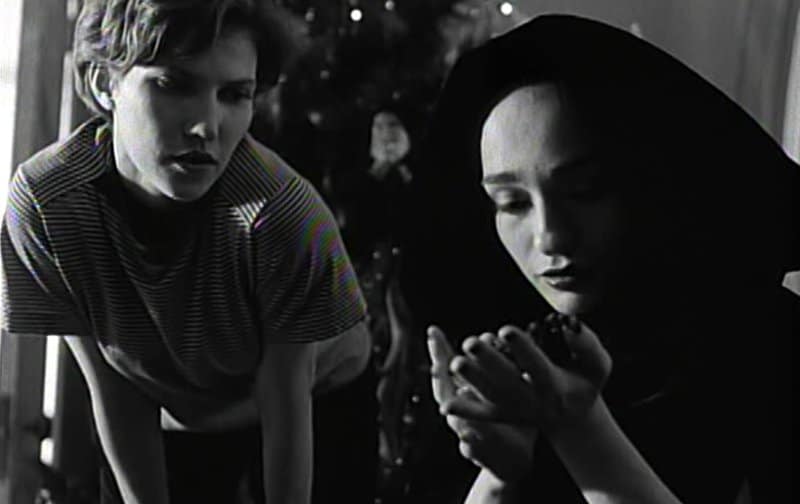
They go back to Lucy’s place and listen to some My Bloody Valentine and drink some more. They play around with a Polaroid camera and sparklers. And then they find themselves on the floor, and they kiss.
“Your husband is very lucky,” Nadja says.
“He wouldn't necessarily agree with you at this moment,” Lucy answers guiltily.
Nadja continues her seduction by slipping her hand down the front of Lucy’s jeans and Lucy says, barely above a whisper, “I can't believe I'm letting you do this to me.”
Nadja pulls her hand back up, her fingers now coated in menstrual blood, which she then shares with Lucy.
“Okay, just to tell you that the scene with Galaxy Craze, years later I realized that in fact what I was licking on my hands was her period blood,” Elina volunteers without me even asking about it. When they were filming, the direction for her was to simply lower her hand out of frame. “I didn’t realize that what I was doing was putting my hand in her sex. I didn’t.”
Because the film is in black and white, they didn’t need to concern themselves with a red liquid for fake blood. So, Elina tells me, “…they were putting chocolate on my hand that was supposed to be blood and I was licking the blood. I didn’t even make the connection of where I got the blood from.”
Years later, as she watched the film again, it clicked. “All these years later, by watching it, I was like, ‘Oh! This means I put my hand in her sex and that’s the period blood.’ Just to tell you that I was unconscious of certain things, which don’t bother me because they don’t take away from the process of what I’m doing anyway.”
Galaxy was also unaware of exactly what was supposed to be happening during that scene. When I begin to bring it up, Galaxy blurts out, “Oh, it’s so disgusting! I forgot about that. I completely forgot. It’s so disgusting. Why did we have to do that?”
I tell her how Elina didn’t realize what was even happening in that scene until years later after multiple viewings, and Galaxy, sounding truly mortified says, “It is really gross! Like, why did [director Michael Almereyda] have to go that far? I totally forgot about that until you just told me. I don’t know. It would’ve been better just kissing.”
“Well,” I tell her, “vampires like blood. I think that’s the thing.”
“Ohhhhh,” she says, “OK. Yeah but, I thought they had to have, like, real blood. That is so gross,” she says again before quickly changing the subject and, quite literally, asking me about the weather where I live.
This pivotal scene, to some at least, is a different kind of horror.
***
In any case, Nadja doesn’t drain Lucy’s blood. But after their dalliance, Lucy falls ill and becomes withdrawn. Maybe it’s the curse. Or maybe it’s just infatuation.
Jim finds his wife despondent. But he’s not sure what it is.
They go to a bar, and Jim opens up to her. “If we can't be totally honest, there's no point in anything, right? And lately I've been feeling so disconnected from everything. I take long walks, I go to the park. Sunsets help somehow. Calendar art – cornier the better. Once or twice a day, I see a woman on the subway who I think I could fall in love with. No reason, except I like her face, her hands, her neck. And then I come home and you're there and I realize I should be completely happy. I mean, today, seeing you so sick, I got so worried. I felt so helpless. All I know is that I want to be with you forever.”
This is a truly beautiful, complicated, heartfelt, slightly funny speech that perfectly encapsulates the lonely feeling of being adrift while also being in love, and trying to make your way back.
But Lucy barely registers what he’s saying, and responds flatly: “Life is full of pain but I am not afraid.” Then she repeats a line that Nadja had told her the night they met: “The pain I feel is the pain of fleeting joy.”
“I'm not sure I know what that is,” Jim responds earnestly. Lucy draws him near, perhaps to embrace him, to kiss him, or maybe to tell him more. Instead, she throws him over the bar because, either Nadja has possessed her and commanded her to, or because, as sweet as her husband is being, he just confessed that, lately, once or twice a day, he sees some other woman he thinks he could fall in love with.
The pain of fleeting joy. It’s a powerful line, and a powerful concept. “I love that line that Michael wrote… where I’m saying the fleeting joy. In fact I’m a being that is [constantly] running after this fleeting joy. This was the motor, the engine of how I approached this character. The desire to capture and to hold onto this fleeting joy is something extremely human which I could recognize in myself,” Elina told me.
This is the true power of the film. For her, and for me. I write to Michael Almereyda, and I try as best I can to express just how wonderful I think Nadja is, how deep it is, how poignant it is. How it’s not just some stylish, ironic take on the vampire genre. I want him to not only understand how deep my love for the film is, but also to coax something out of him. I am trying to get him to admit that he was going for something grand, something heartbreaking. I want him, the creator of this magnificent piece of art, to stand up and say this is so much more than what it seems on the surface.
I want him to reveal his own secret self within the film – his meanings, intentions, messages.
He demurs. “A film can seem like a message in a bottle – a message that becomes fused with a bottle, for better or worse. I’m glad this one has washed up repeatedly on your shifting shore. My relationship to it is not the point,” he concludes.
***
Of course, even if I go out of my way to say it’s not, Nadja is indeed a vampire film. And as it features the children of Dracula and Van Helsing, the hunt is on. It’s a strange, atmospheric, confusing-at-times, funny-at-times, gorgeous-at-times vampire hunt. But it’s a vampire hunt, nonetheless. At one point, they track Nadja down and when they do, Lucy goes to her. They embrace.
“I've spent all day thinking about you. What have you done to me?” Lucy asks.
“I'm sorry. I get lonely,” Nadja says simply. Not unkindly. But also not regretfully. She’s a single person in New York with no attachments. She’s just following her heart.
“I don't understand…” Lucy starts to say.
“Relax,” Nadja soothes her, “let it happen.”
And then, realizing what Nadja has told her, Lucy pulls back from the embrace. “Get lonely? Is that all you can say?”
In approaching her role, Elina tells me she never viewed Nadja as particularly malicious. “I never thought Nadja was the villain,” she says. “She’s a survivor. She needs to survive.” Her being a vampire is not her identity; it’s her curse.
But it’s not just survival in terms of vampire mythology – survival through blood drinking. As Elina says, it’s the ennui of life itself. That was her thought process behind her seduction of Lucy, she tells me. “[The] seduction of this woman was because of my terrible melancholy.”
The vampire hunt takes them all the way to (where else?) Transylvania. Even as they are walking the catacombs, torches in hand, now with Nadja’s twin brother, Edgar, and his nurse on their side, Jim and Lucy talk as if they’re not in some haunted castle halfway around the world, but back in their apartment.
“I want to be over this,” Lucy says. “I want to move on. I want to stop smoking. Learn a new language. Go swimming.
Piqued by this sentiment, Jim walks toward her. “Something's gotta change,” he says decisively.
“Maybe we should have children,” she says.
“Children?”
“Would you like that?” she asks sincerely.
We, the viewer, get a glimpse of what this might look like, as we see a shot of her looking happy, holding a baby on a stony beach. “I can almost picture it,” he says.
Meanwhile, a few feet away, Edgar and Van Helsing debate about how best to defeat Nadja.
“She's a monster,” Lucy says. “I hate her.”
Regardless of who might live and who might die in these final scenes, their marriage has survived. And this is what the movie is to me. This is what the message in the bottle says: that you can be hurt, be lonely, be confused, be angry, but there can be love and hope even in the darkest, bleakest circumstances.
That such a message of perseverance should be present isn’t much of a surprise, considering how close the film came to being killed…