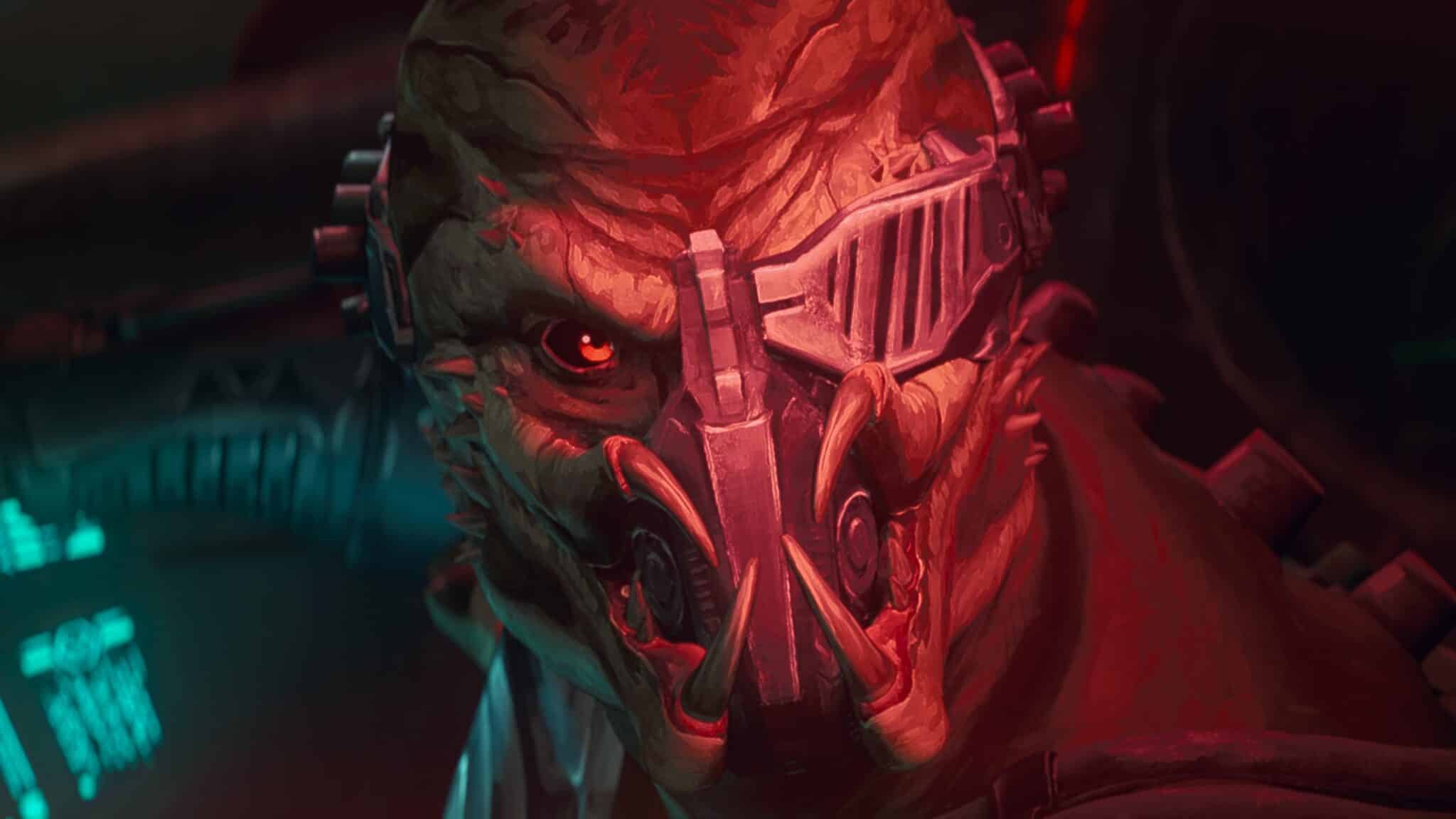
Dan Trachtenberg has cemented himself as the man who has helped to reinvent Predator for a new generation. First, he made 2022’s much-beloved prequel Prey. Now, he’s back with an animated anthology streaming on Hulu in the form of Predator: Killer of Killers. Co-directed with Josh Wassung, this brings the famed alien hunter to life in animated form across multiple time periods. Making that happen required some help, as Trachtenberg was busy prepping the live-action Predator: Badlands.
See also: Do The New PREDATOR Movies Take Place In The ALIEN Universe?
That’s where Wassung came into play on the directing side, but Trachtenberg also needed help getting this ambitious story onto the page. Enter Micho Robert Rutare, who penned the screenplay for the film alongside Trachtenberg. The film they cooked up follows three fierce warriors: a Viking raider on a bloody quest for revenge, a ninja in feudal Japan who turns against his Samurai brother, and a WWII pilot who takes to the sky to investigate an otherworldly threat.
In the early going, Killer of Killers has been met with widespread praise and looks to be another win for the franchise. It may well change Rutare’s career. That career, up to this point, includes writing credits like Mega Shark vs. Crocosaurus, in addition to developing the Sharknado movies. So, how did he manage to make his mark on what very well may be one of the best Predator movies to date? I had the good fortune of speaking with Rutare in honor of the movie’s release. We discussed that and much more. Please enjoy our chat.

I'm not super sure how to ask this, but looking over your resume, this doesn't quite seem like the most obvious movie that you would have written.
It’s a big jump up for me.
It is a bit of a jump up in terms of visibility, let's call it. So how did this happen? Did Dan come to you? How did it come your way?
Well, the producer, Ben Rosenblatt, has been a long time friend and collaborator of mine, and he was working on this with Dan, and because of the nature of the premise and what it is, he felt like I would be perfect for it. As you know, here in Hollywood, there's the things that are on your IMDB and there's the things that never made it IMDB. So there's a lot more that I've done that hasn't made it all the way to the finish line over the last 10 years. So that's part of what explains the leap.
The producer, Ben Rosenblatt, he knew that they were going to do a period piece that had different anthology sections, and he also knew that in some ways my resume does prepare me perfectly for it, because as head of development at The Asylum for a long time, and as also a screenwriter and a director during that period, I worked on many, many, many, many, many, many genre movies. You learn the rhythms of genre and you learn how to service a genre audience. The combination of my love of history and my experience in genre filmmaking made me a fit for it. He pitched me to Dan, and Dan was nice enough to meet with me, and the rest is history. The other thing I'll say is that I had gone to some Prey screenings and given my feedback in that setting, so I got to know Dan a little bit through that. That's basically the story of how I got to do this.

Most screenwriters, directors, anybody that does this long enough, like you said, that you'll have, if you're lucky, one out of every five things you develop gets made. So what was it like for you to have something like this actually get across the finish line on this big of a level?
I'll tell you exactly how it felt for me. There's that scene in Back to the Future when Marty McFly is looking at the picture of him and his siblings, and they're all fading one by one. And he's like, “I'm going to disappear.” Then his parents kiss and he's revitalized back to life. That's how it feels, is that you go along and things happen and you really need that shot in the arm, and this is that shot in the arm for me.

Hell yeah. So when you meet with Dan, you know what they're doing, how much of the story was already shaped? How much of it was you? How much of it was Dan?
Dan came to me with viking, samurai, ninja, World War II pilot and then the development of the story was a collaboration where I would write a full chapter and some treatment, then he would give me feedback and we would go back and forth. Eventually, once we got the studio to approve and record that into the script, it would be, I wrote the first draft of everything and then got feedback, and then wrote the next one, and then got more feedback and wrote the one after. In terms of which elements belong to whom, as is the case with most movies, it's a team effort, and not just me and Dan, but we had ideas from Rosenblatt, the producer, of course, Josh, the animation director, the co-director, and then also Stefan Grube, who's the editor, but also an executive producer.
Do you have one out of the three main chunks – because I don't want to give much away about where it goes – but do you have a favorite of the bunch?
They're all my children. The one that I always kind of think about when people ask this question is the Viking chapter, because I think what I was trying to do is tell a story that's true to human history that the Predator intersects, the moment when the Predator dynamics are actually playing out within human history itself. So not just on the level of character, but on the level of historical sweep.
What I did with the Viking story is I situated the Predator encounter at a place at a time when the hunted was becoming the hunter in terms of human affairs. So you had the Vikings who were attempting to create little colonies in what is now Russia up and down the Volga River. And Ursa had lost her home, because the local inhabitants had pushed her father out and killed her dad. Now this is her coming back to reclaim this territory. And now there was no Ursa in history, but this is what happened between the Vikings or the Varangians and the local Slavic peoples. That was fun for me to bring that history to it, and that's why I enjoyed working on that one. But I loved working on them all, and they all have some amount of that dynamic in terms of how the Predator encounter relates to history.

One thing I find interesting about this franchise, it's going on 40 years now, and I think if you look at comparable franchises like Alien, the Alien mythology this far in is ironclad in a lot of ways. But what's interesting about Predator is despite how many movies there've been, it still feels so wide open in a lot of ways. Is that daunting when you have so much that you can explore? Or is that just the best thing in the world?
It's less daunting, frankly. You talk about Alien, I can't imagine the complexity of working on a Star Wars movie or something where so much of the lore has been established. There's debates about what's canon and what's not canon. In this franchise, I don't want to call it a blank slate because it's not a blank slate, but it gives you enough wiggle room that you don't have to be looking over your shoulder all the time and worrying about what the precedent is, what the established lore is, what's not. So it makes it a bit easier, frankly.
I think Dan particularly and you guys have made the most of that for sure. Obviously I don't want to spoil anything for anybody, but my first thought when the movie ended was, because every once in a while I get a movie that ends and you're like, “Oh, they've already made a sequel,” or, “There's absolutely going to be a sequel.” Because my first thought when this movie ended is, “it can't end like that.” There must be more to the story. Obviously that all probably depends on how well this does, but do you have designs on coming back if they make a sequel? Have you and Dan talked about it?
I'd love to come back. I don't think any clear decisions have been made in any direction, but that's more of a question for Dan.
Before I let you go, is there anything else at all you want to say about Killer of Killers?
I think that what we tried to do with this movie is take the great dramatic irony of the Predator franchise, which is that the hunter becomes the hunted, becomes the hunter, and deep at dynamic, that narrative irony and expand it to include the themes and currents that run through human history. So that was the project, and I think hopefully we succeeded in that.
Predator: Killer of Killers is streaming now on Hulu. For more, be sure to check out our interview with the film’s directors, Dan Trachtenbeg and Josh Wassung.