Editor's Note: This was originally published for FANGORIA on November 10, 2000, and we're proud to share it as part of The Gingold Files.
No, it’s not any better than Mission to Mars.
While not a disaster on the order of Battlefield Earth, the second venture to the fourth planet this year continues the trend of lackluster genre fare that has plagued the last few months. It’s also one of the many recent movies that clearly suffers from postproduction doctoring. There was evidently an initial attempt to make this a film about character, not incident, but with much of the personal dramatic material seemingly deleted from the opening reels, all that’s left is a tired trek through familiar settings.
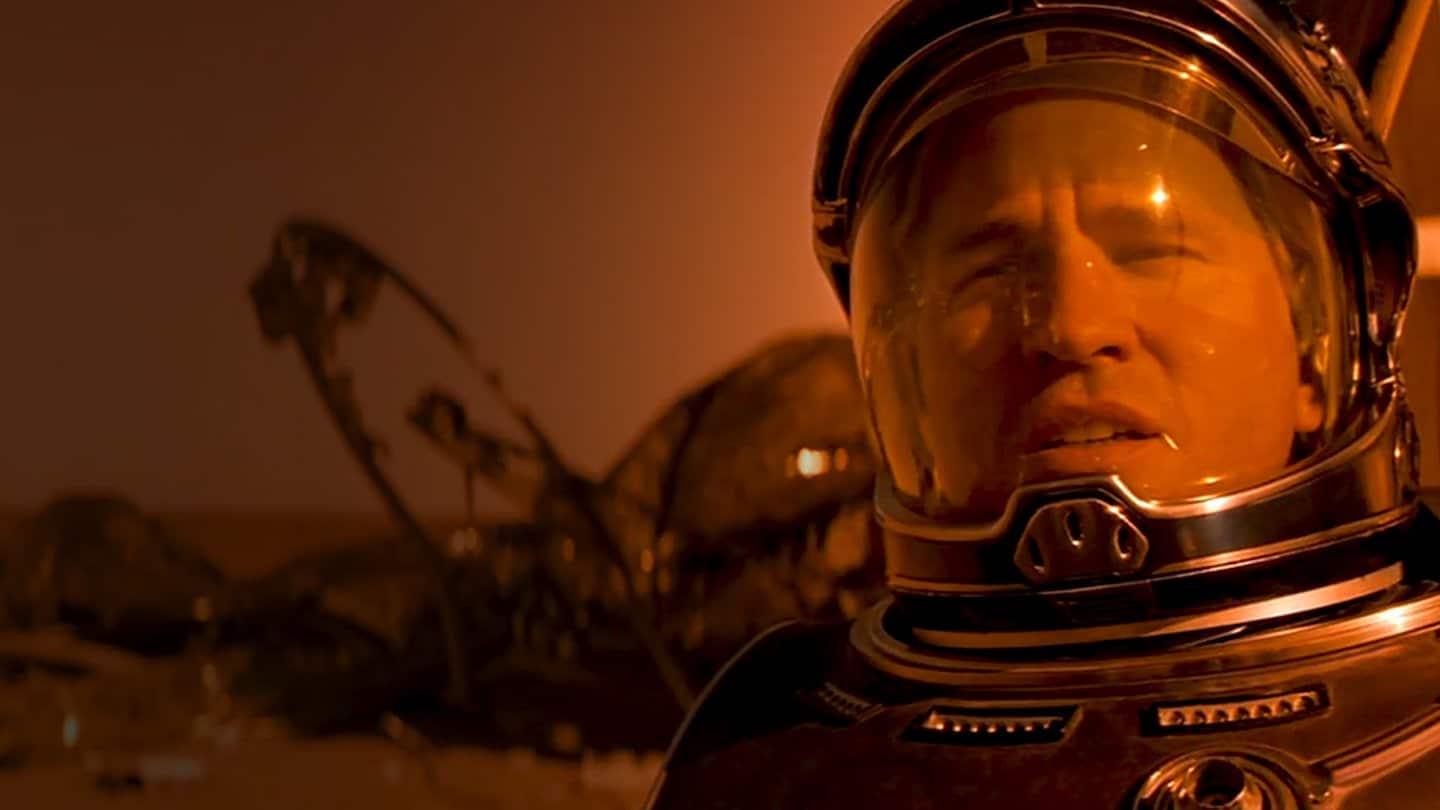
Despite Warner Bros.’ attempts to pitch Red Planet as a horror film about a marauding robot, the mechanical menace is really just a secondary story element. Most of the film follows a crew of astronauts who have ventured to Mars to find out why a terraforming project seems to have failed. Once they arrive, after a too-brief series of character-establishing scenes, the mission inevitably goes awry, leaving a small group of men stranded on the planet and the team’s commander (The Matrix’s Carrie-Anne Moss) struggling with the malfunctioning spacecraft. Simple survival on Mars’ surface is the main challenge; the robot, called AMEE, is just a subsidiary threat.
With such a prosaic series of events as this movie contains, rooting interest in its people is crucial, and that’s where the film especially falls short. A lengthy opening voiceover montage makes it pretty clear that there was once a longer introduction that allowed one to get to know the characters and their relationships, which was sacrificed in the name of pace. This means that we don’t care much for anyone involved, and that the last half contains scenes between them paying off subplots that have no setups. Debuting feature director Antony Hoffman, a commercials vet, doesn’t indulge in the Cuisinart editing of some of his promo brethren—indeed, his work is square and uninteresting, and he doesn’t show much aptitude for pacing. Some of the story progression is illogical, some predictable, and events that should be important to the story and protagonists aren’t given sufficient dramatic weight.

Like any SF film with enough money thrown at it, Red Planet is technically proficient, but despite the contributions of cinematographer Peter Suschitzky (a recent David Cronenberg collaborator) and production designer Owen Paterson and costume designer Kym Barrett (both from The Matrix), there’s a been-there, seen-that feeling to most of the visuals. Certainly, Pitch Black, which utilized a similar basic premise and some of the same Australian locations, came up with a much more striking and original look on a considerably smaller budget. The actors, including Val Kilmer, Moss, Tom Sizemore, Benjamin Bratt and an especially underutilized Terence Stamp, don’t shame themselves, but they’ve all done better work elsewhere.
Red Planet is the kind of misfire that has become too familiar on the movie scene lately—not terrible, just depressingly routine. As science fiction, it’s thematically regressive, and its tense/scary moments are too negligible and too few for it to work as horror. Movies about space travel should spark awe, wonder, mystery or terror of the unknown; you know something’s wrong when the overriding feeling is, “Oh, jeez, this again?”