Last Updated on March 16, 2024 by Michael Gingold
Editor's Note: This was originally published for FANGORIA on April 18, 2008, and we're proud to share it as part of The Gingold Files.
At least one victim in Pathology is dosed with a drug that leaves them conscious but immobilized, able to see but not feeling anything—a condition I could identify with after the movie’s 94 minutes were over. Hardly a horror film despite the emphasis on cut-open cadavers, Pathology is a glum attempt at a medical thriller/morality melodrama that winds up just lying there on the slab of its own failed pretensions.
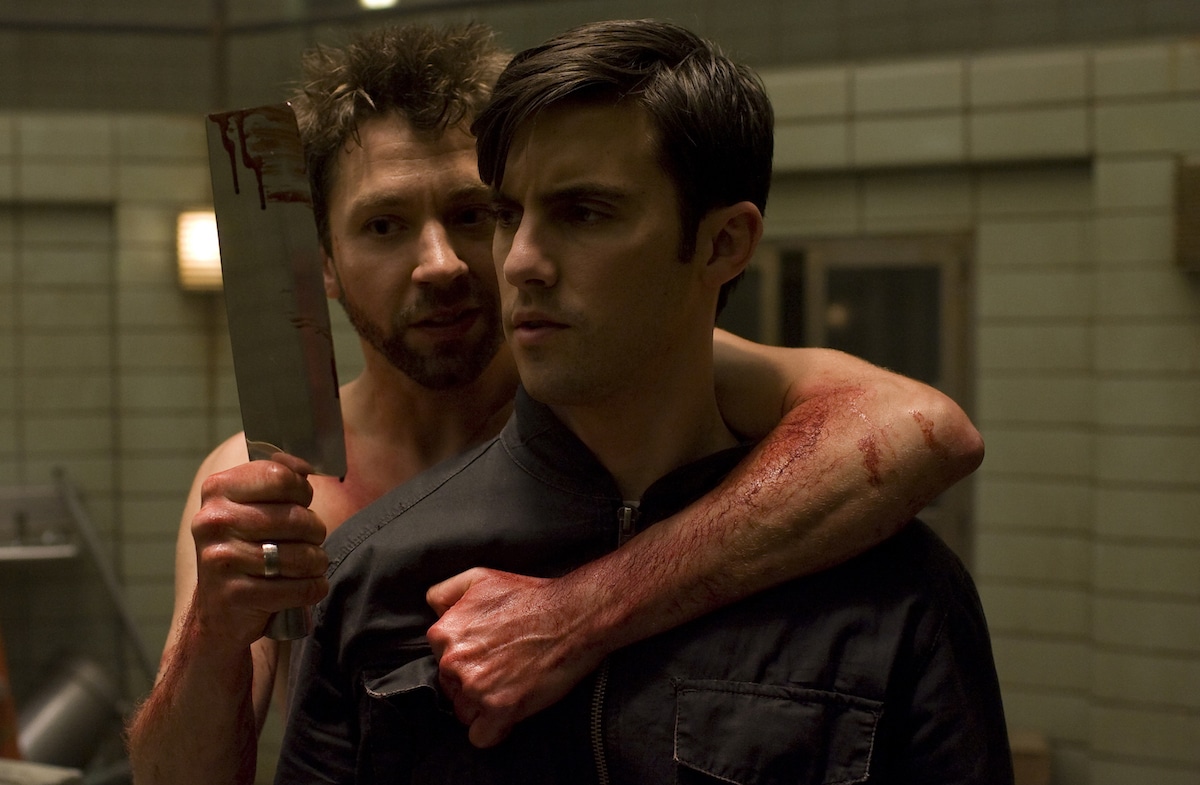
Heroes’ Milo Ventimiglia stars as Dr. Ted Grey, a med school graduate who begins an internship under big-city pathologist Dr. Morris (an unrecognizable John de Lancie). Quick to show off both his precocious knowledge and supposed sensitivity to human feeling in deducing causes of death, Ted quickly earns the enmity of cocky Jake Gallo (Michael Weston), who nonetheless is soon luring the newcomer into a “game” he and several of his cohorts have been playing. This involves one of the group bumping off someone who’s either an undesirable or a terminal patient (preferably both) in such a manner that none of the others, even with all their forensic knowledge, can determine how it was done. The movie attempts to establish these grisly extracurricular activities as an extension of their God complex, but it mostly seems like just another expression of their boundless hedonism, as they keep busy ravishing and injecting drugs into each other’s bodies when not digging into those of strangers.

Ted quickly gets seduced into joining the club, especially when hot redhead Juliette (Lauren Lee Smith) starts offering him her own corpus—despite his having an out-of-town fiancée (a thankless role for Alyssa Milano). Since Ted enters into and embraces the dark side with a minimum of emotional fuss, there’s little psychological tension or plausibility to his descent, and Jake is too obviously deranged too early for there to be any mystery about him. Scares aren’t really on the agenda, and the movie never genuinely addresses the taboos Jake and co. are breaking in their sick contest; it takes their bad behavior for granted (and so, apparently, do all their fellow pathologists who witness their other anarchic antics in the lab, but never seem to object).
With muted cinematography by Ekkehart Pollack, the movie quickly settles into a torpid tone broken every so often by moments of preposterous luridness, as when Ted and Juliette vigorously get it on immediately after bumping off a “Fat Bastard” (yes, that’s how he’s credited) played by former Dr. Giggles Larry Drake. Moments like this suggest that perhaps screenwriters Neveldine & Taylor (yes, that’s how they’re credited—no first names) intended the material to be delivered throughout in the delirious style they brought to their own thriller Crank, but award-winning commercials director Marc Schölermann adopts a somber, self-important mood that suggests a powerful dramatic statement is being attempted. No such luck; there’s no one to identify with and thus no emotional weight, and the longer it goes on, the more obvious its plotting becomes.
About the only truly creditable element of Pathology is the FX work of Tatopoulos Studios, which contributed an assortment of faux stiffs that are extremely realistic both inside (which we frequently glimpse) and out. Perhaps a bit of CGI was employed for the dissection sequences, but it’s genuinely hard to tell. These grisly moments may satisfy hardgore fans’ yen for viscera, but in terms of actual horror or suspense, they’re just bloody icing on a cake that’s otherwise stale and tasteless.