Last Updated on February 24, 2025 by Angel Melanson
Oz Perkins has heard your gripes about “elevated horror” and is here to smash them to a bloody pulp. The Monkey, the much-anticipated follow up to last year’s ominous ode to the occult Longlegs, is free of any languid underpinnings, and doesn’t hide its message behind metaphor. It’s a succinct, staccato reminder that makes good on its tagline – everybody dies, and that’s fucked up.
It’s a reality Perkins himself is all too familiar with. The filmmaker’s own connection to atypical tragedies (both of his parents famously passed away in devastating and unusual circumstances) arguably makes The Monkey his most personal, and confident, film yet. But The Monkey isn’t interested in your sorrow or sympathy. Instead, this is a film where Perkins’ offbeat, often lowbrow sense of humor (glimpsed here and there, nestled among the darkness of his past cinematic offerings) is front and center – this is, after all, the same director who played dorky David Kidney in Legally Blonde and boasts a cameo in Not Another Teen Movie.
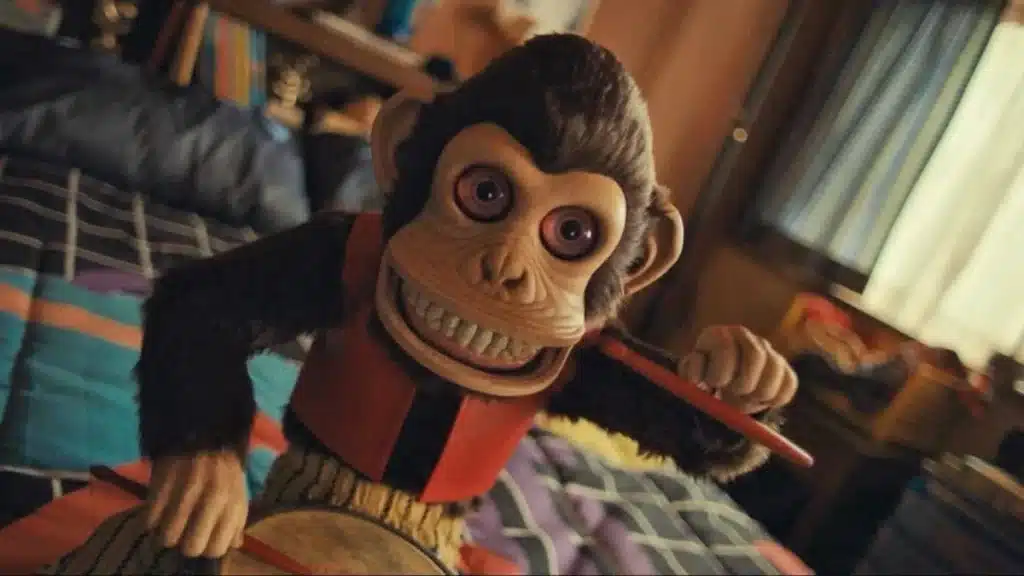
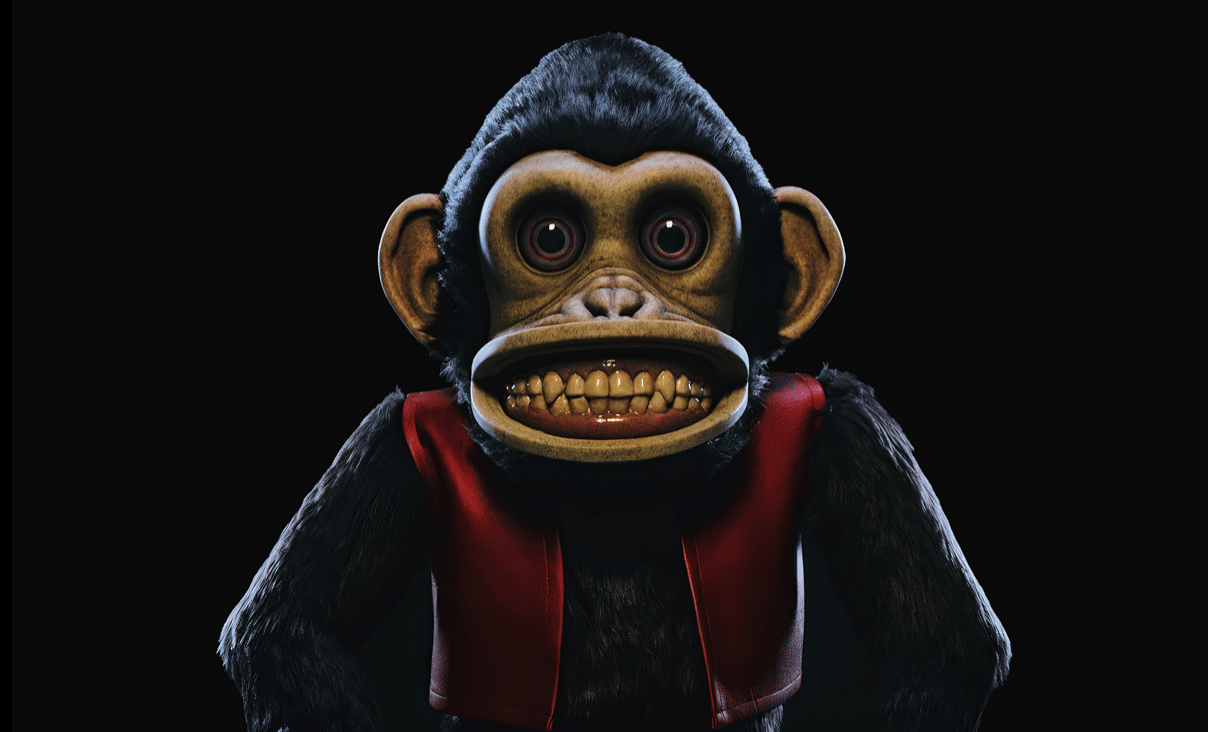
Based on the Stephen King short story of the same name, The Monkey centers on twins Hal and Bill (played as children by Christian Convery and adults by Theo James) who come into possession of a mysterious toy monkey left behind by their pilot father. The sinister simian comes with a warning that it is “like life”, which the boys quickly find out refers more to the random nature of horrific deaths induced by the terminal beat of its drum and less to how realistic it looks. Overwhelmed by the uncontrollable nature of the monkey, Hal and Bill decide to dispose of it by unceremoniously throwing it down a well, only to be pulled back into the nightmare when, after 25 years, the brutal, bizarre deaths start right back up again.
From the get-go, The Monkey cements itself as an instant midnight movie classic. The gore set pieces combine both the ludicrousness of any of the Final Destination deaths with Perkins’ love of visceral, mean-spirited violence, making every death explosive – often in every sense of the word. Perkins’ take on the source material isn’t a particularly loyal one, giving him free reign to get creative with the kills, crafting a world where everything from hibachi grills to lawnmowers becomes a source of inevitable carnage.
Complimenting the grisliness are the visual gags which come thick and first. They don’t always land but when they do they land hard, thanks to an eclectic crew of supporting characters, with particularly hilarious cameos from Elijah Wood and Perkins himself as the mutton-chopped Uncle Chip. Tatiana Maslany as the twins’ dry and cynical mother Lois is a highlight, as is an unrecognizable Rohan Campbell, who helps to trigger the madness of the second half of the film.
At the heart of the spiralling insanity is Theo James, who showcases impeccably natural comedic timing, and Christian Convery who steals the show as Young Hal and Bill, delivering two performances so distinct that this writer genuinely did not know she was watching the same actor until double checking the credits while writing this review.
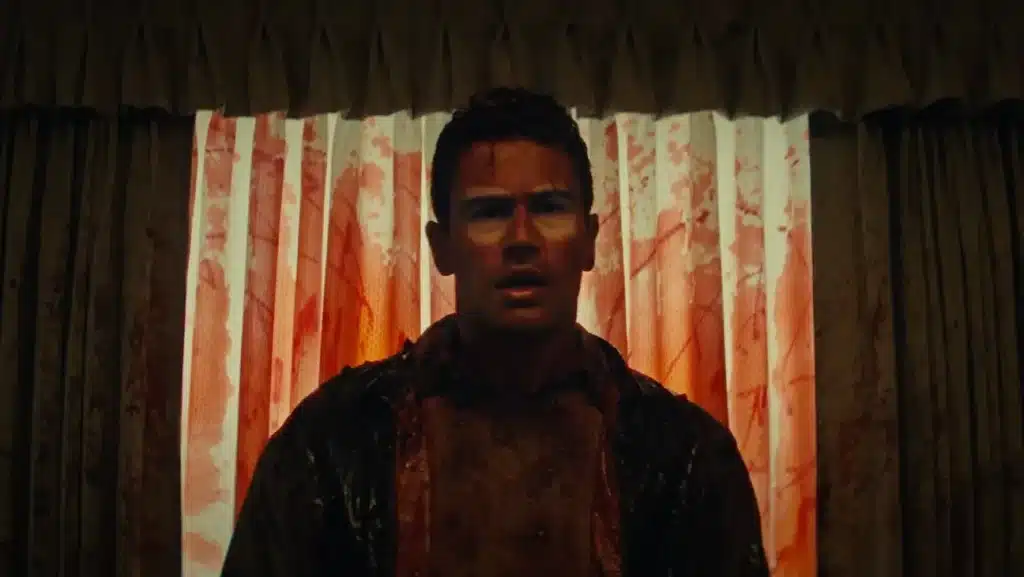
At a tight 90 minutes, there’s little fat to be trimmed, but The Monkey does suffer from a slight midsection sag where lore is dumped thick and fast. Sometimes the connective tissue of this gleeful bloodbath is weak – sincerity isn’t always Perkins’ strong suit and as a result, the emotional beats – particularly the second act’s focus on the relationship between Hal and his mostly-estranged son Petey (Colin O’Brien) – don’t hit half as hard as the hilarity.

But between its sharp, witty script and Perkins’ signature visual style (as always inherently concerned with representing the dark heart of wood-panelled American suburbia), The Monkey says all it needs to without, thankfully, getting too bogged down into the weeds of how and why the toy does what it does. Just like life, and death, it just does.
Perhaps understandably, given the nihilistic nature of what feels like living out the end of days in real time, grief has had a chokehold over horror for the last few years, and it’s remarkably refreshing to see a filmmaker approach the unjust and unpredictable nature of death with a smile and a shrug rather than pulling its audience down into the thanatophobic doldrums.
Sure, The Monkey might not be the deepest film in the world, but it’s a film that knows exactly what many of us need right now, at the start of what looks to be another frightening year – a blistering riot of absurdism that revels in the inherent silliness of life and death, and will leave you laughing through a mouthful of blood.