Last Updated on February 18, 2025 by Angel Melanson
There are some key differences between Bram Stoker’s novel Dracula and the unauthorized silent film adaptation from 1922, Nosferatu, but one thing remains a constant in every version of this tale—the Jonathan Harker/Thomas Hutter character would drop dead with envy if he ever caught wind of Docusign.
Hutter, as Harker was renamed by director F.W. Murnau and his screenwriter Henrik Galeen back in the day, and played by Nicholas Hoult in Robert Eggers’s note-perfect new spin on the classic, kicks off Nosferatu by “traveling East” with some legal papers for the mysterious Count Orlok. The secluded weirdo intends to acquire a dilapidated estate in Wisborg, a fictional German city that Eggers’s team have designed to look like a mix of Prague and Orlando’s Wizarding World of Harry Potter.
With Mutter trapped in a nightmarish Transylvanian haze, Orlok begins a journey from his dusty castle toward polite civilization, bringing with him a plague that has been analyzed by lit scholars for over a century, and in this telling leans heavy on repressed sexual desire. You’ve never seen people undulate so erotically while drinking blood as they do in this movie.
Robert Eggers has been a shot-in-the-arm for erudite genre films since his Puritan New England debut The Witch in 2015, the chowder-filled secluded psychedelic freak-out The Lighthouse in 2019 and the Métal hurlant-inspired Viking drama The Northman in 2022. Nosferatu, a dream project he’s been talking about since The Witch, is his most elegantly designed picture yet, an answer to the daydream question “what if Stanley Kubrick decided to do a Dracula story instead of Barry Lyndon?” In addition to shooting in central Europe, cinematographer Jarin Blaschke used 35mm film and deployed candlelight wherever possible for the Transylvania-set scenes. It’s the most gorgeous and visually playful motion picture released this year.
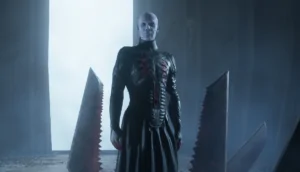
Indeed, you don’t even get a good look at Count Orlok (Bill Skarsgård) until well into the story, making his reveal even more exciting. You certainly see his shadow and, more importantly, hear him, wheezing his grouchy demands through a thick Slavic accent. (In addition to sunlight, Orlok clearly hasn’t seen an Albuterol inhaler for a few centuries.)
Skarsgård’s Orlok is an absolute gift; a glorious interpretation on a character that you may have thought had been done to (and beyond) death. With creaking bones, disgusting nails and lungs filled with phlegm, he still growls out lusty dialogue (“I am appetite, nothing more!”) that slices under the skin. This character is an instant classic.
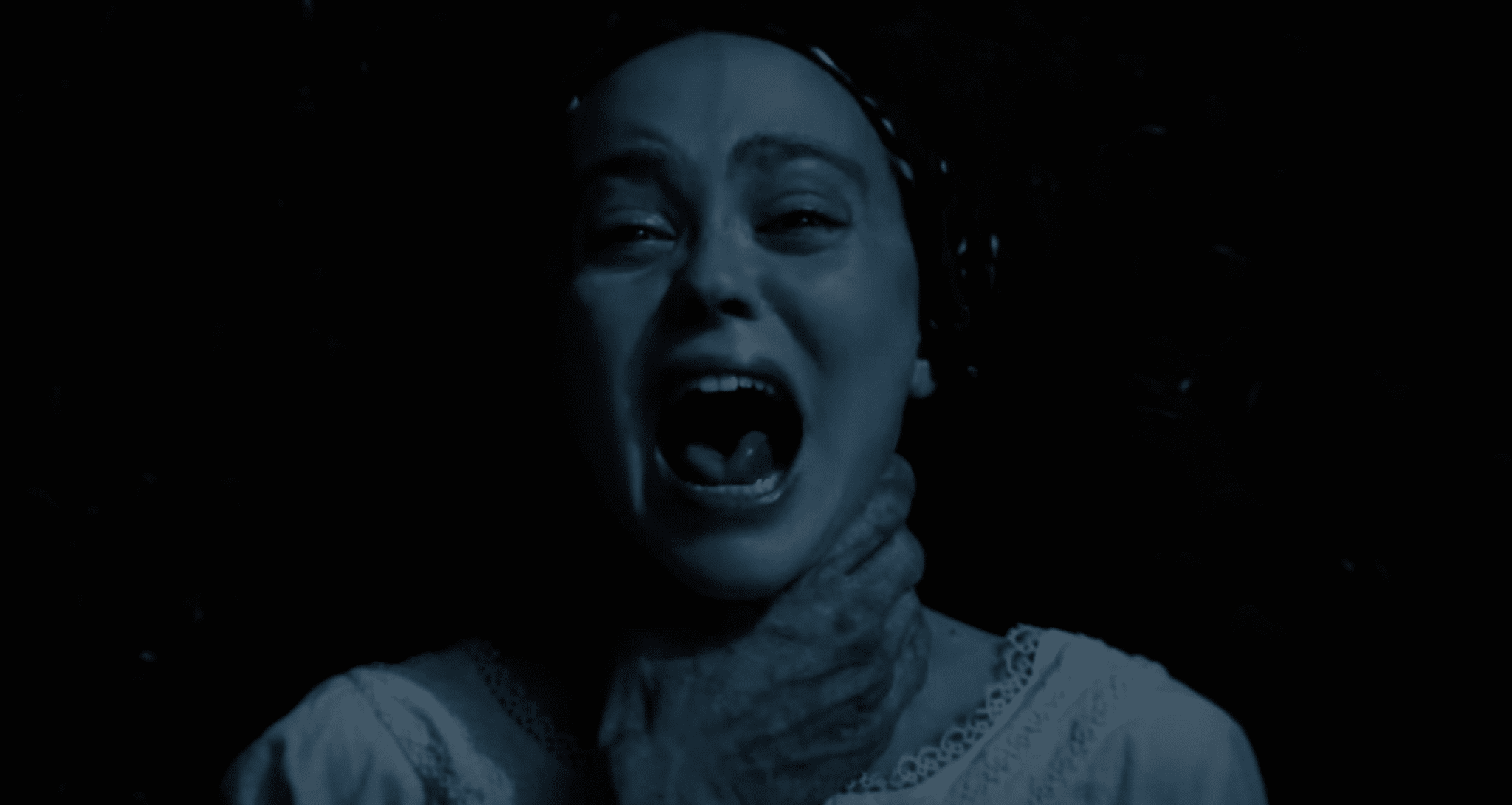
The object of Orlok’s desire (which, dare we suggest, is a two-way affection?) is Lily-Rose Depp’s Ellen Hutter, Thomas’s timid newlywed prone to fits of malaise and hysteria. As the alchemist and scholar of the occult Professor Von Franz (Willem Dafoe) will explain, she is naturally tuned to a frequency of darkness, which creates a bond between she and the malevolent Count Orlok—a deep desire that can only be sated with the spewing of bodily humors.
Her dreamtime visions, which cause her to quake in the night and murmur “come,” are hardly acceptable in courtly society. While Thomas is out on assignment she’s staying with friends, and the man of the house (Aaron Taylor-Johnson) is simply not amused by these ravings! He’s hilarious in this, reminiscent of Daniel Day-Lewis in A Room with A View, but in a movie where people get their carotid arteries slit in addition to reciting poetry.
The Dracula/Nosferatu story is about as fundamental to popular culture as they come—we just had an entire movie (The Last Voyage of the Demeter) based on only one chapter from Bram Stoker’s book—but Eggers makes a bold step here by delivering a from-the-top classicist version. While it certainly gooses up the sex and gore, it has a fealty to the original text, and leans heavily into the period language. (This is catnip to actors like Dafoe and Taylor-Johnson, as well as Emma Corrin and Ralph Ineson.)

Watching this Nosferatu is like going to see a production of Hamlet that doesn’t do anything zany or modern with the setting or the cast, it simply trusts the story and the audience enough to play it straight. The only difference here is how much professionalism and care has been put into the production.
Now, that may not mean this is a whopping success with the opening weekend crowd. Those with narrow visions of what a horror movie can be, and are riding the sugar rush of Terrifier 3, may find the stylized dialogue and, let’s be honest here, minimal plot to be a little elusive. But those who, like Ellen Hutter, gravitate to psycho-sexual “vibes” cinema (with hyper detailed sets, costumes, wallpaper and miniatures) may find themselves thrumming with delight.