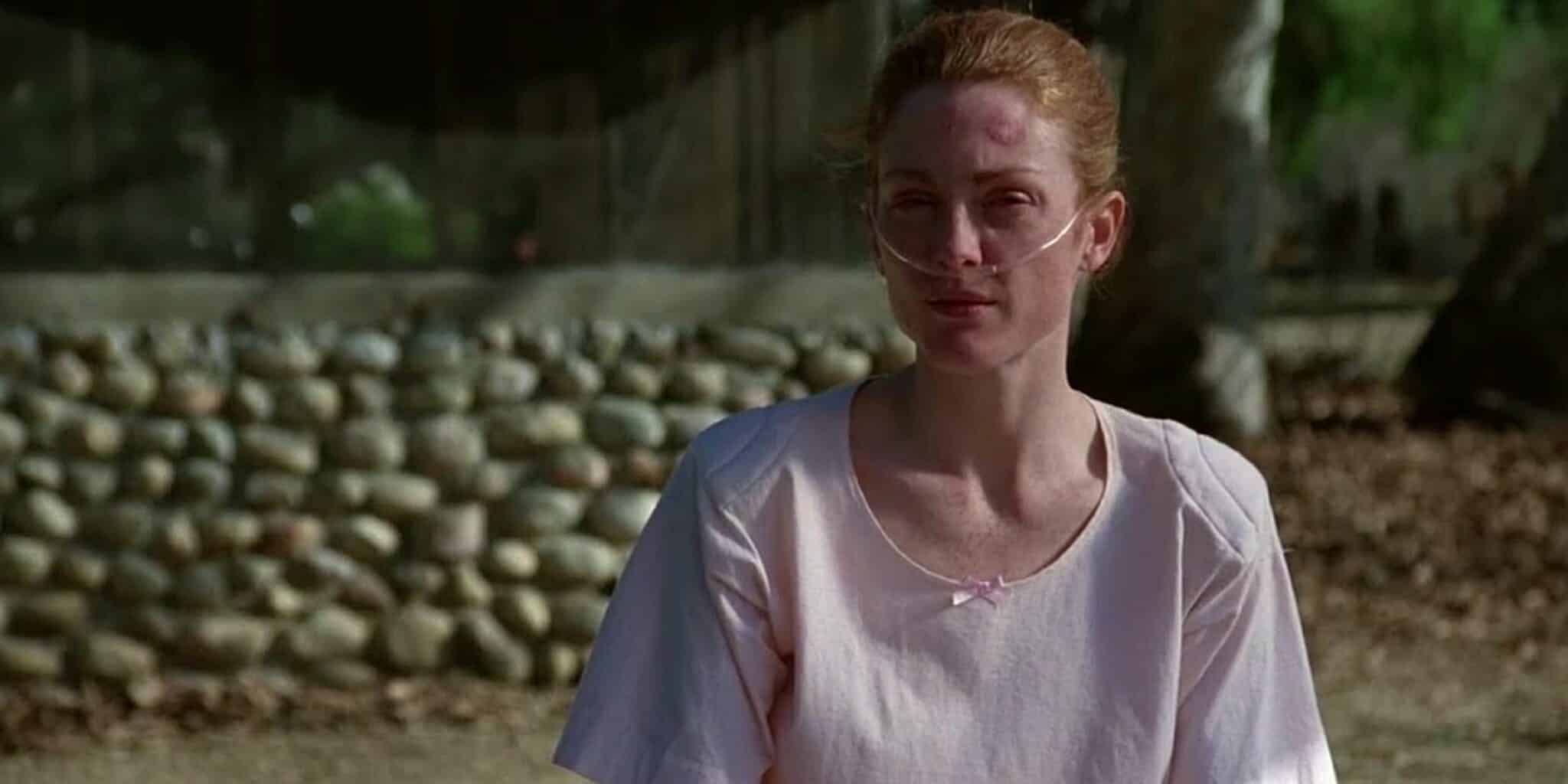
The first thing we see Carol, Julianne Moore’s character in Todd Hayne’s seminal enviro-thriller film Safe, do on screen is cough as she’s entering the house. It’s a completely innocuous action at first that becomes an absolutely colossal foreshadowing in the film. Carol is a pampered housewife in a big spacious house with plenty of sunlight and an eclectic interior design. The single most frustrating situation in her life is that the furniture company delivered her luxurious sofa in the wrong color, something she complains about to her immigrant maid and then to the receptionist at the furniture store.
Her husband barely pays attention to her other than for sex, and her friends are constantly talking about new fad diets or various “cleanses” and “retreats” they should try. Carol’s background is sheltered and is ripe in its susceptibility to fear. Her son recites a school essay in which he graphically details stereotypical fears of violent Black gangs in Los Angeles. It’s common that people who have few exposures to the normal world tend to create the most horrific fantasies of it in their heads.
Carol’s condition cannot be neatly wrapped into the diagnosis of paranoia. Some of the things she feels and experiences are absolutely real. The neglect she receives from her husband, the cough she gets from the smog ejected out the back of a diesel truck, and the general malaise of her curated lifestyle, which Haynes portrays like magazine cutouts, centering the decor of the home with Carol at the extreme edges of the frame.

The lighting is eerie, with a diffused ghostliness and grey shadows that make everything look as if it hasn’t been touched in ages. Safe is just as much about the societal symptoms of susceptibility to fear as actual psychological illnesses. When we think of the many studies that have been performed on those who are most susceptible to fall into conspiracies and paranoid thoughts, we generally find elderly people and those who feel the most isolated have the highest risks.
When asked to think of the most terrifying moment of Safe, most people would probably point to the coughing fit and panic attack Carol has while driving down the spiral ramp in a parking garage. It’s the otherwise quiet film’s most manic sequence, where Carol’s gasping and choking mix with the tire screeches echoing like banshee screams.
As startling as that moment is, I would contend that the scariest moment (one which has pierced my brain and never quite let the wound heal) was watching Lester. The anonymous figure at the Wrenwood commune for sufferers of “environmental illnesses” that Carol attends wanders the grounds, completely covered in a sweatsuit and bandages, walking awkwardly and painfully like his limbs and joints are all loose from their sockets and no longer function to full capacity. The head manager of the commune tells Carol that Lester became so completely submissive to his fear that it basically destroyed his ability to function normally in the world.
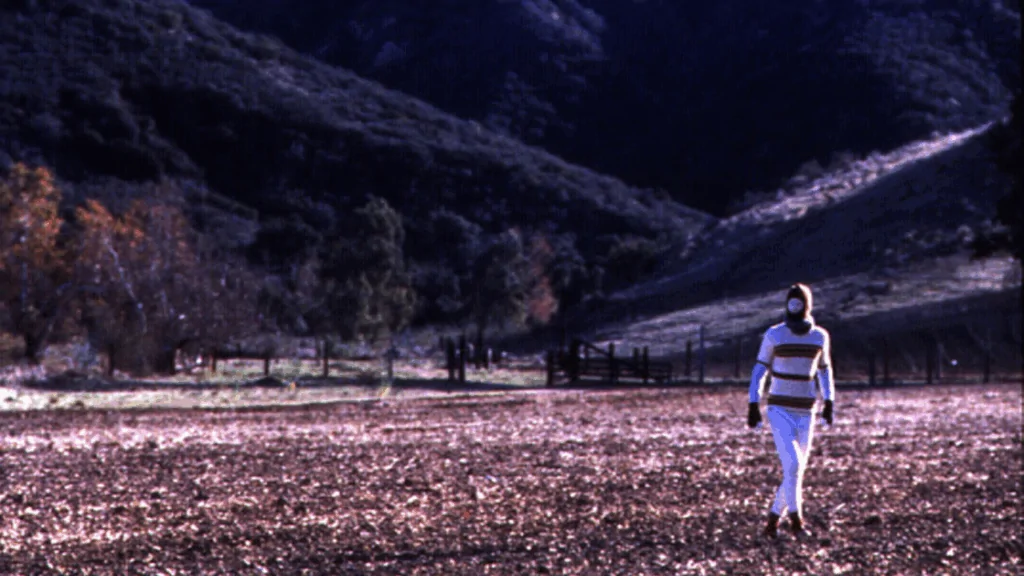
To me, Lester is the heart of Safe. His condition and his situation reflect a lot of what happens when conspiracy, fear, and paranoia all collide to create the debilitating psychological ruin that becomes a point of fear within the film. Carol sees him and imagines herself in his body. Over the past few years, American society has seen glimpses of what such irrational but real psychosis has done to the populace, but we’ve yet to accept or fully grasp why.

From conspiracies over vaccines to political manifestos like QAnon, to crazed health scares in food, there has been a litany of fears that have manifested on the internet and extrapolated false claims into being commonly repeated “truths.” It has also been documented that people have become isolated and alienated through the psychological toll inflicted by their own obsessions of exposure to the internet.
Within every irrational fear, however, is a kernel of truth. Carol’s feelings of sickness due to environmental toxins are not without their scientific backing. Of course, we are aware of how pesticides, pollution, and chemical hazards in the air and water have ruined people’s lives for decades, but Carol’s fears stem from a lack of physical proof. Haynes showcases her slow recession from her family and social circles through a very plain inability to express what she feels in real, tangible facts. That doesn’t invalidate her feelings, but it does drive doubt because it exists purely in the ether.
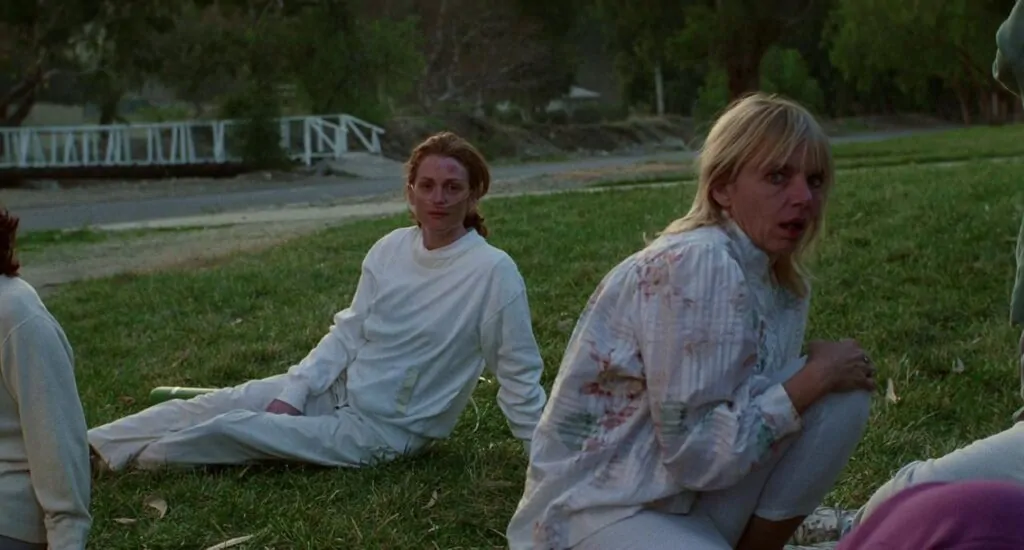
Julianne Moore is brilliant in her performance as she portrays Carol with a frustrating sense of crippling quietude that renders her unable to fully articulate her own experiences. She’s so averse to expression because in the society she lives in, such trauma is embarrassing to admit. In the same way, it has become increasingly difficult in today’s society to diagnose the effects of things like internet “brainworms” as they are colloquially referred to, because they lack tangible symptoms that doctors can detect. It’s a slow degradation.
The cliché we’ve heard in recent years is that the internet connects us but also drives us further apart. It strangely has the ability to simultaneously connect you to many people and ideas, but it is even more effective at building isolated chambers of fear and paranoia that feed into themselves. What Carol experiences through the film is a similar kind of self-fulfilling prophecy regarding her condition. She eventually tries to find reasons to be scared, making her see danger and sickness where there is none to be found.
While on its surface, one wouldn’t necessarily consider Safe as “scary,” it utilizes many sequences that signal dread and the creeping sensations of fear within us. The slow, methodical zoom-ins on Carol, the impressionistic dissolves, and the feeling of time standing still in parts where Carol is alone with nothing but her thoughts are sequences of great tension.
Lester’s appearances all happen during the daytime in bright sunlight, but they send a shiver down the spine instantly thanks to his inhuman gait and the cuts to him that make it feel as though he’s approaching menacingly. It’s these small elements of form that Haynes utilizes to make Safe ironically uncomfortable throughout. In this way, the film is less about the horrors of any tangible manifested “thing,” but instead, the feeling of fear itself is the monster.
As we see so many instances online of people expressing being terrified of cities they have never been to, scared of cultures and religions of people they’ve never met, and a general belief that being sheltered is a virtue, one can’t help but think of Todd Haynes’ Safe as a cinematic concentration of all those feelings. Through Carol, the movie depicts the progression from initial discomfort to the latter stages, where fear completely overtakes the mind. Ultimately, its manifestation is revealed within Lester, when the human form begins to degrade into something unrecognizable. A sad and terrifying disfigurement, wrapped up and scared of the entire world.