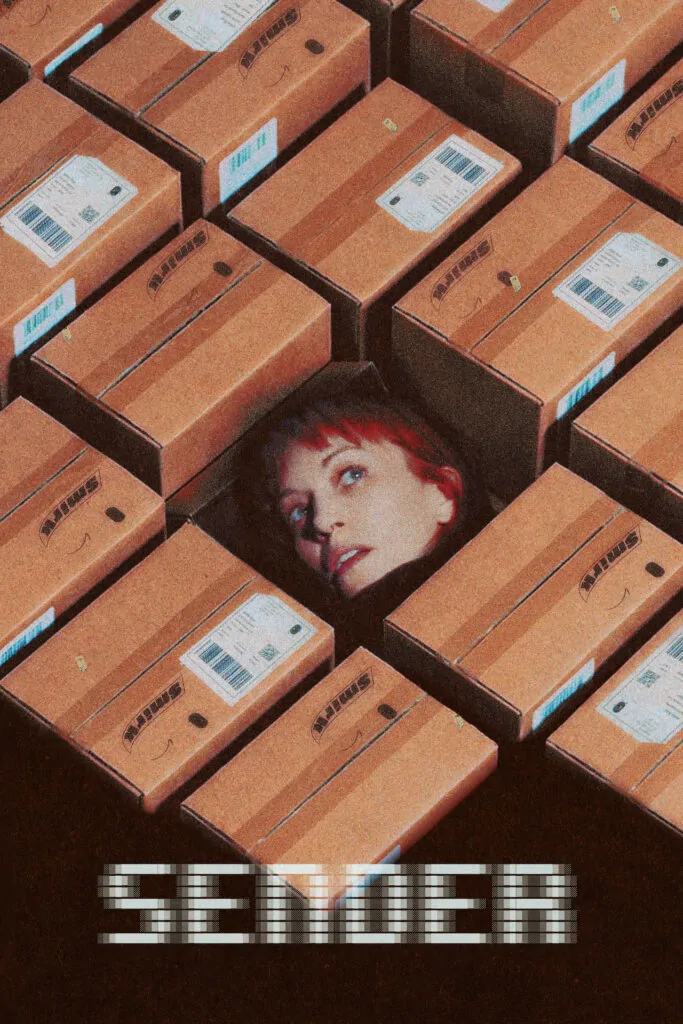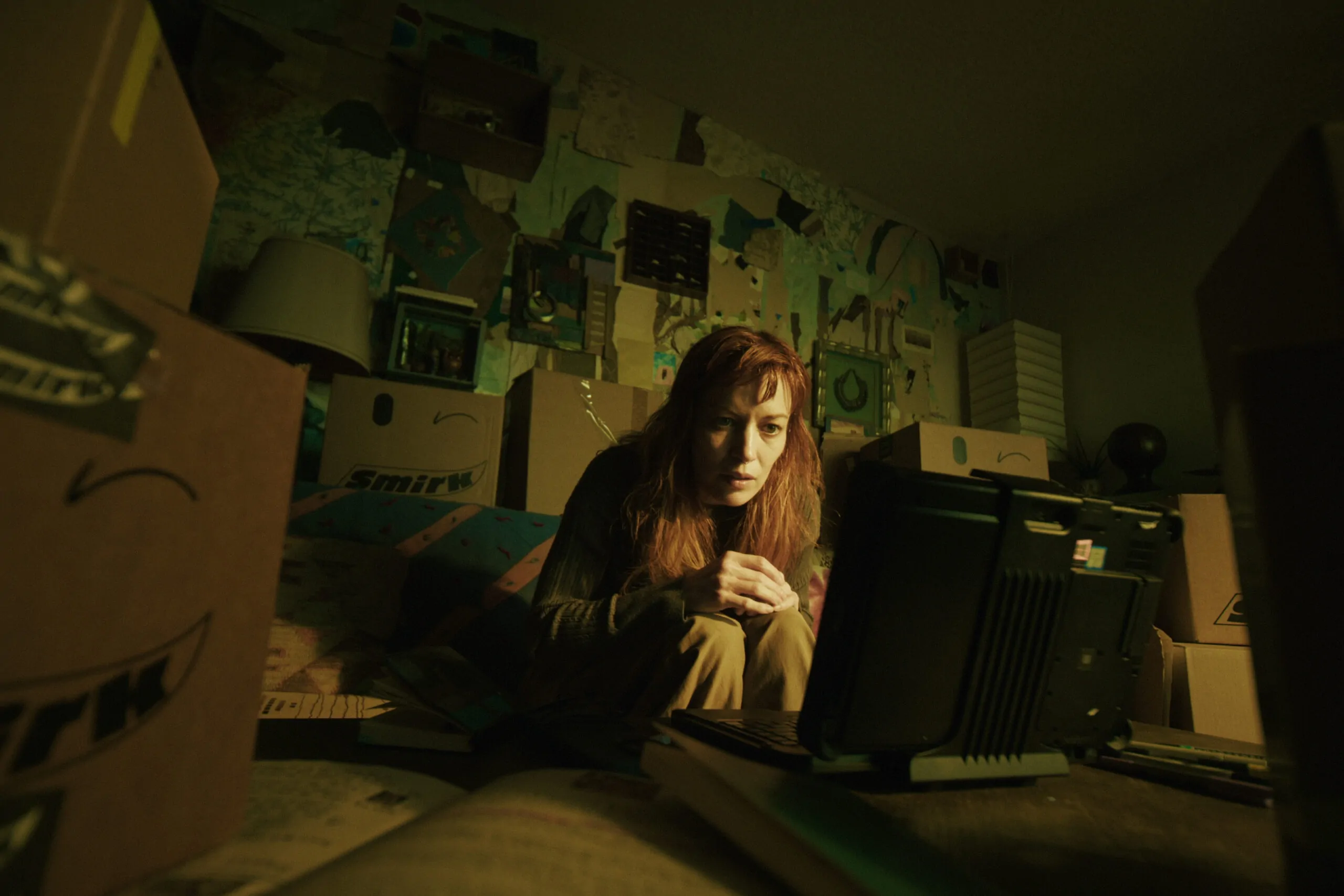
Back in 2022, Russell Goldman made waves with Return to Sender, his mesmerizing short film about a woman in the early throes of sobriety who is terrorized by an onslaught of packages she never ordered. It was only a matter of time before his high-concept anxiety trip was given the feature treatment, and fortunately, his intricate mutation of the banal rituals of modern consumer life turns domestic spaces into a psychological warzone. Equal parts corporate satire, paranoid thriller, and mental breakdown, Sender hand-delivers genuine dread in neatly taped cardboard boxes, cheerful alerts of shipping notifications, and hyper-specific targeted advertising. Now starring Britt Lower as the titular woman tormented by constant deliveries, Goldman crafts a corrosive horror story about algorithmic intimacy, surveillance capitalism, addiction, and the terrifying possibility that unseen corporate forces know us more intimately than we know ourselves. The monster under the bed has been replaced by the recommendation engine.
Lower plays Julia with frayed-nerve perfection, introduced to the audience in the middle of total collapse. She’s newly sober, but she’s unemployed and isolated in a sterile rental house that will likely never feel like a home. When she’s not hiding out in the communal kitchen at AA meetings, she’s latching onto Whitney (Pluribus star Rhea Seehorn), whose clipped demeanor suggests she has other issues to unpack beyond her alcoholism. But Julia is desperate for Whitney’s companionship, masquerading as a request for her to be her sponsor. At least that way she’ll have someone to help mediate whenever Julia’s meek sister Tatiana (Anna Baryshnikov) enters the fray.

And then the Smirk packages arrive.
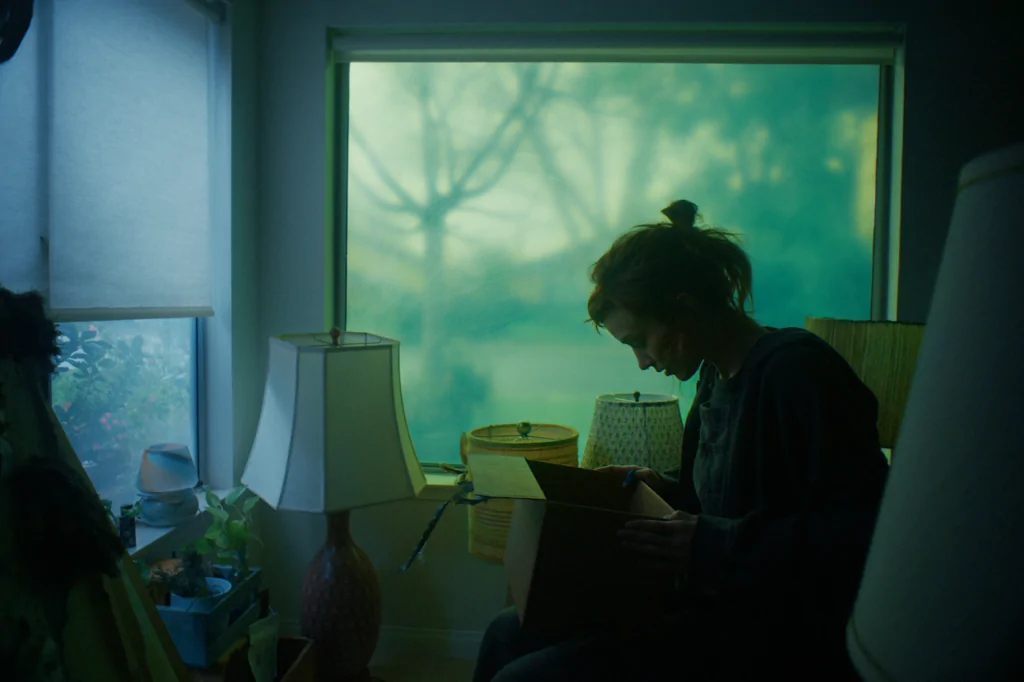
The omnipresent Smirk is an obvious stand-in for famously overworked and understaffed e-commerce sites like Amazon, so at first, Julia can hand-wave away the deliveries as an innocent mistake. She even befriends the kind delivery driver, Charlie, played by genre favorite David Dastmalchian. But as Sender lingers on, the packages’ contents escalate into items with an unsettling, targeted familiarity. Soon, the deliveries excavate Julia’s past with surgical cruelty, constant reminders of a destructive personal history that she’s desperately trying to rehabilitate. The brilliance of Sender lies in how thoroughly it understands our current algorithmic landscape of consumer culture as a psychological violation, tapping into the same existential terror pulsing beneath Videodrome and Pulse, where technology is an invasive extension of desire and institutional control. Smirk is as embedded in Julia’s daily life as Amazon has become in much of real-life society, recognizing that the true horror of late-stage capitalism isn’t oppression by force but dependency disguised as convenience.
The sound design, editing, and cinematography work well together to convey Julia’s erratic mental stability, reflected most successfully after Julia, understandably, spirals into paranoia and sleep deprivation with such ferocity that memory, guilt, hallucination, and reality bleed together until even mundane sounds of everyday life warp into something distressingly hostile. It’s as if Julia is trapping herself in a haunted house of her own making through psychological erosion, and every technical element is operating at the highest level to completely immerse the audience into her perspective. Editor Marco Rosas gives the film a jagged pacing style built on abrupt cuts and disorienting transitions that deny viewers emotional continuity. Scenes often end half a second too late or begin too early, creating a persistent low-grade anxiety that mirrors Julia’s perpetual fight-or-flight state. And every member of the star-studded ensemble cast brings their A-game, including a nearly unrecognizable Jamie Lee Curtis, who pops up as a narrative bookend, in addition to her role as a producer (she also produced Goldman’s short film).


Most impressively, Goldman also demonstrates a sophisticated understanding of addiction. Recovery in Sender is not portrayed sentimentally as redemption, but as a destabilization. Sobriety strips Julia of the chemical insulation that once dulled her trauma, leaving her exposed to every humiliation and insecurity she’s spent years suppressing. We know that in the long run, sobriety is the best thing for her, but she’s rawdogging life for the first time in years, and that’s a massive undertaking. It’s hard not to view the mysterious packages as the physical manifestations of her intrusive thoughts, and Sender repeatedly wants the audience to question whether Julia is being stalked from the outside or dismantling herself from within, and wisely refuses to provide a clean answer.
Sender isn’t merely “about” online shopping, invasive advertising, or a metaphor for sobriety. It’s a character study backed against the erosion of private selfhood in an era where corporations monetize memory, shame, preference, and impulse with terrifying accuracy. Contemporary horror lives in predictive algorithms, behavioral tracking, and the horrifying intimacy of data collection. Horror has always reflected cultural anxieties, and by the final act, I wanted to close my laptop and bury it in the backyard. Our lives are being quietly cataloged and manipulated by forces we’ve willingly invited inside, an addiction we’re forced to endure to make it through every day.
Sender is currently seeking distribution; we'll keep you posted.