

With the resounding success of last year's Silent Hill 2 remake, Konami has finally taken it upon itself to create a brand new entry in the series, Silent Hill f. In a collaboration with developer NeoBards Entertainment, Silent Hill f marks a fresh new start for the iconic horror franchise after years of relative silence.
Silent Hill f has a horrifically haunting atmosphere, thanks to its focus on Japanese horror, which tends to be much more psychological in nature compared to the more physically grotesque western horror. Although Silent Hill f surprisingly has its fair share of gruesome scenes. Unfortunately, Silent Hill f‘s scariest moments are dampened by its clunky combat system.
Silent Hill f takes place in 1960s Japan in the fictional rural town of Ebisugaoka and follows a young girl named Shimizu Hinako. After getting into an argument with her parents, Hinako leaves and meets up with her friends, Shu and Rinko. Ebisugaoka then becomes infested with bright red flowers, and all of its inhabitants turn into monsters.

Silent Hill f Characters
For Hinako and her friends, their goal is to find a way out of town, all the while Hinako deals with her own internal turmoil. The infestation serves as a metaphor for the declining Ebisugaoka, which became a victim of post-war industrialization. Previously, the town attracted new citizens with the promise of work in the coal mines and dam construction.

However, after both projects were completed, almost everyone else left. Ebisugaoka slowly became forgotten, and the bridge that connects to the nearby city is the town's remaining legacy. Feeling stuck in their current life situations, Hinako, Shu, and Rinko are desperate to escape. It's a compelling setup that invites historical nuance to create a chilling commentary on how rural areas were left behind during the 1960s economic boom.
Some of Silent Hill f‘s striking core themes include societal expectations and traditional female gender roles. Hinako's raging alcoholic father and docile mother make her question the patriarchal structure of that time period. Hinako's mom says that a woman's happiness begins with marriage, yet her household experience completely contradicts that. She has a “perfect” sister, Junko, whom she can't seem to measure up to, which is made worse by the fact that Junko married and ditched her hometown, leaving Hinako to bear more of her father's abuse.
Additionally, Shu doesn't really see Hinako as a woman and calls her “partner,” much to the chagrin of her parents, who want her to act more feminine (and Rinko, who has a crush on Shu). Hinako and Shu have a genuine best-friend dynamic, with neither really showing romantic interest in each other. That's what riles Rinko up, as Shu constantly ignores her in favor of chasing nostalgia and playing Space Wars with Hinako, a fictional game they both played together as kids.
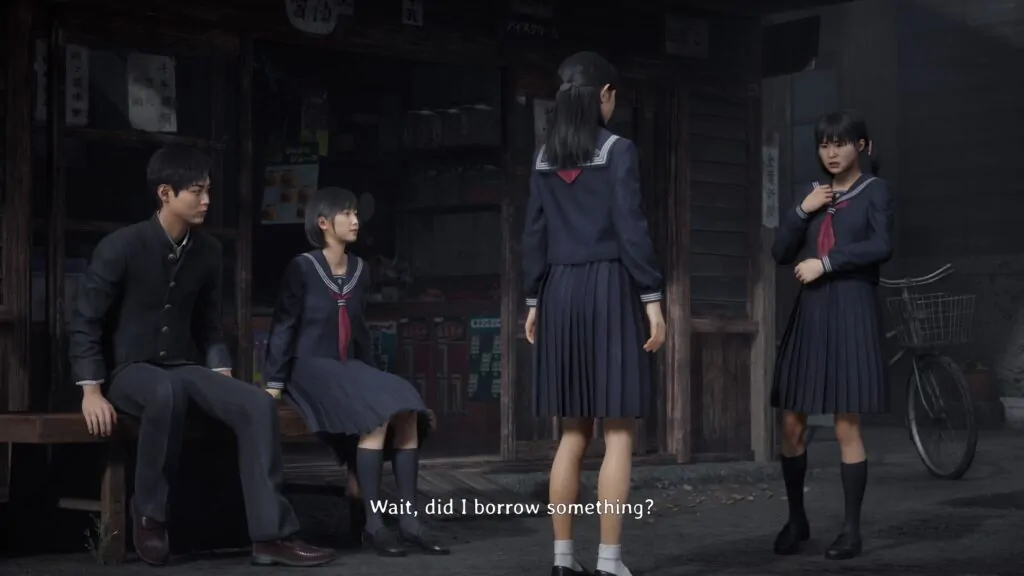
The rebellious acts of gender expression continually add depth to Hinako's character development and further complicate her relationship with her friends. These character dynamics and narrative threads kept my attention throughout the entire story, even when the moment-to-moment combat soured my experience.

Silent Hill in action
Silent Hill f implements real-time action combat and some light RPG mechanics. Hinako only has access to melee weapons, including pipes, baseball bats, and sledgehammers. This smartly builds tension between players and the various monsters, but it can be frustrating due to some mechanics. For starters, Silent Hill f‘s narrow corridors and alleyways in Ebisugaoka instill a dreadful sense of claustrophobia during exploration which beautifully contrasts with the blooming vegetation taking over. However, it becomes a problem because the camera gets too close to Hinako, making it almost impossible to see incoming enemies, especially if you become surrounded.
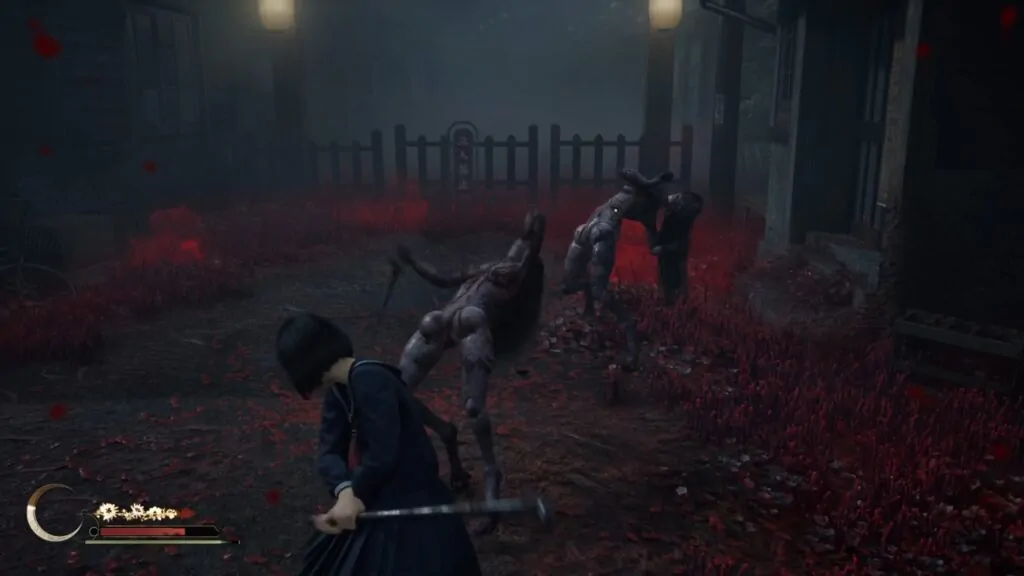
Hinako's stamina meter is an issue as well. This meter is used for everything, including running, dodging, and launching counterattacks. I found myself running out of stamina too quickly. Hinako attacks very slowly (she's a child after all), and enemies attack even faster. If Hinako misses, it feels overly punishing because her stamina recharges entirely too slowly. This is a problem, particularly when facing off against more than two monsters, as they'll completely overwhelm you. Boss battles can be frustrating as well, as their attacks are both fast and consecutive, leaving you very little breathing room with your stamina.
In many instances, it's better to avoid combat altogether, which is actually a very viable approach. Despite the misgivings of how unwieldy the combat is, scarce resources make Silent Hill f a competent survival horror game. Weapons have a durability meter, which you'll need to patch up with tool kits found lying around, and consumables replenish Hinako's sanity. Hinako can focus intensely and slow down time, making it much easier to spot counterattack opportunities, but at the cost of her sanity slowly depleting. Learning to balance these mechanics is the difference between survival and death.
Silent Hill f‘s most interesting mechanic, however, is its Faith system. Food can be used to replenish sanity, health, and stamina in a pinch, but offering them at a shrine instead rewards Hinako with faith points. Faith points can then be used to make Hinako stronger by raising her maximum health and other stats, or draw an Omamori to equip and receive passive effects like making the window to dodge wider or slightly restoring health whenever an enemy is defeated.
There's a trade-off between receiving permanent upgrades and keeping your consumables for emergencies. It adds a strategic layer to how players approach progression, creating an extra sense of tension and stress.
Facing Fears
Occasionally, Hinako becomes unconscious and takes a trip to the Dark Shrine, an otherworldly realm within her mind where she explores the trauma in her relationships with her parents and friends, who manifest as disgustingly vile creatures. Silent Hill f‘s art direction shines most here, as the Japanese folklore-inspired monster designs are some of the best in the series.
Like many other Silent Hill games, there are layers of symbolism to digest to understand its themes and character dynamics. It's what keeps the games interesting on repeated playthroughs, as it's difficult to fully grasp what's going on the first time around.
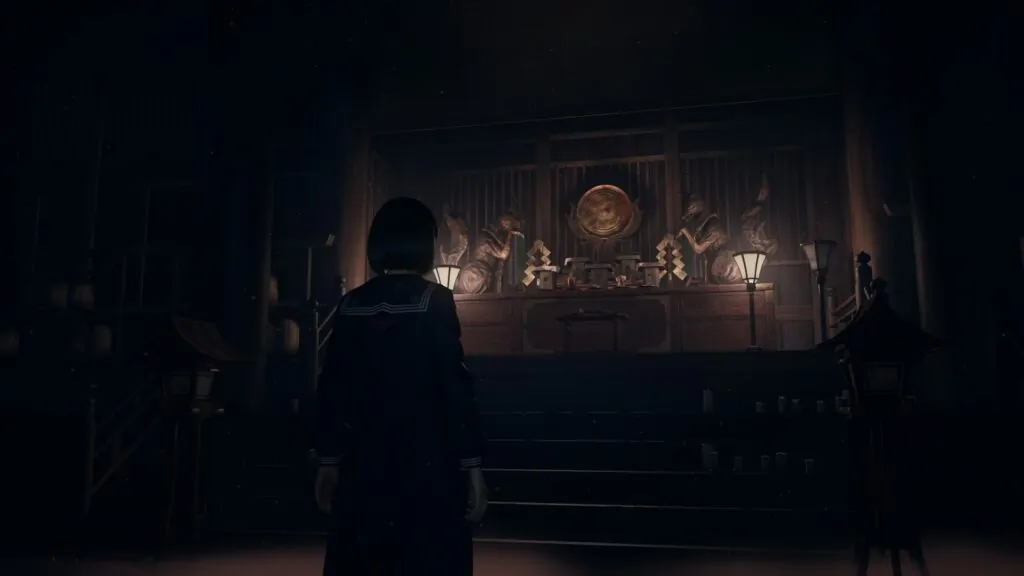
As Hinako makes her way further through the Dark Shrine with the guidance of a mysterious white-haired man in a fox mask, she undergoes extremely taxing rituals that represent the abuse she's suffered both physically and mentally. The mutilating type. These shocking and bloody scenes are used sparingly for the maximum amount of impact, leaving me curious to see how far she could go.

Silent Hill f also has its fair share of puzzles, which perfectly toe the line on complexity. They weren't overly hard, but not simple enough that they felt insulting to solve. The puzzles are also impacted by which difficulty mode players choose, which adds a bit of replayability to the game if you're going for more challenging playthroughs.
Speaking of replayability, Silent Hill f features five different endings, and on subsequent playthroughs, Hinako can make decisions that fulfill specific conditions to unlock them. With New Game+, players can also carry over whatever parameters, faith, and collectibles they gathered on the previous playthrough into the next. Despite a typical playthrough being around 10-12 hours, there's plenty of content to keep players satisfied.
Silent Hill f and its bold new setting is a rejuvenating breath of fresh air. Its storytelling and atmosphere are better than ever, but in pursuit of incorporating real-time action combat, it feels like a slog to play through. Still, Silent Hill f is the comeback that the series needed, and every Silent Hill and horror fan should at least give it a go.
Silent Hill f launches on PC, PS5, and Xbox Series X|S on September 25.
