Let me pitch you a movie: there's a high-schooler, see. He's wimpy and unpopular. A wallflower. Jocks bully him, and the popular girl won't look at him twice. He can't catch a break… until he's given supernatural gifts and abilities inspired by a member of the animal kingdom. Gifted with incredible powers, he starts to use them for personal gain. Until he makes a critical mistake and then listens to the wise words of his paternal figure. In the end, he realizes that it's not superpowers that make you a hero, but rather the choices you make with them.
Depending on who you are, that plot might evoke everyone's favorite wall-crawling, web-swinging superhero. But if you're a werewolf fan first and foremost, then I've just described the premise for the cult classic teen-comedy monster movie Teen Wolf, which is celebrating its 40th anniversary this year.
Starring a Family Ties-era Michael J. Fox, Teen Wolf was a modest success, but it was also eclipsed by Fox's *other* movie from 1985, Back to the Future. Still, Teen Wolf has endured as a fondly remembered genre mashup that helped cement Fox's star status and capitalized on the resurgence of both teen comedies a la Valley Girl and werewolf flicks in the vein of An American Werewolf in London and The Howling.
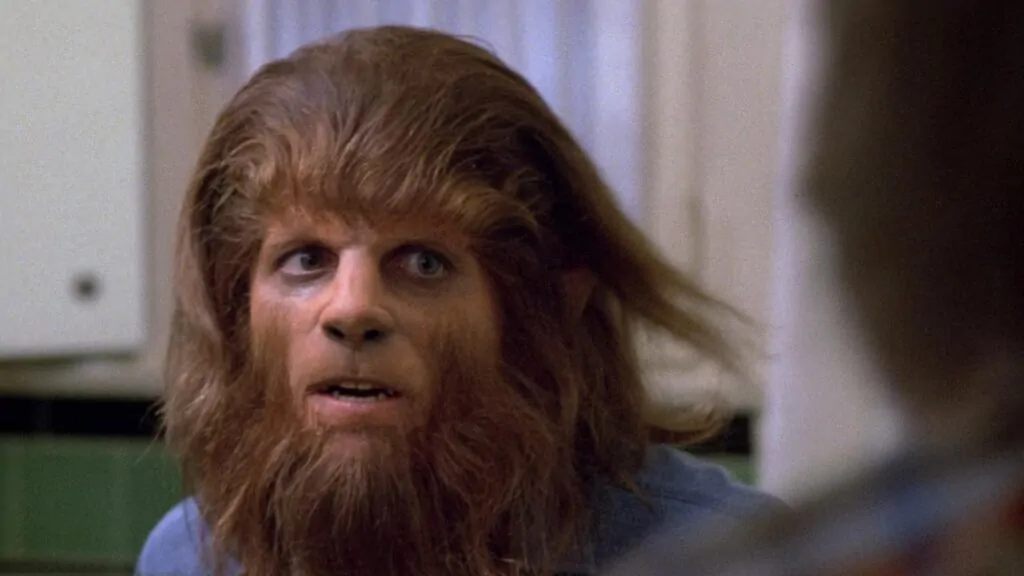

Despite the off-the-wall premise of a werewolf playing high school basketball, Teen Wolf landed with audiences surprisingly well. Some appreciate it as a social satire of high school power structures, and others appreciate it for Michael J. Fox's endearing performance as the eponymous teen wolf, Scott Howard. Others just dig a good bit of van surfing.
But for a burgeoning geek who equally loved creature features and costumed crusaders, Teen Wolf resonated with me as a covert re-telling of Spider-Man's origin story, swapping tights for letterman jackets. In its own savvy way, Teen Wolf models its story arc after the quintessential hero's journey of superhero comics, elevating Teen Wolf from a gimmicky teen comedy to a resonant coming–of-age fable.

It's not something that you'd immediately associate with Teen Wolf. There's always been a subgenre of superhero horror, but they tend to err on the side of horror with hard-edged violence, menacing atmosphere, and tormented anti-heroes. Think Blade, The Crow, or Darkman. Teen Wolf, on the other hand, is unique in that it borrows conventions from both genres but tonally resembles a John Hughes movie.
The funny thing is that it's not much of a werewolf flick. Michael J. Fox looks more like Chewbacca than The Wolf Man. It's a spoof of werewolf mythology, and a cute one at that. Still, it doesn't have much bite in that department. Instead, Teen Wolf is best as a sincere portrait of growing pains and the burden of maturity. For this, it looks to the Spider-Man model.
Ironically, there was already a Spider-Man movie adaptation in development from Cannon Films at the time of Teen Wolf's release, with none other than Friday the 13th: The Final Chapter director Joseph Zito attached. If you read the Spider-Man script that had been in development, you could see that Teen Wolf would have been more accurate to the character than the corny take that Cannon would've had.
It goes beyond broad thematic similarities. There are several analogs between Scott Howard's cast of characters and Peter Parker. Scott has his father, Howard, while Peter has Uncle Ben. Scott has his much more outgoing friend Stiles, and Peter has Harry Osborn. Scott even has his own J. Jonah Jameson in the form of Vice Principal Thorn, a pure hater, who's out to take Scott down.
They're both bullied ruthlessly by jocks. They both chase the popular girl before winding up with the girl next door. In most versions, Peter chases Liz Allen and winds up with Mary Jane Watson. Scott chases Pamela and settles down with *checks notes* Boof? Yes, Boof.
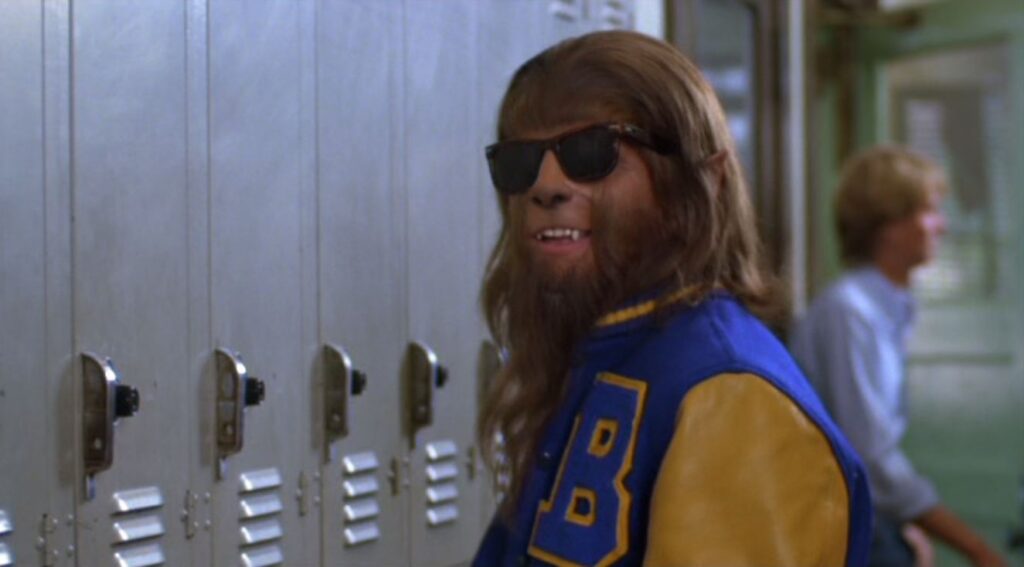
Most importantly, their character arcs are almost beat for beat. While Scott doesn't get his powers the same way, the scenes of him discovering his lycanthropy evoke the feeling of any superhero first discovering their powers. Most importantly, Scott makes the same mistakes and learns the same lessons that Peter Parker does.
After Scott learns that he's a werewolf who can change at will, he uses it to become a star athlete. It's laughable, but not too far off from Peter Parker's origin. In most canon, Peter first uses his powers to become a pro-wrestler to win money. He wants to cash in on his powers for money and popularity. After all, who wouldn't? That's what makes Spider-Man and Teen Wolf so relatable to a teenage audience. They're honest about growing up. If a teenager learned that they were a werewolf, they would almost certainly figure out a way to swindle some beer with it.
There are good times to be had in watching Peter and Scott have fun with their powers. It gives the audience a chance to live through them vicariously. But a sobering reality hits them both. Superhero or not, werewolf or not, there will always be consequences to your actions.
Unfortunately for Peter, it's only after Uncle Ben's murder that he uses his powers for good.
Scott makes his own mistakes and has to atone for the abuse of his powers. There's nothing as grim or fatal as Uncle Ben's death, but there's a surprisingly tense moment that helps Scott realize the weight of his actions.
That scene comes when Scott is assaulted by one of his former bullies at the high school prom. After promising Boof that he would stay in his human form, Scott loses control of his emotions and wolfs out in front of the whole class in a scene that evokes Bruce Banner turning into The Incredible Hulk. It's a pivotal moment for Scott's character that helps put him on the path of responsibility. He doesn't end up fighting crime, however much there may be in this idyllic Nebraska town, but he does decide not to use his powers in the championship game.
He doesn't save the day, but it's heroic in its own high school drama way. If you want to see Scott go all the way with his powers, then you can watch him battle the forces of evil in MTV's Teen Wolf show.
The superhero parallels are most pronounced in Scott's first conversation with his Dad post-transformation, where Howard says possibly the most famous comic book quote of all time. Decades before Cliff Robertson's Uncle Ben made the mantra iconic in Sam Raimi's Spider-Man, Howard Scott tells his son: “With great power comes great responsibility.“ Well, technically, he says, “With great power, there must also come a great responsibility,“ which is actually closer to the phrasing in Amazing Fantasy #15. Unless Howard is paraphrasing the original Voltaire quote, then it's no coincidence.

If I were only suspicious of Teen Wolf's comic book inspirations, it was all but confirmed when I learned that legendary comic book scribe Jeph Loeb co-wrote the film. After Teen Wolf, Loeb went on to write for shows like Smallville, Buffy the Vampire Slayer, and did runs on countless superhero comics. Perhaps his most acclaimed work is Batman: The Long Halloween, which also blends superhero mythology with horror motifs, albeit to a vastly different effect than Teen Wolf. He also did a celebrated miniseries on the Wall Crawler himself in Spider-Man: Blue.
Looking back on Teen Wolf, Loeb acknowledges how it served as a predecessor for his career in the world of spandexed heroes. In an interview with Vulture, Loeb reflected on the film and said, “If you look at my comic-book work — Batman, Spider-Man, Bruce Wayne, Peter Parker — and then also with Buffy and Smallville, those are all about the same kind of things, in my mind. These would eventually be the things that interested me.“
Film Critic Robert Galluzzo made a similar observation on the parallels between Teen Wolf and Loeb's future works. “It makes sense that someone like Jeph Loeb would tackle this because it has a very traditional superhero story arc,“ he noted on the Teen Wolf making-of documentary from the Shout! Factory release.
Teen Wolf's thematic relationship with superhero mythology isn't just a fun tidbit, it's the very DNA that makes it an enduring coming-of-age fantasy. Sure, it's a goofy comedy about a werewolf shooting hoops, but it reflects the confusions of growing up in a surprisingly poignant way.
I often wondered what a Spider-Man adaptation would've looked like in the '80s, whether it be the failed Zito project or a long-rumored attempt to turn Peter Parker into a werewolf-esque Spider-Human hybrid. While I would've been more than a little curious to see that, the truth is we didn't need a Spider-Man movie in the '80s – we had Teen Wolf.