Last Updated on August 27, 2024 by Angel Melanson
Many have tried (and failed) to get a reimagining of The Crow to the screen. That all changes this week when Rupert Sanders' take on James O' Barr's original comic takes flight. Bill Skarsgård and FKA Twigs star as fated lovers Eric and Shelly, who meet a brutal and violent demise before Eric comes back from the dead for a chance to set things right.
Director Ruper Sanders joined us to chat about misconceptions, exploring the theme of self-sacrifice and the challenge of creating something to compete in a Marvel-centric cinematic landscape when “you've basically got their catering budget,” sharing: “We're a down-and-dirty indie movie. There's a lot of ‘Hollywood's come in and broken my baby,' but we're a down-and-dirty European, essentially art-house movie.” Read our full interview below.
When you're dealing with an adaptation or re-imagining of an existing property, I imagine you go in knowing that people will have strong feelings before they ever even experience what you've created. Do you feel that's more constricting or more freeing as a creator?
I think it's kind of a necessity in today's audience demands. They turn up to the cinema to see something they feel they know. And that could be from a previous generation, or it could be more contemporary. But to me, great texts deserve new adaptations. If only one version of Shakespeare's Macbeth was allowed to have been made, then we'd be robbed. I think the beauty of what we've done is that it will appeal to the 17-year-olds of this generation and the 17-year-olds of 30 years ago. I also think that the people who watch this one will probably want to go back and look at the original.
It actually opens up some of this material that maybe few people knew about. There's definitely a cult following, but it's a small amount of people. It's great for a younger generation to be exposed to James O'Barr's work in a very fresh way.
This is working off of James O'Barr's original The Crow comic with a screenplay written by Zach Baylin and William Schneider. How close is the final product on the screen to the script that you first read?
To be honest, I didn't really read a script, because it was kind of a work in progress throughout. I adapted the source material, I didn't copy it frame for frame, that didn't interest me. There were incredible themes in James' work that I thought could be more fully explored. The character of Shelly was very vague, and to me, she is the emotional engine of the film. She couldn't just be an apparition or a flashback so that the guy could go and do his business, that was very important to me.
I think this is, in a way, a more feminine movie because it's really about his love for her. Our movie is different because it's not just pure revenge. He's not just a man who's killing loads of people because someone killed his loved one in a very miserable way. This is someone who is so consumed by grief that he is offered, in a very mythological way, an ability to get her back. That felt really powerful.
This is very Shelly-centric.

Yes. Unless you understand how in love with her he was, you aren't really emotionally invested in enough in that journey. Pure revenge, to me, is quite nihilistic and brutal. Where ours is different from revenge movies is that Bill cries halfway through committing violence. It's not something he really wants to do. He knows that he has to do it. It's a very different storyline in that respect.
There's a softness to it.
Yeah, exactly. There's softness and hardness, which is why Bill's so good; he's able to embody both. It just allows you a little bit more emotional complexity in the film. I think revenge is a very brutal and quite hollow emotion to drive a film in its entirety.
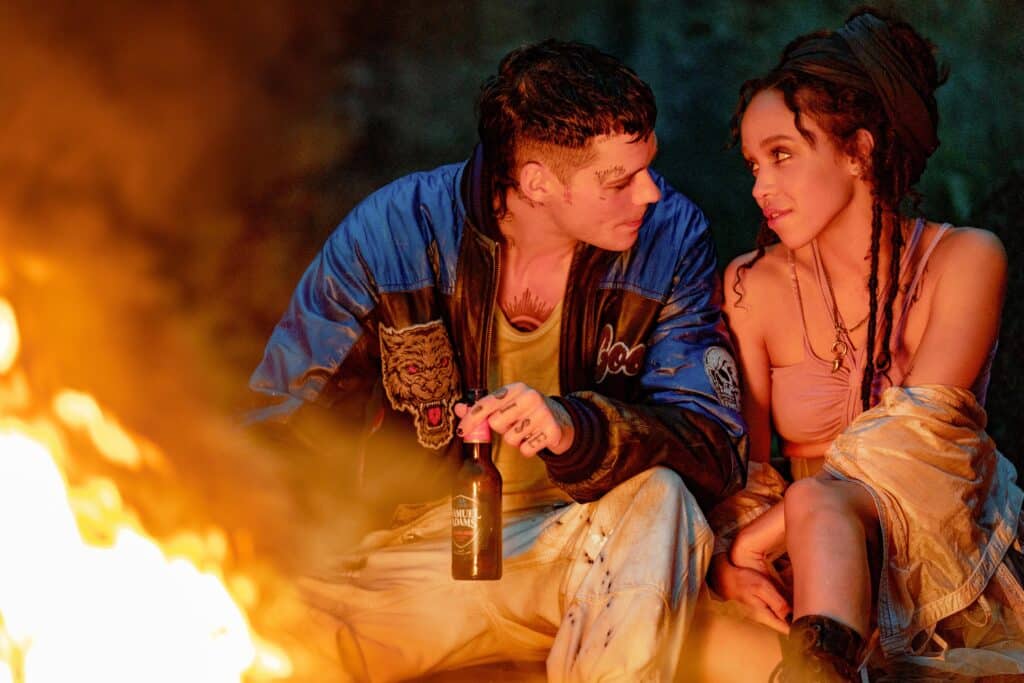
How do you decide what to keep from the comic and Alex Proyas’ 1994 version? How much did that inform you, are you mainly looking at themes and fleshing those out in a different kind of way?
I just looked at the comic, really. I think screenwriters will sometimes write that first draft, just having thought about it for a few weeks, and that's what I did. I knew what my vision of the film was. I didn't go back and look at the original film or read the comic at that time. It was more like, “I remember The Crow. I know what interests me about that world.” That was really the driving force. You have to have a very blinkered vision. If you start listening to the noise, you'll fall off a cliff.
We're a down-and-dirty indie movie. There's a lot of, “Hollywood's come in and broken my baby.” But we're a down-and-dirty European, essentially art-house movie. There's no one from Hollywood in this entire production. It was shot in Prague and Munich, edited, and finished in London with a pretty much European-based production. We are not waltzing around in the big Hollywood studios spending loads of money, which is why I think the film is more inherently linked to the original than people think. It was made with that same spirit.
My friend Dariusz Wolski shot the original, and I talked to him a lot about what the process was like. It was very similar. We were down and dirty in Eastern Europe doing what we could for very little money to make something that competed with the bigger Marvel universes, which is hard when you've basically got their catering budget.
That's what made it creative, and that's why we could make an R-rated film without interference really. We made something quite dark and emotional, which isn't frequent.
It does get very dark. You also go very mythological and supernatural in this. Aside from the fact that we have our hero resurrecting from the dead… that's always there, but you add some additional supernatural elements.
Yeah. People say, “Oh, you've added all this supernatural stuff.” In the original, he comes back from the dead. You can't get much more supernatural. I wanted to make it a bit more about heaven and hell, and open the scale of that a little more. Like I said, I didn't just want a very brutal revenge movie. I wanted to deal with the themes of love, loss, and grief we all experience.
I also wanted to deal with the idea of self-sacrifice because I feel that everyone's become very insular and isolated and probably wouldn't do much for the person next to them anymore. That's really important the more we go into our devices and live in a very insular world. I thought it was a nice theme to start exploring what you would give for someone else.
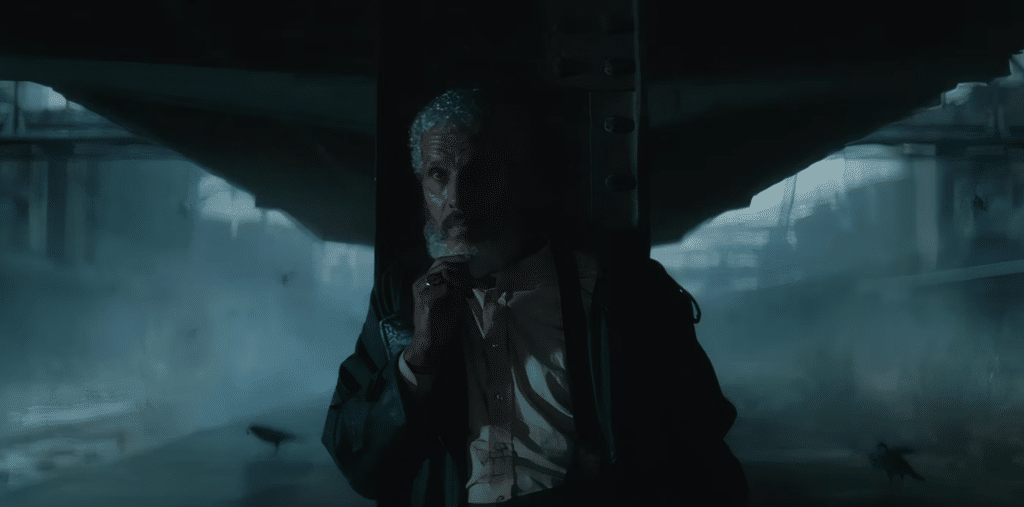
I really enjoyed the Kronos railyard sequences in particular. It added a new element to it that struck a chord in me.
Sami Bouajila is incredible. He's a French Oscar-winning actor who I've followed for a long time. And he's got this quality… It wouldn't have worked with someone from Studio City standing under the railyard. He's got this amazing Eastern French vibe that feels historic and mythical, and he's funny. I wanted someone who was kind of grounded but felt mythical.
Bill Skarsgård is no stranger to action and stunts, but it looks like he's doing a lot here. He also does a lot of falling into and being submerged underwater. What's it like shooting those water scenes, especially when you're repeatedly throwing your actor into the water?
Burying people in liquids is very cinematic, I don't know why. Bill was great. We didn't have the luxury of lots of warm baths, and we were shooting at night, mainly doing night shoots out in Prague. It wasn't very comfortable, but Bill was all about being pushed into shallow piles of water out in an old abandoned railyard. We'd had an exhausting shoot; we did a lot in a very short time with very complex work and a smaller budget. We shot in 30-something days. My first film was 90 days! We were doing complicated stuff, and we were all exhausted.
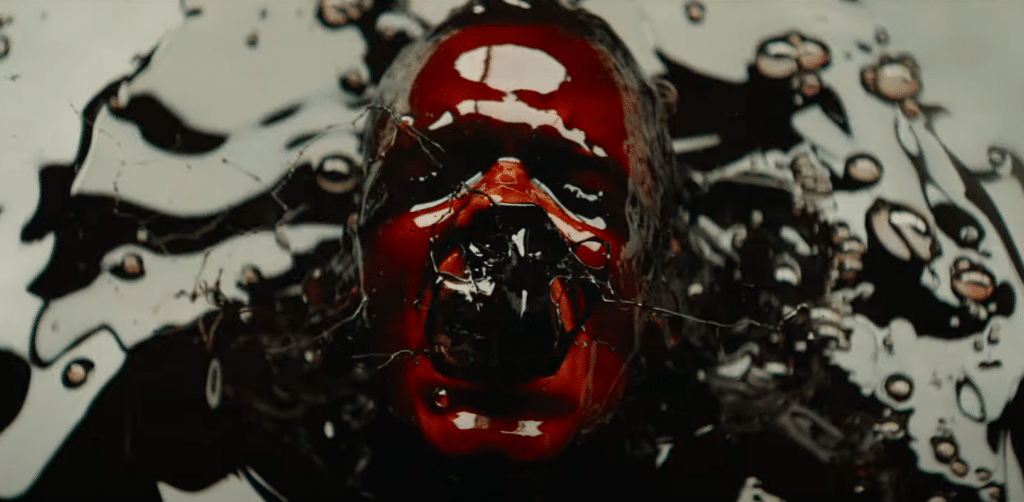
We had this big agricultural trough of black corn syrup, and on the last day, I said to Bill, “I've got this idea for a title sequence. It's going to be messy, but it's going to be cheap. We've got a high-speed camera here. Would you just get in there and thrash around and punch and spew black liquid?” He was like, “Sure.” He got in a slightly cold, depressing tub in the back of a sound stage and thrashed around at high speed. It is a really seminal piece in the title sequence and then later in the movie.
A lot of it was about falling and sinking and how you divide those two worlds in a way that feels organic and not too make-believe. I wanted it to be quite a visceral connection between our world and the other. This portal of liquid and lots of veiled characters is another symbol in there, “We can't touch them, because they're now separated.” A thin veil separates them, and that's an image that recurs throughout the movie.
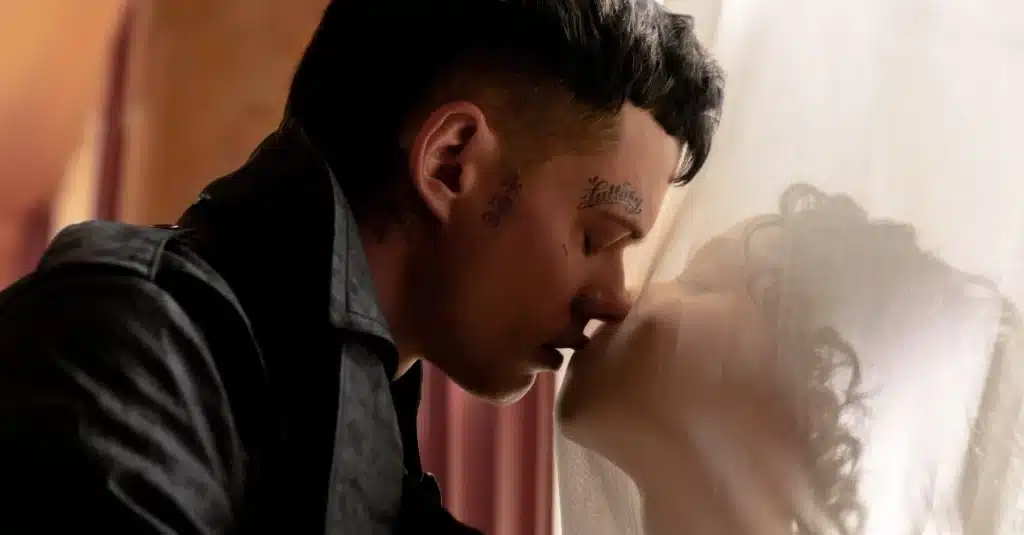
There's a point where he comes back to the apartment and kisses Shelly through this curtain. She's there, but then she's not there, the mannequins are all shrouded in plastic veils. There's a lot of thematic imagery in there that I think people will maybe start to understand or start to see more of in the second and third viewing. There's a lot of richness to it.
That's kind of the indie spirit that you just struck upon. How do you show this and convey this feeling done “cheap and messy?” But you found ways to do that.
Yeah, exactly. But also, you've got to have a film that stands up in the IMAX theater and looks like it's made for five times more. I think that's where we've been successful. We've got a film that is very emotional with big action set pieces. I think a lot of the time I watch these films, and it's just moving pixels. There's just stuff happening, and it's spectacular, but it's so spectacular that you kind of lose the human element to it. We use very little green screen, if any. Everything was done in camera. That helps the emotional connection with the movie.
Speaking of emotional connection, this is a love story at the core of it. There's lots of action and gore, but The Crow is a love story. None of that works if you don't have the chemistry between your leads Bill and Twigs.
Yeah. We were all quite surprised at how much we all got on together. I knew Bill a little bit, I didn't know Twigs. I wanted someone who was kind of other-worldly and magical so that when she disappeared, we felt that vacuum and that sense of loss with Bill. Bill's an experienced actor, he's grown up as part of an acting dynasty, and he's done some incredible work. Twigs is a very ambitious and driven performer in many categories, she just really wanted to be the best she could be. I think that made her a little bit nervous, because she was so driven to do something great.
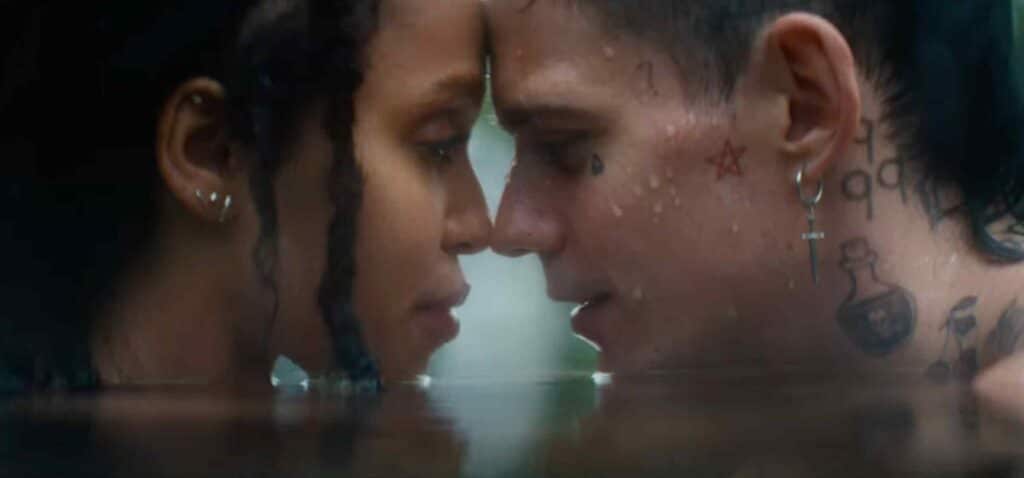
She and Bill just instantly kind of fell into each other. We shot the stuff at the lake on day one, and as soon as the camera started rolling, they were into each other in a very beautiful way, and it was kind of magical and quite a relief.
A couple of lines stuck with me, but this one in particular, “The opposite of love is not fear. It's doubt.” Where did that come from? Was it taken from somewhere or written for the script?
It was definitely written for the script. We had quite a mercurial process in writing the movie because I had a very strong vision of what I wanted the film to be. It takes work. That probably could have been written on the back of a cereal box on the morning of going in to shoot. Those things evolve when you live in them for three years. Every waking hour, every minute off you have, you're thinking about the scenes that are coming up. So I actually couldn't tell you where that came from, to be honest. But it is a beautiful line, whoever wrote it.
The Crow is in theaters August 23rd, watch the trailer below.