Editor's Note: This was originally published for FANGORIA on September 6, 2002, and we're proud to share it as part of The Gingold Files.
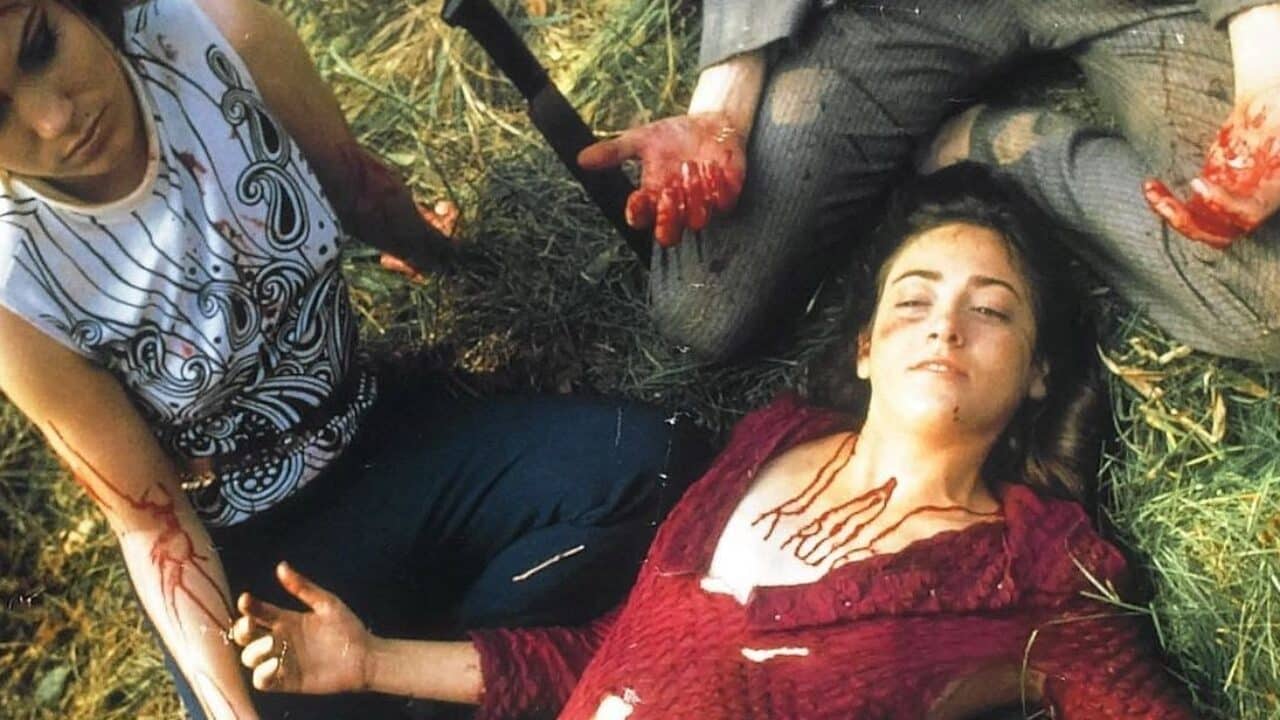
Now that The Last House on the Left has finally arrived on DVD from MGM, will it lose its status as one of the Holy Grails of video collectors? Probably not, as long as speculation persists about truly “uncut” versions lurking out there somewhere. On one of the disc’s featurettes, writer/director Wes Craven and producer Sean S. Cunningham note that Last House suffered its trimming not at the hands of the distributor or some over-governing censorship board, but from individual projectionists, theater owners and irate church groups. This is supposedly the most complete edition available, and with its brief glimpses of the infamous chest-carving and intestine-fondling, one is inclined to believe it.
Beyond the fact that it pushed violence past any previous boundaries back in 1972, Last House’s power has been attributed to its rough-around-the-edges, documentary-style shooting. On the Craven/Cunningham commentary track, the director notes the heavy influence of non-fiction filmmaking on his approach, and even on DVD the movie still plays like one very disturbing piece of cinema vérité. The 1.78:1 image is heavy on the grain and contrast—which are even more pronounced in the fullscreen version also included—and there are damaged and blemished moments scattered throughout, though the colors and level of detail are consistently good. (Cunningham claims that this was the first movie to be shot on Super-16 film for blowup to 35mm prints, and this transfer appears to have been struck from one of the latter.) The Dolby Digital mono sound is only as good as the elements allow; it’s clear enough, but audio sweetening might have helped.

Would Craven and Cunningham have gone out of their way to provide such an additional enhancement? It’s hard to say from their commentary, on which they view their joint horror debut with a mixture of nostalgia, amusement and embarrassment. Sharing a fine camaraderie from the beginning, they spend the first half hour in a comic mode, before the film’s real violence begins and Craven states, “From this point on, any joking would be wildly inappropriate”—which doesn’t stop him from quipping about a fly that lands on Sandra Cassel’s forehead during her rape scene. While the commentary has occasional dead patches (the two claim not to have seen the movie in decades, and at one point Craven chastises Cunningham, “We’re not supposed to just watch our movie, Sean!”), there’s plenty of solid information imparted, and Craven even explores the movie’s underlying themes, most revealingly when he describes David Hess’ Krug as the ultimate bad father.
A half-hour documentary titled “It’s Only a Movie,” produced and directed by Fango contributor/Last House expert David A. Szulkin, gathers Craven, Cunningham, Hess and just about everyone else who worked on the movie for a detailed look back at its origins and making. While some of it will be old news for die-hards, it’s fun to see how the cast looks today (even Martin Kove, the only actor save Hess to do significant post-Last House work, shows up), and the story of the movie’s bumpy early release is always entertaining, with Cunningham revealing just where the Last House title came from. The doc includes fun visual material as well—check out a vintage photo of Craven with hippie hair, and when the last script page flickers on at about the 18-minute mark, freeze-frame it and get a load of the planned final image!
On the fullscreen side of the disc, a “Forbidden Footage” featurette is not a collection of deleted scenes but a discussion by the filmmakers and cast about staging the most disturbing moments, and the censorship that resulted. Based on the anecdotes here and in the main doc, one gets the impression that for everyone except Cassel (who was genuinely scared during certain moments), the violence was much more fun to shoot than it is to watch. The last key supplement is a 14-minute collection of outtakes and dailies, which play without sound but appear pretty well-preserved. It is here that, at last, those seeking the maximum Last House gore can get a lengthy look at the intestine-pulling.