It’s 11 pm, October 31, 2003, and I’m walking backwards down Santa Monica Boulevard. My hand is on the back of a DP, guiding him as he, too, walks backwards while filming a menacing, bare-chested Abercrombie model wearing a devil hood and little else. Next to me is filmmaker Paul Etheredge, also walking backwards, with one eye on a portable monitor and the other on the action heading toward him.
Along for the stroll are a makeup person, an assistant camera op, and Karen Wolf, the daughter of Joe Wolf (producer of Halloween), dressed as a sexy lady cop. We’re navigating over curbs, across intersections, and around thousands of mostly gay, mostly costumed, mostly drunk revelers. This is the West Hollywood Halloween Carnival. I’m a production coordinator, and tonight, principal photography begins on what would eventually become the first widely known gay slasher – Hellbent.
The Hellbent origin story is a classic Hollywood tale of being in the right place at the right time. In the early 2000s, Etheredge was working in various capacities for producer Steven Wolfe. “Steven was trying to get a queer horror film off the ground with Joe Wolf from the Halloween franchise, and at the time, Irwin Yablans was involved,” Etheredge recalls. As luck would have it, Etheredge happened to be walking down the hall in the production offices at just the right moment.
“Steven popped out and just yanked me into the meeting. Literally, it was me walking in and Joe and Irwin turning to me and saying, ‘Gay horror film, killer in WeHo, what do you got?’” Thinking fast, Etheredge pitched a story inspired by Black Orpheus, a film he’d been exposed to as a child by his mother, who also happened to be a film studies teacher. “It was a film that both Joe and Irwin also knew… So it was quick bonding over that, and it made it a hell of a lot easier.” Etheredge left the room with the gig.
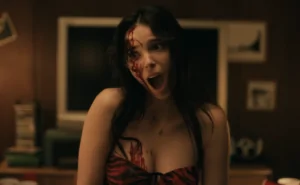
Etheredge’s first task was to craft his off-the-cuff pitch into an actual screenplay. The filmmaker presumed queer audiences would be hungry for something new after years of standard LGBTQ film festival fare. “So many of the [gay] films… dealt with coming out, falling in love with a straight hustler, having some kind of drug addiction crisis, having some sort of crisis within the church,” he recalls. “And I'm just like, my God, this is so dreary.”

Along with these uplifting themes, the prevailing wisdom at the time was that the success of your gay film required one special ingredient—penis. “’ You won't make a nickel if you don't show the pickle.’” Etheredge was advised. “I didn't agree with any of that.” Etheredge’s formula for a good gay horror flick was simple. “I just want to see my friends going out to a party and getting picked off, and that was my approach.”
Fellow queer filmmaker Mark Bessenger, whose gay vampire flick Bite Marks was released in 2011, points to Etheredge’s character building as one of the main reasons Hellbent imprinted on him back in the day. “For the first time in a long time, a slasher film had characters that I really cared about,” he offers. “In most of these movies, the characters are ciphers, walking zeros that you don’t care whether they live or die. But in Hellbent, I really felt bad when the main characters were killed.” He chuckles, “When’s the last time that happened in a slasher movie?”
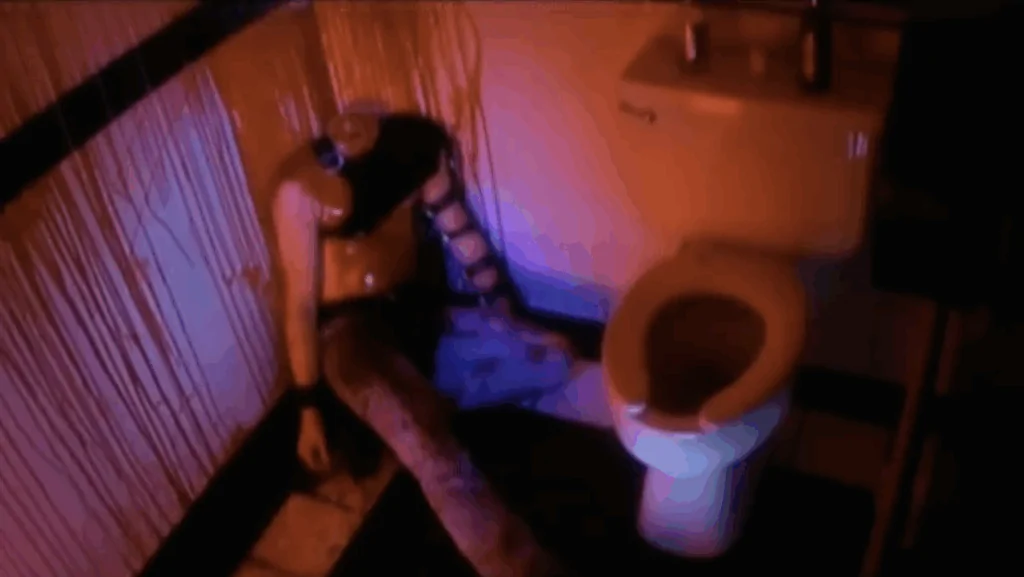
Making any film is a Sisyphean task, more so for filmmakers rolling that boulder up the hill on a low budget. Success means understanding how to make a dime look like a dollar, and on Hellbent, that meant Etheredge shooting the climax of the film… in his own apartment. Etheredge recalls Wolfe informing him, “‘…we have to use all of our assets for free.’ And I'm like, okay, great. My husband's going to love this.” Ultimately, “I left that place with blood still on the walls,” confesses Etheredge.
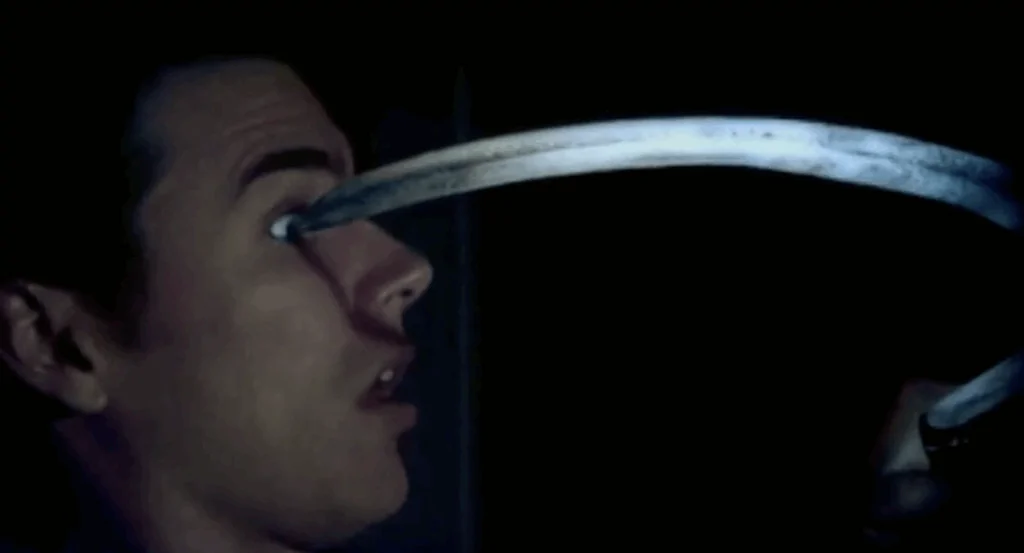
The highlight of that day was the creation of the film’s most iconic moment, eventually adopted as Hellbent’s key art – the eyeball meets the scythe. Out gay writer/director David Kittredge, creator of the gay genre mixer Pornography: A Thriller, looks back on that scene with the highest of praise. “It’s a great horror moment. A perfect punchline— simultaneously horrifying and hilarious. Most horror movies wish they could have a moment that great.”
(Behind the scenes, this writer remembers watching the actor playing the hooded villain laboring with a scythe to chop through a door that hadn’t been scored properly. What could have been ten minutes of action turned into at least an hour and a very fatigued shirtless gay demon.)
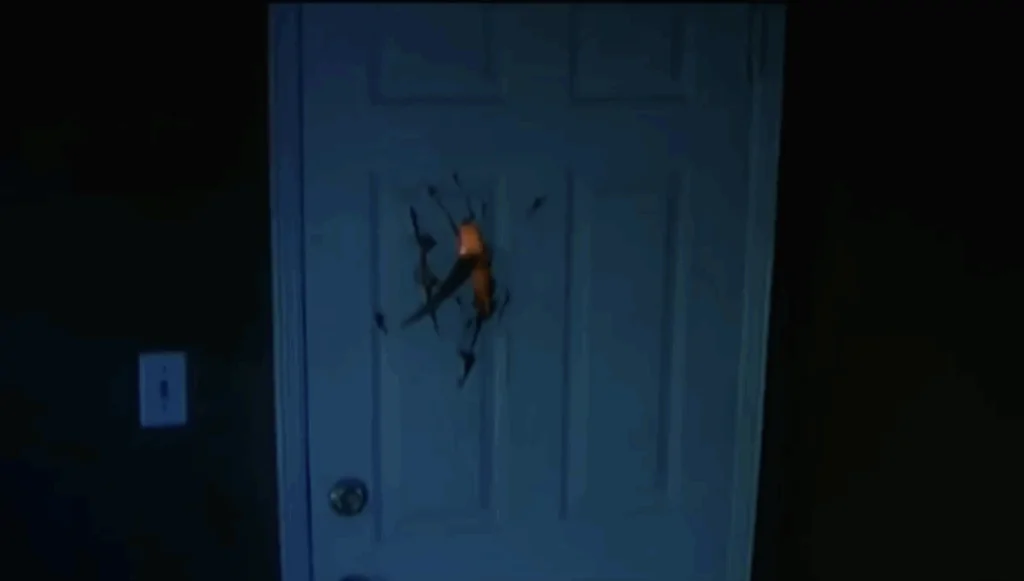
The inspiration for the scene was a too-good-to-be-true real-life incident from Etheredge’s high school days. “My best friend and I were sitting across the table from each other, and he had a metal ruler and was scraping it along the bottom of his eyelid, and I joked, ‘Stop that, you'll put your eye out,’” recalls Etheredge. “And he laughed and stuck his ruler under his eye and popped it out into my folder.” The filmmaker shudders as he remembers. “He had a glass eye and I had never known.”
After a contest to name the film (“Queer Eye for the Dead Guy I think was one of the entries,” recalls Etheredge), Hellbent hit the festival circuit in 2004. “I remember seeing the film at Outfest in Los Angeles, and the audience reaction was extraordinary,” recalls out filmmaker JT Seaton, whose gay horror short film Nightshadows was also making the festival rounds. “Seeing a feature film so embraced by the community was incredibly inspiring.” Seaton would go on to make the gay zombie comedy George: A Zombie Intervention.
Prior to Hellbent’s festival debut, LGBTQ horror content could be found in films from the earliest days of cinema; however, true “gay horror,” as the genre was known then, with LGBTQ plots, themes, and leading characters, was limited to a handful of micro-budget indies like 1988's Curse of the Queerwolf, and the 2002 lesbian slasher Make a Wish. October Moon and Scab (both 2005) were fellow travelers with Hellbent at the queer film fests. But post-Hellbent, the genre would grow exponentially.
Although still limited, still micro-budget, and still indie, fare like Bessenger, Kittredge and Seaton’s films, plus Creatures from the Pink Lagoon and In the Blood (both 2006), Gay Bed and Breakfast of Terror, Gay Zombie, and this writer’s Socket (all 2007), and Eulogy for a Vampire (2009) would find life in heavy festival rotation and DVD distribution.
But Hellbent got the golden ticket— after crossing the LGBTQ film festival finish line in 2004, Hellbent rolled out in an actual, honest-to-goodness theatrical release in 2005. “Every gay filmmaker I knew was thrilled when Hellbent got a theatrical release,” Kittredge recalls. “For a moment, it felt like a door could open for gay genre films to actually play in theaters.”
Hellbent didn’t exactly set the box office on fire, nor did it truly open any doors for Etheredge moving forward. But what the film did do was show queer audiences what a horror film with gay characters, written and directed by a gay man, could look like. The previously mentioned projects that followed in Hellbent’s wake, plus genre TV shows like Dante’s Cove, The Lair, and the constant flow of horror films and TV movies by David DeCoteau for queer PPV network Here TV, among others, all owed a debt to that gay canary in the rainbow coal mine.
Etheredge, currently promoting his latest horror feature, The Other, regards Hellbent positively in the context of the film’s legacy. “It didn't necessarily get me career-wise in a place, but I am very proud of what that film has done. And even now, I get emails from various people my age or slightly younger who saw the film, and it was a formative experience. ‘It's the first time I actually felt I saw myself on screen,’ that kind of thing.” “There’s a real point of view here…” says Kittredge of the film, “…simultaneously examining these well-worn horror tropes but also slightly twisting them, inverting them, challenging them.”
In the end, a film crew walked backwards down Santa Monica Blvd. in West Hollywood so queer horror could run.